
Dakos Recipe: Cretan Barley Rusk with Tomato, Feta and Olives
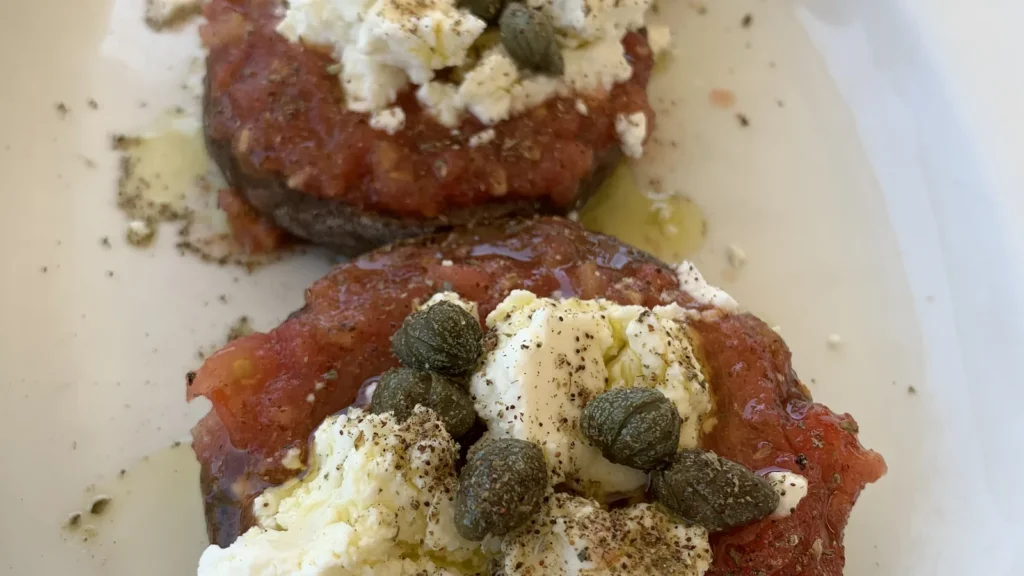

Dakos is the signature meze of Crete: a hard barley rusk softened with a little water and olive oil, piled with grated ripe tomato and soft white cheese, and finished with olives, oregano and more olive oil. Visit Greece lists barley rusks with grated tomato and xinomyzithra cheese, known as dakos, among the classic dishes of a Cretan table. It takes 15 minutes, needs no cooking, and is best in summer when tomatoes are at their peak.
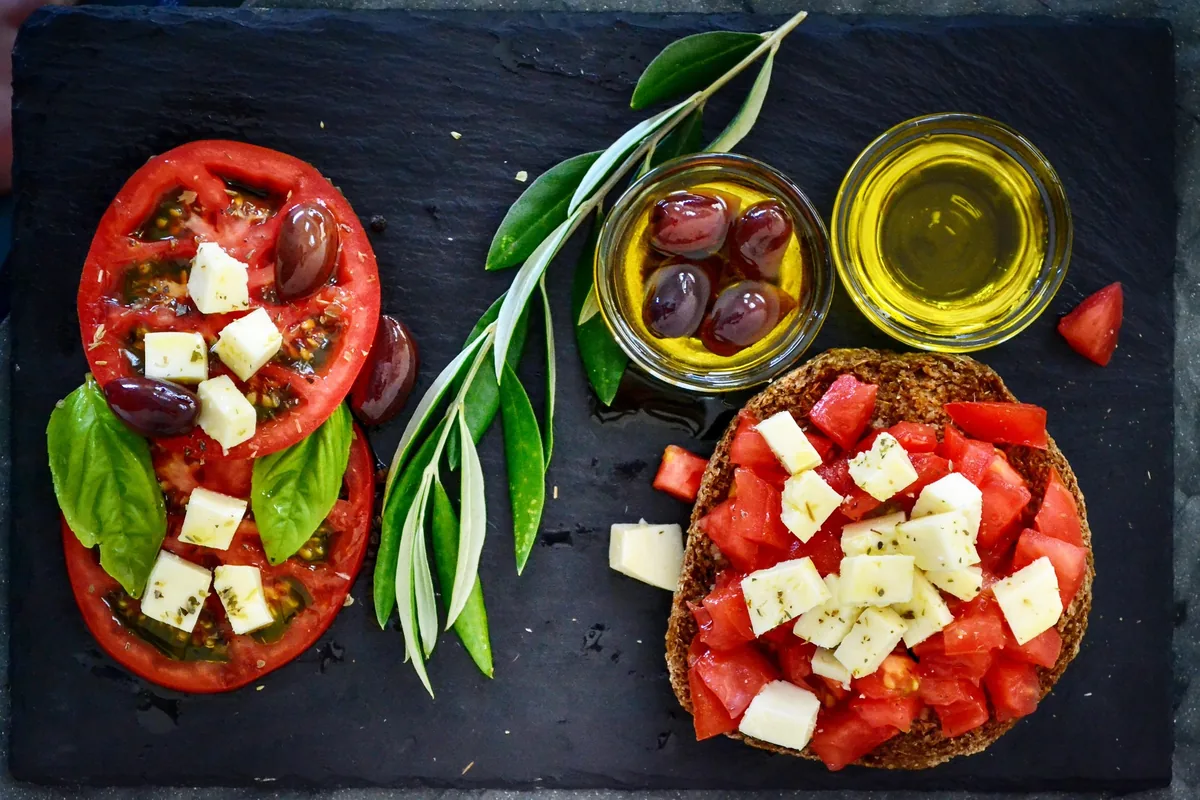
Dakos recipe (Cretan barley rusk salad)
Serves: 4 servings as a starter. Prep: 15 minutes. Cook: none. Total: about 15 minutes.
Ingredients
- 4 large barley rusks (paximadia or dakos rusks)
- 3 large ripe tomatoes
- 5 oz (150 g) fresh mizithra or feta, crumbled
- 8–12 Kalamata olives, such as our Kalamata olives
- 1 tbsp capers (optional)
- 1 tsp dried Greek oregano, such as our dried Greek oregano
- 4–6 tbsp extra virgin olive oil, such as our Rapti Koroneiki olive oil
- A pinch of Greek sea salt and black pepper
Method
- Halve the tomatoes and grate the cut sides on the coarse side of a box grater into a bowl, discarding the skins. Season with a pinch of salt and leave to drain for 5 minutes in a sieve, keeping the juice.
- Sprinkle each rusk with 2–3 tbsp water, or hold it very briefly under the tap. Don’t soak it; it should soften on the surface but keep its crunch inside.
- Place the rusks on plates and drizzle each with about 1 tbsp olive oil. Spoon over some of the tomato juice and let it soak in for a minute.
- Spread the grated tomato over the rusks.
- Top with the crumbled cheese, olives and capers. Rub the oregano between your fingers over each one, add pepper and finish with a generous drizzle of olive oil.
- Serve straight away, while the rusk still has some bite.
The rusk
Dakos is built on paximadi, a twice-baked rusk. In Crete the classic one is made with barley flour, which makes it very hard, dark and nutty. Barley rusks are sold in Greek and Mediterranean shops and online, often round with a hole in the middle; whole wheat or mixed-grain rusks also work. The rusk is meant to stay partly crunchy, so moisten it only lightly. Barley rusks contain gluten, and many are made with some wheat flour too, so they are not suitable for people avoiding gluten.
Tomato and cheese
Grating the tomato gives a juicy, spoonable pulp that soaks into the rusk without making it slippery. Use the ripest tomatoes you can find and season them before spreading.
The traditional cheese is fresh mizithra or the tangier xinomyzithra, soft white whey cheeses from Crete. Outside Greece, feta is the usual substitute; it is saltier, so season the tomato lightly. Under its EU protected designation of origin, feta is a Greek brined cheese made from sheep’s milk or a mix of sheep’s and goat’s milk. Drained ricotta is milder and closer to mizithra in texture.
Olives, oregano and oil
Kalamata olives and capers are the usual extras. Our guide to Kalamata vs black olives explains the difference in flavour. Rub dried oregano between your fingers to release its aroma; read cooking with Greek oregano for more. Crete is famous for its olive oil, and dakos uses plenty; our page on Cretan olive oil covers the island’s oils.
Serving dakos
Serve dakos as a starter or light lunch, alongside other meze such as tzatziki, gigantes plaki and a Greek salad. For a party, break the rusks into bite-sized pieces, or make one large dakos on a platter. Our simple Greek mezze guide has more ideas.
Allergens and storage
Dakos contains gluten from the rusk and milk from the cheese; milk and wheat are among the nine major food allergens listed by the US FDA. It doesn’t keep once assembled, because the rusk softens. Prepare the tomato up to an hour ahead and assemble just before serving. Don’t leave the cheese-topped dakos out at room temperature for more than 2 hours.
Find our olives in the Kalamata olive collection, the oil in the Greek olive oil collection, and more ideas in our Greek pantry recipes.
Sources
- Visit Greece: Savouring Crete on a platter (dakos)
- EUR-Lex: Commission Regulation (EC) No 1829/2002 registering Feta as a protected designation of origin
- US FDA: Food allergies, what you need to know (the 9 major food allergens)
Dakos: frequently asked questions
What is dakos?
Dakos is a Cretan meze of barley rusk topped with grated tomato, soft white cheese, olives, oregano and olive oil.
What cheese is used in dakos?
Traditionally fresh mizithra or xinomyzithra, soft Cretan whey cheeses. Feta is the most common substitute outside Greece.
How do you soften the rusk for dakos?
Sprinkle it with a little water or hold it briefly under the tap, then add olive oil and tomato juice. Don’t soak it, or it turns mushy.
Where can I buy barley rusks?
Greek and Mediterranean grocers sell them, as do many online shops. Look for paximadia or dakos rusks.

Good things from our land, ideas for your table.
Explore the pantry journal →