


Build a generous board
Pair dried figs with walnuts and a firm, savory cheese.
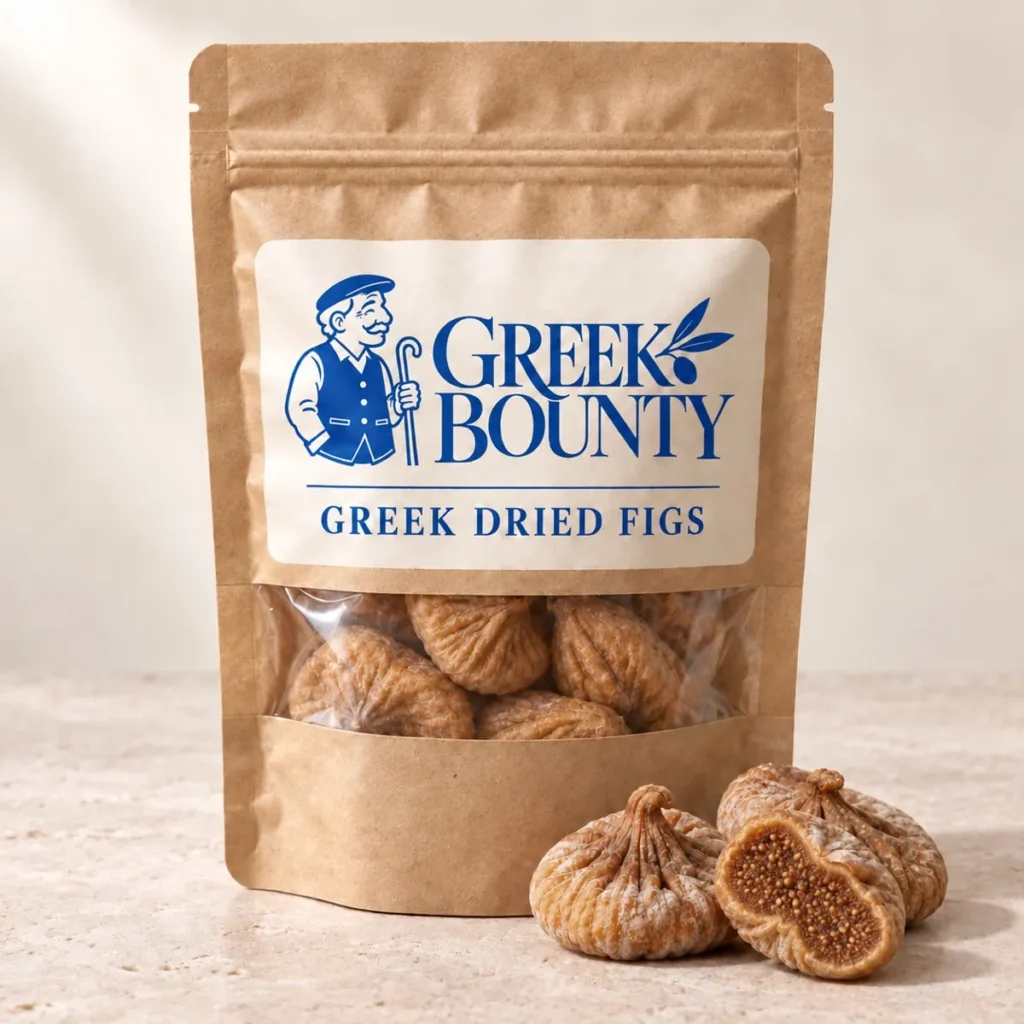
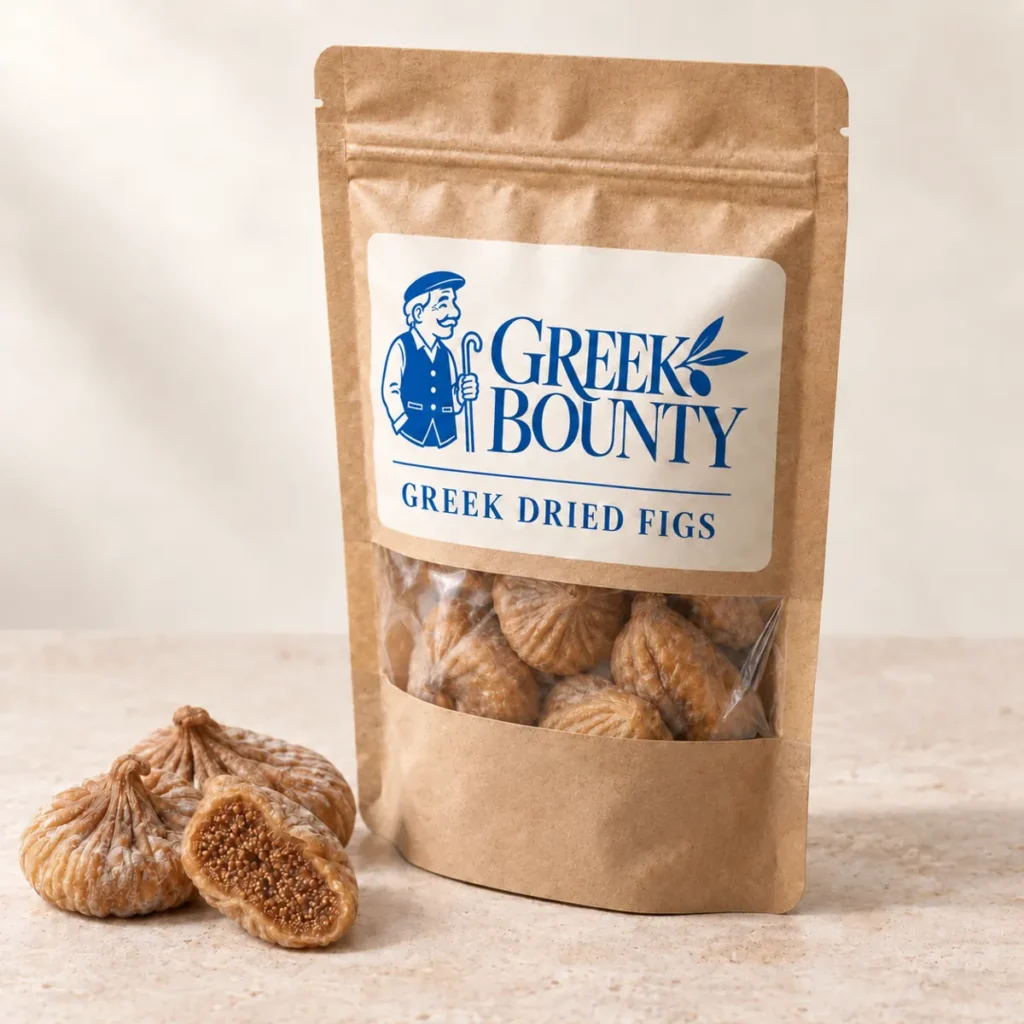
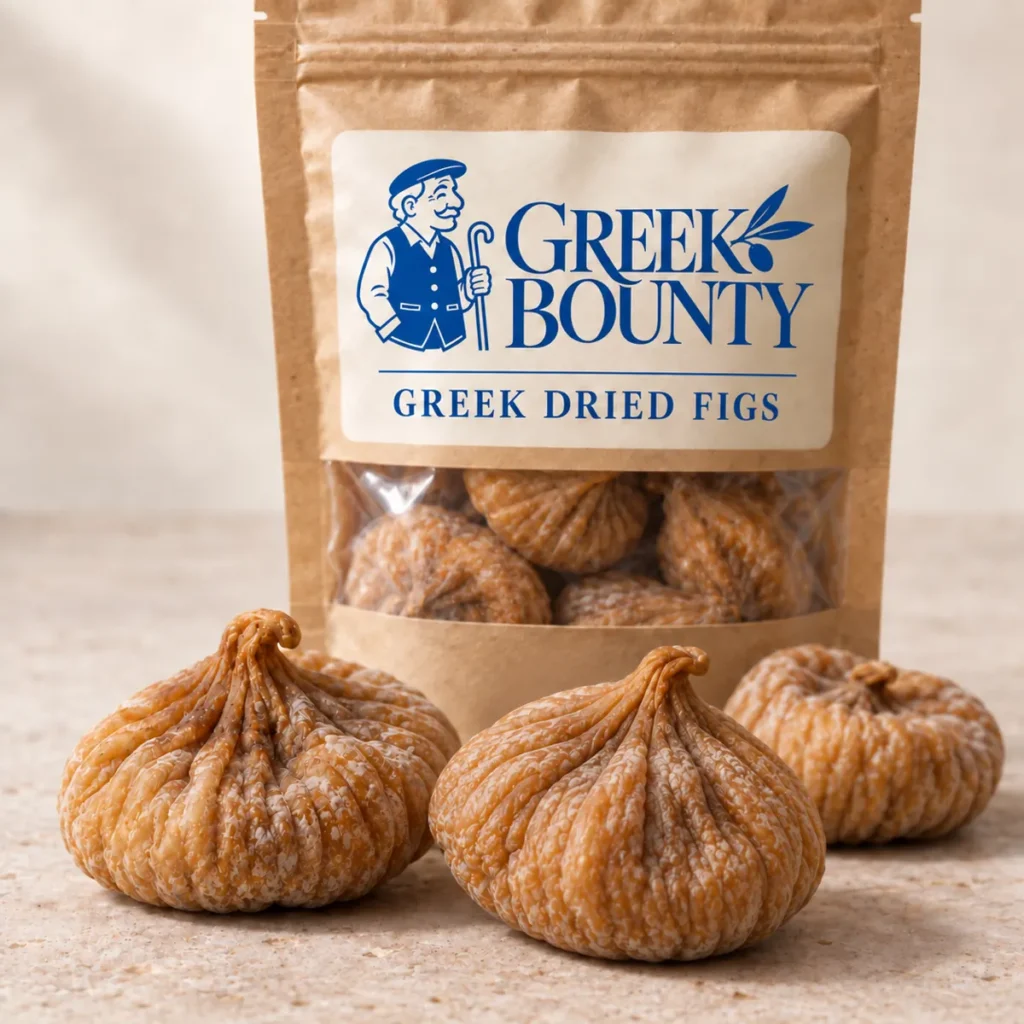

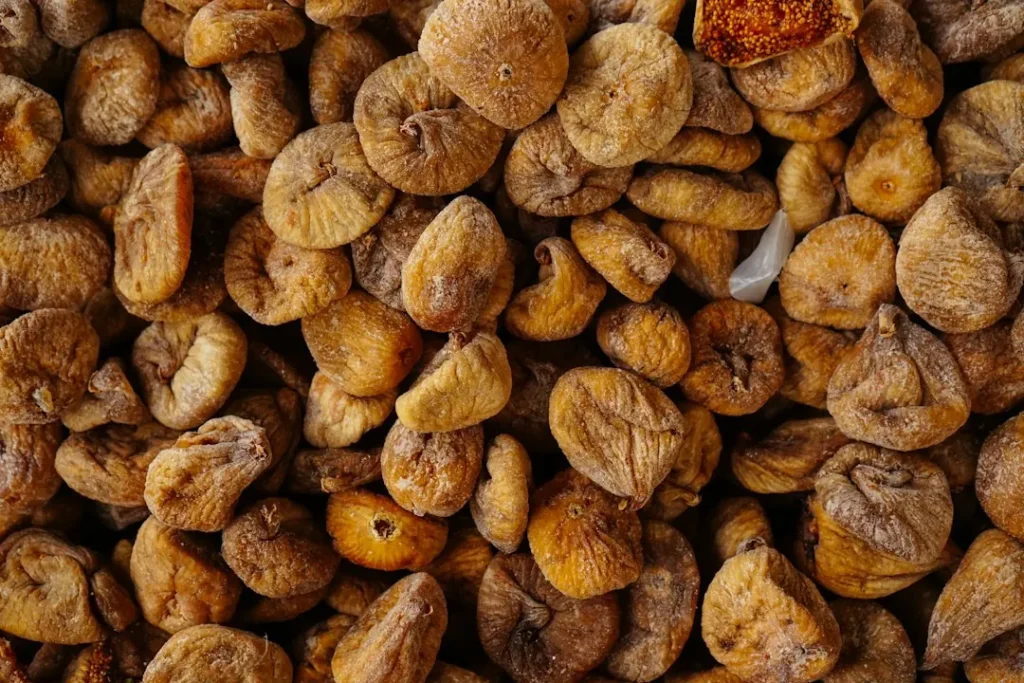
Packaging previews · Ingredient photographs follow.
Image 4. Photo by Amit Rana on Unsplash. Resized and cropped for display.
Image 5. Photo by Tom Hermans on Unsplash. Resized; display may be cropped.
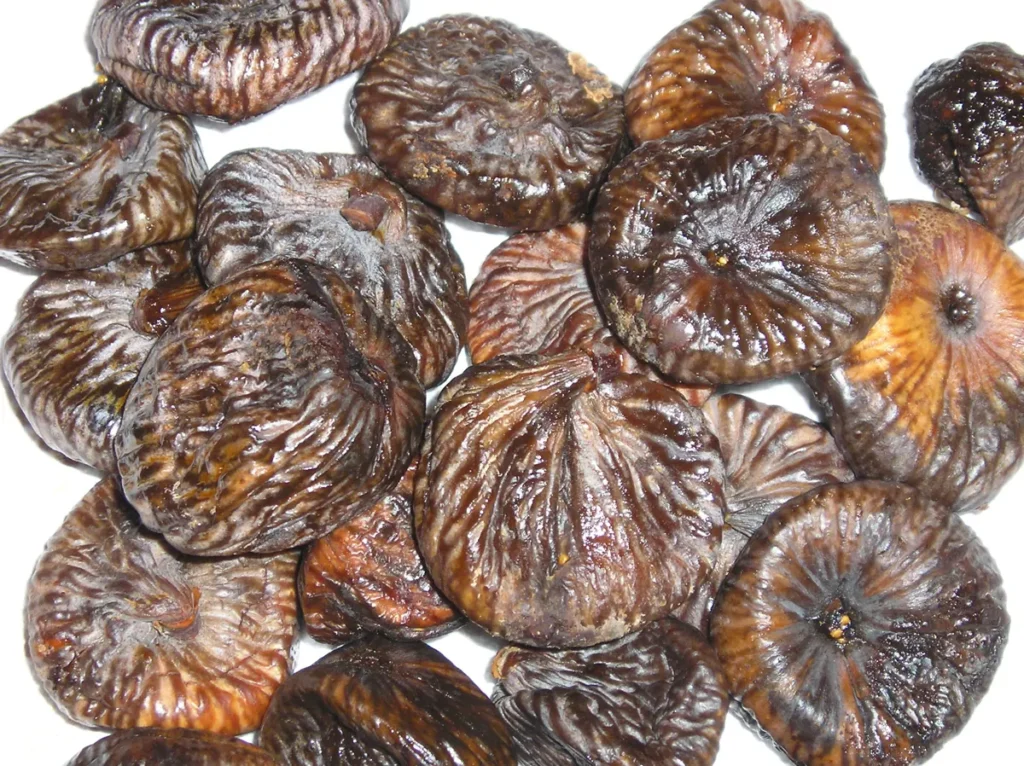
Image 6. Dried figs. Photo: Chefallen · CC BY-SA 3.0. Display may be resized or cropped.
AI-generated packaging and serving illustrations, not photographs of the product. The pack label is the authority for product details.
A pantry pleasure with a place from breakfast to the cheese board.
Some sweetness asks for nothing more than a small plate and a little time. Dried figs offer the pleasure of fruit with another kind of depth: a yielding bite, the delicate crunch of seeds, and a richness that sits beautifully beside sharp cheese or dark coffee. They belong as naturally on a generous dinner table as in a quiet afternoon pause. A few thoughtful pairings are enough to turn them into a small occasion.
Greece’s fig story has distinct regional chapters. Kalamata and Messinia are closely associated with sun-dried figs, a tradition that carries summer’s fruit into the pantry. Kymi, on Evia, has a different signature: its royal white figs are known for delicate skin and a soft texture. In the local drying tradition, split figs are joined in pairs to make askades. Such details make a regional ingredient memorable—different fruit, different preparation, a different pleasure at the table.
Serve dried figs with walnuts and a firm cheese, slice them into a salad with peppery leaves, or chop them into a savory pan sauce. For an effortless final course, put them beside yogurt and let the contrast do the work. Our dried figs celebrate this versatile pantry pleasure: fruit that can move from breakfast to the cheese board without losing its character. Start with a simple pairing, then follow your appetite.
US shipping $8, free on orders of $75+. UK delivery available. Shipping & Returns
Messinia and Evia both have important dried-fig traditions, with Kymi offering a distinct regional story within Evia. These place names invite comparison rather than a promise that all fruit shares one texture. How figs are prepared, dried and packed affects the way they fit a recipe. A pack intended for a sharing plate may suit you differently from fruit you plan to chop or soften for cooking. Check the final ingredients and product description instead of assuming a named region means one drying method or an additive-free recipe. Then let the fruit’s own texture guide the way you serve it.
Find its perfect pantry pairing →Pair dried figs with walnuts and a firm, savory cheese.
Explore the fig traditions of Messinia and Evia, including Kymi.
Slice figs into salads or chop them into a pan sauce.
Serve with yogurt and let contrasting textures do the work.
Add sliced figs to a cheese or grain plate.
Fold chopped figs into an appropriate loaf or cookie recipe.
Drying turns a seasonal harvest into a versatile pantry pleasure.
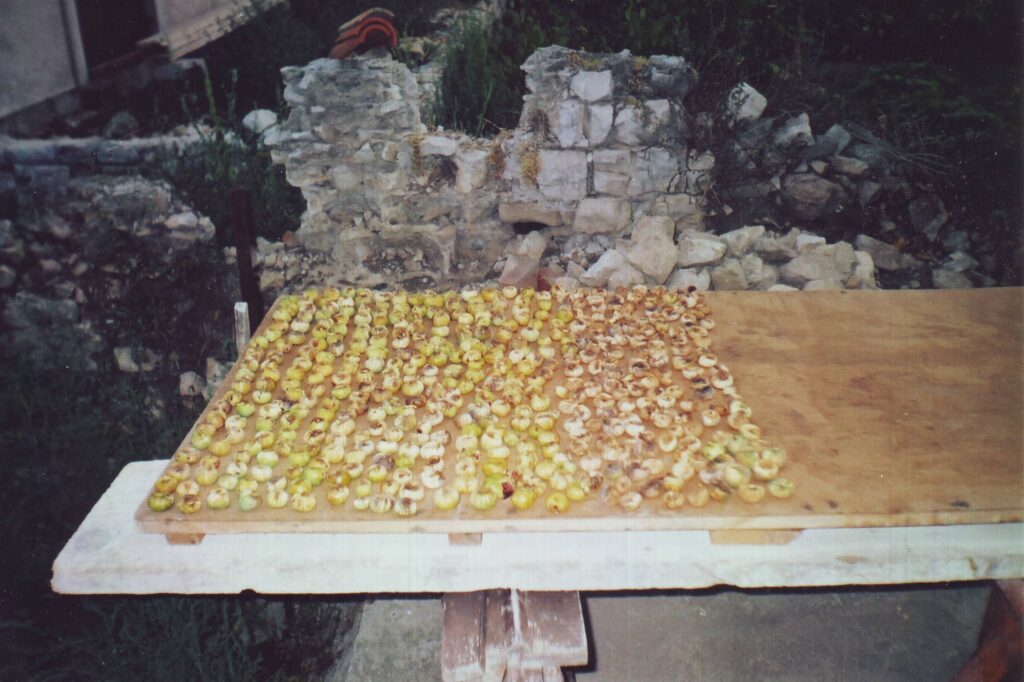
In Greek fig-growing traditions, mature fruit is gathered and selected for drying. Messinia and Evia, including Kymi, are among the regions associated with this craft.
Sun drying is a traditional way to preserve the crop. Preparation varies; some regional methods split figs before drying and join the dried fruit in pairs.
Drying creates a different eating experience from fresh fruit. Serve figs with walnuts and cheese, slice them into a salad, or chop them into a savory sauce.
A small plate of figs and firm cheese is an effortless way to explore their contrasting characters.
Fresh fruit offers a different texture and seasonal experience. Dried figs bring a pantry-ready form suited to slicing, pairing, and cooking.
A plain dried fig and a coated or filled fig are different foods. Check the ingredients to understand the preparation.
From the first taste to the last thoughtful touch.
Dried fruit can be part of a varied eating pattern, and figs bring sweetness to both savory and sweet dishes. Fruit can contribute dietary fiber; the amount in a particular fig product should come from its Nutrition Facts, not a category-wide promise. Naturally occurring fruit sugars differ from added sugars, but portions and overall energy intake still matter. Check ingredients for coatings or added sweeteners. Enjoy figs alongside other foods, such as plain yogurt or a small cheese selection, without treating them as a circulation remedy.
Simple ideas. Your own delicious ritual.
AI-generated ingredient and serving illustrations; images are not photographs of the recipes below.
Slice figs over yogurt and finish with a little honey.
Serve a small portion beside a cup of Greek coffee.
Combine chopped figs with leaves, grains and a lemon-oil dressing.

Inspired by the olive-growing landscapes of Laconia and Mani, and the rich pantry traditions of Crete. Greek Bounty is taking shape around useful ingredients and the pleasure of sharing good food.
Read how the Greek Bounty pantry is taking shape, and explore our ingredient guides.
Get to know Greek Bounty →These notes describe the ingredient category. See each product page and its pack label for ingredients, allergens, pack size and storage.
Discover complementary collections.
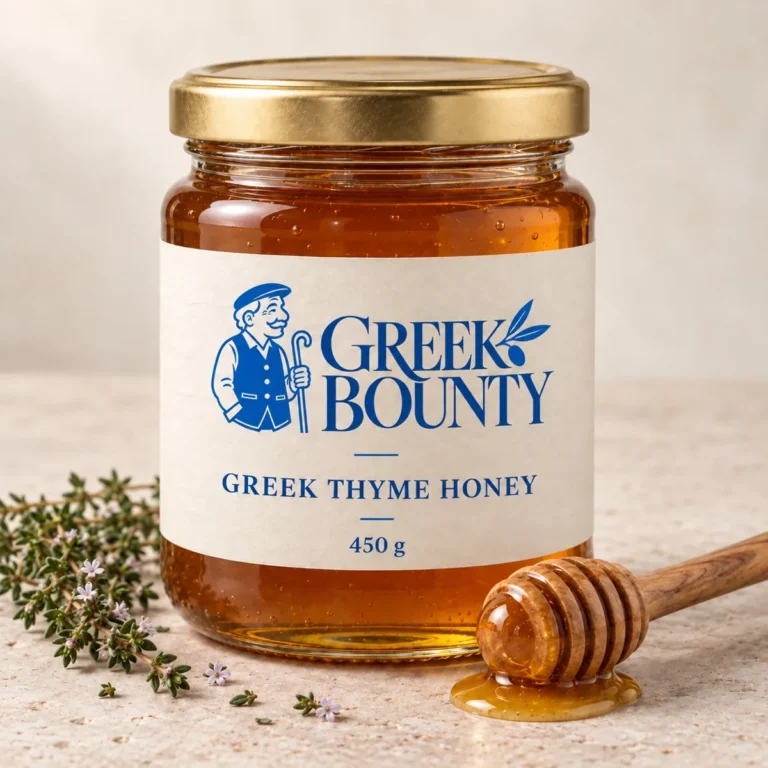 FOR YOUR PANTRY
Packaging preview.
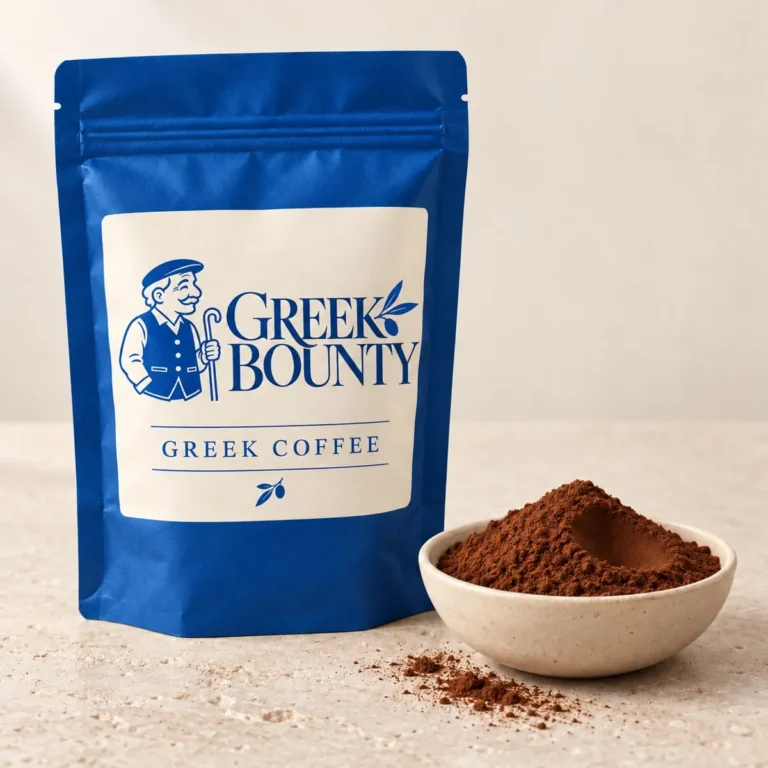 FOR YOUR PANTRY
Packaging preview.
 FOR YOUR PANTRY
Packaging preview.
Clear answers, without the guesswork.
No. Our Greek dried figs come in a 200 g (7 oz) pack.
The label on the pack you receive has the complete ingredients and storage directions.
Yes. They can be chopped into recipes or softened when a recipe calls for it. Adjust preparation to the fruit and follow the pack instructions.
Prices and US & UK shipping are live. Card checkout is being connected — email info@olympianllc.com to place an order.
US standard shipping is $8.00, and free on orders of $75 or more. UK delivery is $9.32, and free on orders of $89.90 or more.
Practical answers for choosing, preparing and enjoying it.
Original ingredient notes by Greek Bounty · Updated October 3, 2026. General serving ideas, not supplier-specific instructions.
