
Greek Olive Types: Kalamata, Halkidiki, Konservolia and Throumba
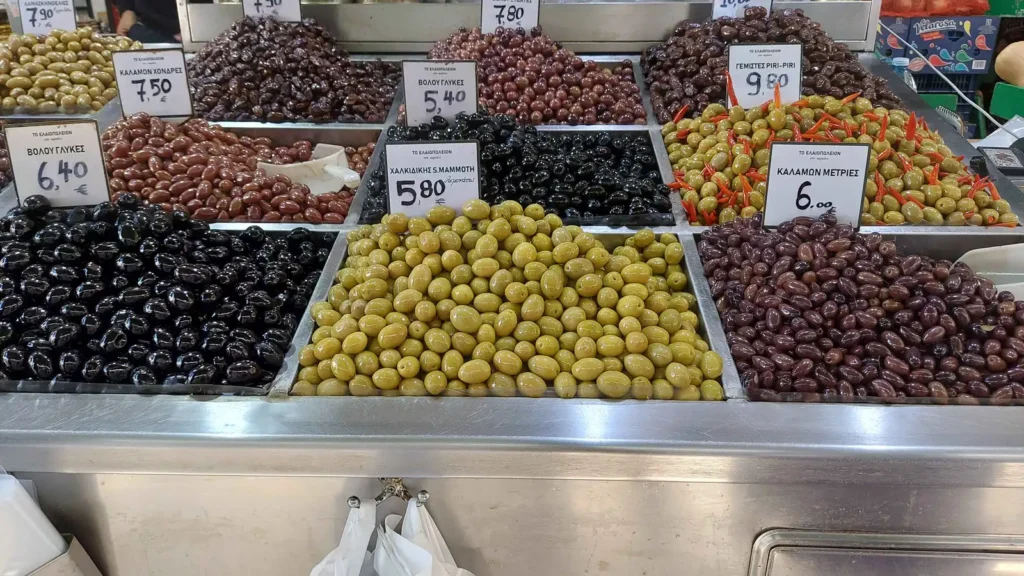

Greece grows many kinds of olives, and several of its table olives have protected names in the EU. This guide covers the ones you are most likely to see in a shop or on a meze plate: Halkidiki olives, Kalamata, Konservolia, Throumba and Megaritiki. Each is defined by its variety, where it grows and how it is cured.
Quick comparison
| Olive | Colour when sold | Typical cure | Character |
|---|---|---|---|
| Halkidiki (Chalkidiki) | Bright green to greenish-yellow | Green olives in brine | Very large, fleshy, slightly bitter and spicy |
| Kalamata | Deep purple to brown-black | Ripe olives in brine, often slit | Fruity, firm, almond-shaped |
| Konservolia (Conservolea) | Green or black | Green or ripe, in brine | Plump and versatile |
| Throumba | Black and wrinkled | Ripens on the tree; often dry-salted | Soft, intense, less bitter |
| Megaritiki | Black, wrinkled when dry-salted | Dry salt | Salty and concentrated |
Halkidiki olives
Halkidiki (also spelled Chalkidiki) olives come from the Chalkidiki peninsula in northern Greece. Their protected name, Prasines Elies Chalkidikis (“green olives of Chalkidiki”), was registered as a protected designation of origin (PDO) in the EU on 23 May 2012. According to the product specification, as published by GOV.UK, they are made from the Chondrolia Chalkidikis and Chalkidiki varieties.
The specification describes large fruit with a high proportion of flesh to stone, a bright green to greenish-yellow colour, and a slightly bitter, spicy taste. They are sold whole, pitted, crushed or stuffed, with fillings such as almond, red pepper, carrot, gherkin or garlic, and may be flavoured with herbs such as oregano, thyme or bay. Their size makes them the classic olive for stuffing and for serving with drinks.
Kalamata olives
Kalamata olives are almond-shaped, deep purple olives from the Peloponnese. Elia Kalamatas was among the first Greek names registered as a PDO in 1996. The IOC describes them as being processed like Greek-style black olives, fermented in brine, and notes that they are often slit so the brine can get in. We cover them in depth in our Kalamata vs black olives and Kalamata olives nutrition guides.
Konservolia (Conservolea)
Konservolia is a widely grown Greek table olive that can be sold green or black. The IOC names Conservolea as the variety commonly used for Greek-style naturally black olives. Several place names are protected in the EU: Konservolia Amfissis, Atalantis, Rovion and Stylidas are PDOs, and Konservolia Artas is a PGI (protected geographical indication).
Throumba olives
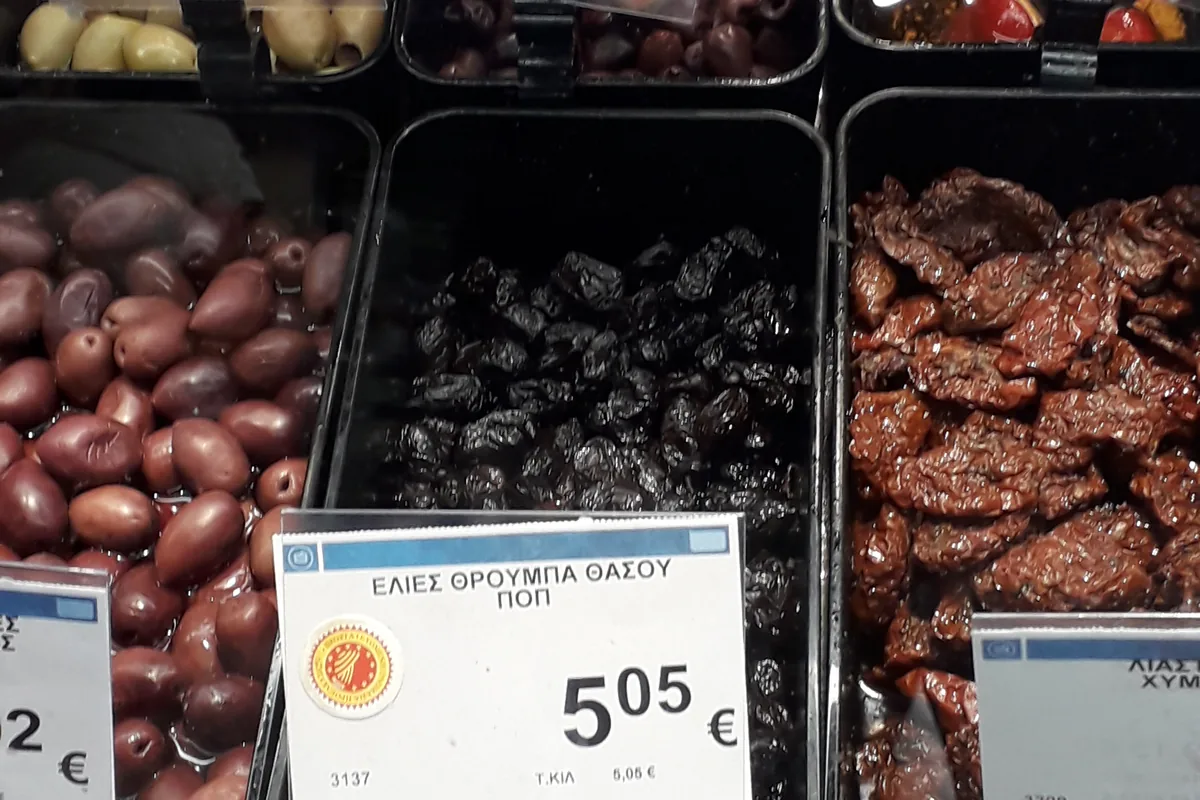
Throumba (Thrubolea) olives are unusual because they lose much of their bitterness while still on the tree, so they ripen sweeter, as the IOC notes. They are black and wrinkled and are often dry-salted. Three are protected in the EU as PDOs: Throumba Thassou (Thasos), Throumba Chiou (Chios) and Throumba Abadias Rethymnis Crete.
Megaritiki and dry-salted olives
Megaritiki is another Greek variety, and the IOC gives it as an example of olives cured with dry salt, at around 15% salt, which leaves them wrinkled and concentrated. Dry-salted olives are often dressed with olive oil and oregano before serving.
What about Koroneiki?
Koroneiki is Greece’s best-known oil olive. The fruit is small and is grown mainly for olive oil rather than for the table. Read more in our Koroneiki olive oil guide.
How to choose and use Greek olives
- For a big, crunchy olive to serve with drinks or stuff, choose Halkidiki.
- For a Greek salad, dakos or tapenade, choose Kalamata.
- For a rich, intense olive with bread and oil, try wrinkled Throumba.
- For a mixed bowl, combine colours and marinate them: see our marinated olives recipe.
Colour alone doesn’t tell you the variety; see green olives vs black olives for why, and olive brine for using the liquid in the jar. Browse our Kalamata olives and the Kalamata olive collection.
Sources
- GOV.UK: Prasines Elies Chalkidikis (Chalkidiki green olives), protected food name
- EUR-Lex: Commission Regulation (EC) No 1107/96 (registers Elia Kalamatas as a PDO)
- EUR-Lex: Commission Regulation (EC) No 1263/96 (registers Konservolia and Throumba table olive names)
- International Olive Council: Table olives (harvest stages and curing methods)
Greek olive types: frequently asked questions
What are Halkidiki olives?
Large green olives from the Chalkidiki peninsula in northern Greece, made from the Chondrolia Chalkidikis and Chalkidiki varieties. Their name has been an EU protected designation of origin since 2012.
Are Halkidiki olives green or black?
They are sold as green olives, bright green to greenish-yellow, often whole, pitted or stuffed.
What is the most famous Greek olive?
Kalamata is the best known abroad. Halkidiki, Konservolia and Throumba are also widely eaten in Greece.
Why are some Greek olives wrinkled?
Wrinkled olives such as Throumba or Megaritiki are usually very ripe and dry-salted, which draws out water and concentrates the flavour.

Good things from our land, ideas for your table.
Explore the pantry journal →