
Olive Oil vs Vegetable Oil: What’s the Difference in the Kitchen?
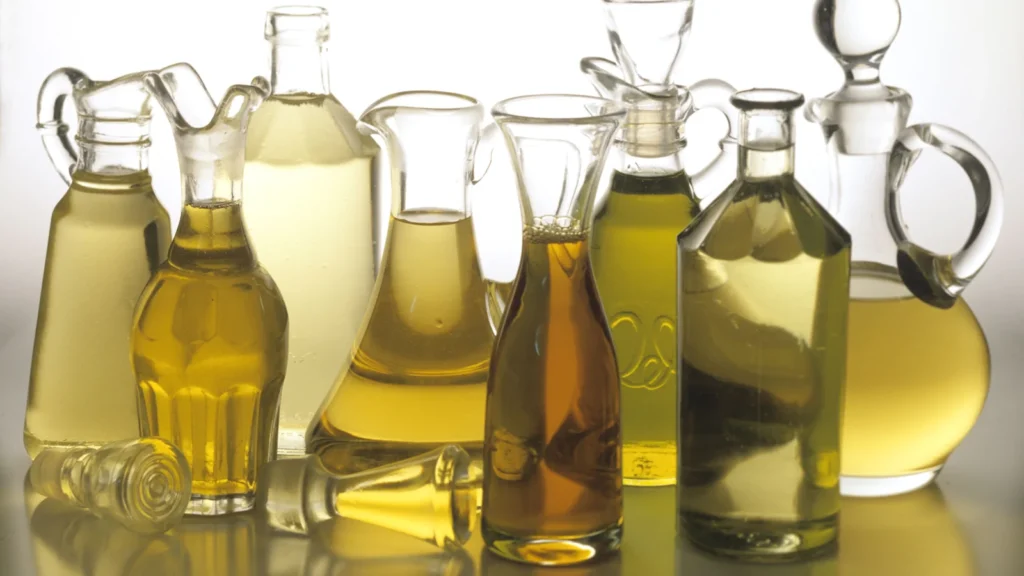

Olive oil and vegetable oil can often stand in for each other, but they come from different plants, are made differently and taste very different. Here is a straightforward kitchen comparison: what is in the bottle, how each behaves when heated, what USDA data shows about their fats, and which to use for frying, baking and dressings. It is a cooking guide, not dietary advice.
What is vegetable oil?
“Vegetable oil” is a general name for a refined oil pressed or extracted from plant seeds. According to the North American Olive Oil Association (NAOOA), the oil sold under that name is usually mostly soybean oil but can include canola, corn or cottonseed oil. Seed oils are typically extracted with heat and solvents and then refined, bleached and deodorised, which leaves a pale oil with almost no flavour. The ingredients list on the bottle tells you which oils are inside.
What is olive oil?
Olive oil comes from the fruit of the olive tree, not from a seed. Olives are crushed into a paste and the oil is separated mechanically. Extra virgin olive oil is unrefined and must pass chemical and taste tests for its grade. Bottles labelled simply “olive oil” or “light-tasting” contain refined olive oil blended with some virgin oil, so they taste much milder. Our guide to extra virgin vs virgin and refined olive oil explains the grades.
Side by side
| Extra virgin olive oil | Refined (“light”) olive oil | Vegetable oil | |
|---|---|---|---|
| Source | Olive fruit | Olive fruit | Seeds (often soybean) |
| Processing | Mechanical, unrefined | Refined, blended with virgin oil | Usually solvent-extracted and refined |
| Flavour | Fruity, grassy, sometimes bitter or peppery | Mild | Neutral |
| Smoke point | 350–410°F (177–210°C) | 390–470°F (199–243°C) | About 460°F (238°C), as quoted by the NAOOA |
| Typical cost | Highest | Moderate | Usually lowest |
USDA fat profiles
All of these oils are almost 100% fat, with about 884 calories per 100 g (corn oil is listed at 900), or roughly 120 calories per tablespoon. Where they differ is the type of fat. Here are the USDA figures for olive oil and three oils commonly sold as, or blended into, vegetable oil:
| Per 100 g | Olive oil | Soybean oil | Canola oil | Corn oil |
|---|---|---|---|---|
| Energy | 884 kcal | 884 kcal | 884 kcal | 900 kcal |
| Saturated fat | 13.8 g | 15.6 g | 7.4 g | 12.9 g |
| Monounsaturated fat | 73.0 g | 22.8 g | 63.3 g | 27.6 g |
| Polyunsaturated fat | 10.5 g | 57.7 g | 28.1 g | 54.7 g |
| Vitamin E (alpha-tocopherol) | 14.4 mg | 8.2 mg | 17.5 mg | 14.3 mg |
| Vitamin K (phylloquinone) | 60.2 µg | 184 µg | 71.3 µg | 1.9 µg |
The headline difference is that olive oil is mostly monounsaturated fat (mainly oleic acid), while soybean and corn oil are mostly polyunsaturated. Canola sits in between. For more detail, see our olive oil nutrition facts. If you have questions about fats in your own diet, a registered dietitian or doctor is the person to ask.
Cooking: which oil for which job?
| Job | Good choice | Why |
|---|---|---|
| Salad dressings, dips, drizzling | Extra virgin olive oil | You taste it; it carries flavour, as in a Greek salad dressing |
| Sautéing and roasting | Either | Average stovetop cooking is about 350°F (177°C), within the range of both |
| Deep frying | Refined olive oil or vegetable oil | Higher smoke point, lower cost for a large volume |
| Neutral baking (sponge, chiffon cake) | Light olive oil or vegetable oil | Little flavour of its own |
| Flavourful baking | Extra virgin olive oil | Adds fruitiness, as in olive oil cake |
The NAOOA also notes that smoke point alone is not the best guide to how an oil behaves under heat, and that the oil in a pan is usually cooler than the burner because the food absorbs heat. Whatever oil you use, heat it until it shimmers, and if it starts to smoke, take the pan off the heat. Our olive oil smoke point guide goes into more detail.
Can I use olive oil instead of vegetable oil?
Yes. The NAOOA says olive oil or extra virgin olive oil can replace vegetable oil in any recipe at a 1:1 ratio; the only real change is flavour. For a neutral result, choose a light-tasting olive oil. For brownies, chocolate cake or citrus cakes, many bakers like the flavour of extra virgin. The swap works the other way too: vegetable oil can replace olive oil 1:1 in cooking, though a dressing will lose the fruity taste.
Replacing butter is a different calculation, because butter contains water: see olive oil vs butter for the conversion chart.
Storing cooking oils
Light, heat and air change any oil over time. Keep bottles closed, away from the stove and out of the sun, and buy a size you will finish within a few months of opening. For olive oil specifically, read does olive oil go bad? and olive oil tins vs glass bottles.
Explore our Greek olive oil collection, including Rapti Koroneiki extra virgin olive oil, or use it in a simple bread dipping oil.
Sources
- North American Olive Oil Association: Can I substitute olive oil for vegetable oil?
- North American Olive Oil Association: Olive oil vs vegetable oil
- North American Olive Oil Association: Olive oil smoke point
- USDA FoodData Central: Oil, olive, salad or cooking (FDC ID 171413)
- USDA FoodData Central: Oil, soybean, salad or cooking (FDC ID 171411)
- USDA FoodData Central: Oil, canola (FDC ID 172336)
- USDA FoodData Central: Oil, corn, industrial and retail, all purpose salad or cooking (FDC ID 171029)
Olive oil vs vegetable oil: frequently asked questions
Can I use olive oil instead of vegetable oil for baking?
Yes, at a 1:1 ratio. Choose a light-tasting olive oil for a neutral flavour, or extra virgin if you want to taste the oil.
What is vegetable oil made of?
Usually mostly soybean oil, sometimes blended with canola, corn or cottonseed oil. Check the ingredients list on the bottle.
Which has a higher smoke point, olive oil or vegetable oil?
Refined vegetable oil is often quoted at around 460°F (238°C). Refined olive oil is 390–470°F (199–243°C) and extra virgin 350–410°F (177–210°C), according to the NAOOA.
Do olive oil and vegetable oil have the same calories?
Almost. USDA lists olive, soybean and canola oil at 884 calories per 100 g, about 120 per tablespoon.

Good things from our land, ideas for your table.
Explore the pantry journal →