
Greek Salad Dressing Recipe: Olive Oil, Vinegar & Oregano
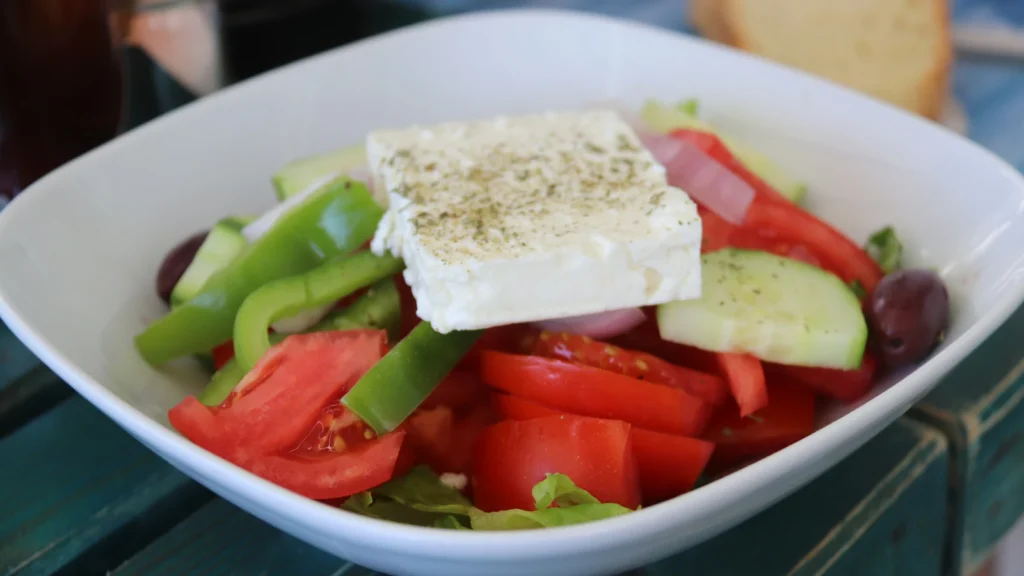
A good Greek salad dressing is mostly olive oil. Add a splash of red wine vinegar, a pinch of dried Greek oregano and some salt, shake, and it’s ready in five minutes. This recipe gives you a reliable ratio, a few optional extras and the simplest way of all: dressing the salad straight in the bowl.

Greek salad dressing recipe
Makes: about ½ cup (120 ml), enough for a large salad for 4. Time: 5 minutes.
Ingredients
- 6 tbsp (90 ml) extra virgin olive oil, such as our Rapti Koroneiki olive oil from Messinia
- 2 tbsp (30 ml) red wine vinegar
- 1 tsp dried Greek oregano, rubbed between your fingers
- ¼ tsp fine sea salt, plus more to taste
- A few turns of black pepper
- Optional: 1 small garlic clove, finely grated
- Optional: 1–2 tsp lemon juice, for a brighter dressing
- Optional: ½ tsp honey, if your vinegar is sharp
Method
- Put the vinegar, salt, oregano, pepper and any garlic in a jar. Stir and leave for 2–3 minutes so the salt dissolves and the oregano softens.
- Add the olive oil, close the lid and shake hard for 15 seconds, until the dressing looks cloudy.
- Taste it on a piece of tomato or cucumber, not from a spoon. Add more salt or a few drops of vinegar if it tastes flat.
- Dress the salad just before serving, and toss gently.
The ratio that matters
The recipe uses 3 parts oil to 1 part vinegar, a common starting point for vinaigrette. Tomatoes and cucumbers release juice, so a Greek salad needs less acid than a leafy salad. If you prefer a sharper dressing, move towards 2 parts oil to 1 part vinegar. Salty additions, such as feta and Kalamata olives, mean you can use less salt in the dressing.
The simplest way: dress it in the bowl
For a traditional village salad (horiatiki), you don’t have to make a dressing at all. Many Greek cooks salt the tomatoes and cucumber, pour over olive oil and a little vinegar, scatter dried oregano over the feta and toss at the table. The juices from the tomatoes finish the dressing for you. Use the jar method when you want to make the dressing ahead or use it on other salads.
Choosing the ingredients
- Olive oil: the dressing is mostly oil, so use one you enjoy tasting raw. Our guide to choosing Greek olive oil explains what the label tells you, and Koroneiki olive oil covers Greece’s most widely grown oil olive.
- Oregano: dried Greek oregano is bold, so start with 1 tsp. See Greek vs Italian oregano if you’re swapping.
- Vinegar: red wine vinegar is the usual choice. White wine vinegar or lemon juice also work; for an all-lemon version, see our lemon vinaigrette.
- Salt: fine salt dissolves faster in the vinegar than flakes. Save flakes for the top of the feta. Read sea salt flakes vs ground sea salt.
Storing the dressing
Without garlic, the dressing keeps in a closed jar in the fridge for up to a week. With fresh garlic, make it on the day. Olive oil thickens or turns cloudy when it is cold, so take the jar out 15–20 minutes before you need it and shake again.
More ways to use it
- Spoon it over warm potatoes, beans or grilled vegetables.
- Use it as a quick marinade for chicken or halloumi.
- Drizzle it over a simple Greek mezze plate.
- Make a herb-heavy version for meat with our Greek seasoning recipe.
Find more oils and serving ideas in our Greek extra virgin olive oil collection.
Greek salad dressing: frequently asked questions
What is Greek salad dressing made of?
A classic Greek salad dressing is extra virgin olive oil, red wine vinegar, dried oregano, salt and pepper. Some cooks add garlic, lemon juice or a little honey.
What is the ratio of oil to vinegar in Greek dressing?
Start with 3 parts olive oil to 1 part red wine vinegar. For a sharper dressing, use 2 parts oil to 1 part vinegar.
Do Greeks put dressing on Greek salad?
A village salad is often dressed straight in the bowl with olive oil, a little vinegar, salt and dried oregano, rather than with a pre-mixed dressing.
How long does homemade Greek dressing keep?
Without fresh garlic, up to a week in a closed jar in the fridge. With fresh garlic, make it on the day you serve it.

Good things from our land, ideas for your table.
Explore the pantry journal →