
Filtered vs Unfiltered Greek Olive Oil: What the Label Means
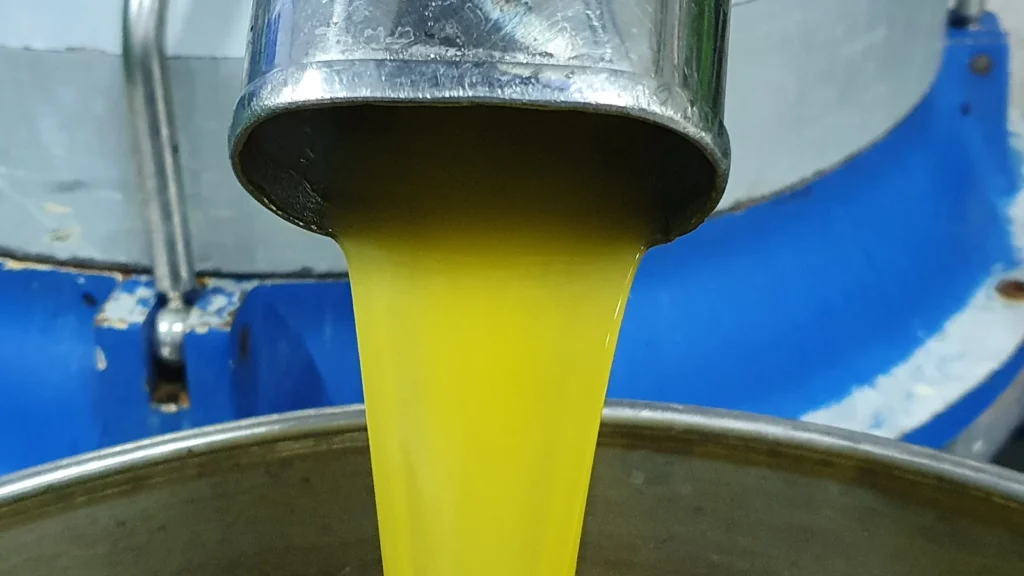

Filtered vs unfiltered Greek olive oil is a question about a production step, not a choice between two grades. Filtration removes remaining suspended material after extraction. Unfiltered oil has not undergone that step and may retain fine particles and moisture. Neither word, by itself, tells you the bottle’s complete quality or flavor.
The practical choice is less dramatic than the labels sometimes suggest. Read the oil category first, then consider dates, producer guidance and how you will use the bottle. Cloudiness can be visually interesting, but it is not a substitute for information.
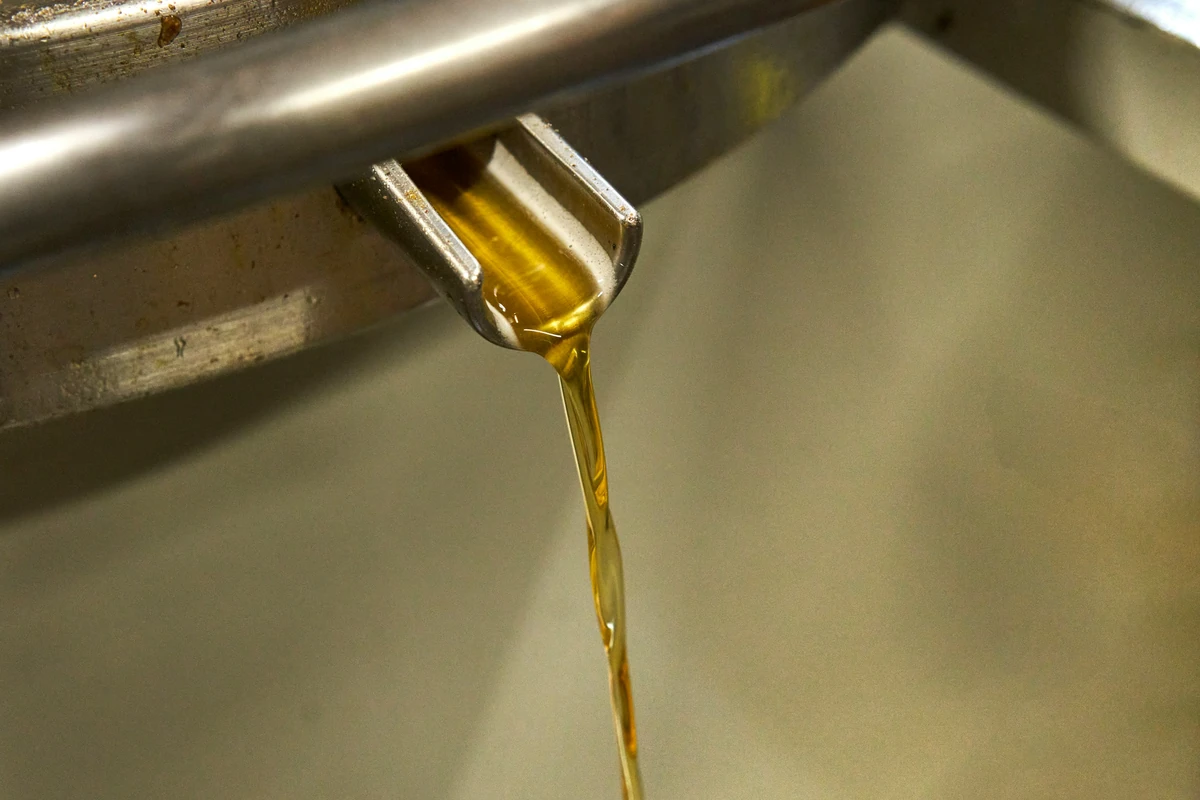
What filtration changes
The International Olive Council’s storage guidance recommends filtration to remove suspended water and solid microparticles. It describes this as a way to reduce reactions that can compromise an oil’s initial quality during storage. The purpose is to manage what remains suspended in the oil, rather than to turn it into a different ingredient.
A producer can also let oil settle and separate it from deposited material. Terms such as filtered, unfiltered and naturally settled therefore deserve their own explanation. If a label gives only a broad phrase, ask what the producer means instead of imagining the entire milling process.
The useful distinction is between production information and an appearance you observe at home. An explicitly declared filtering method is information. A hazy bottle is an observation that needs context.
Filtered does not mean refined
These words describe different things. The IOC’s definition of virgin olive oil expressly allows filtration among the permitted physical handling steps. Filtered oil can therefore belong to the extra virgin category; filtration does not automatically make it refined oil.
Read the full category on the label. An oil labeled extra virgin must meet the requirements of that category, regardless of whether a producer describes it as filtered or unfiltered. “Unfiltered” is not an additional quality grade above extra virgin.
This distinction is especially helpful when comparing two bottles. If their categories differ, you are changing more than filtration. Keep the comparison focused before drawing a conclusion.
Do not let cloudiness make the decision
Clear and cloudy are easy words to notice, which makes them tempting shortcuts. Yet a bottle’s look does not give you a chemical analysis, its handling history or a professional sensory assessment. Do not treat visible sediment as a guarantee of freshness, or clarity as proof that flavor has been removed.
If a bottle changes unexpectedly, follow its storage directions and ask the producer about the specific product. An article cannot identify unknown material in your bottle from a description of filtration alone.
You can still enjoy comparing appearances. Simply keep that observation separate from claims about purity, quality or the exact composition of an oil.
Think about the pace of your kitchen
Before choosing a bottle, estimate how often you actually use olive oil. A household that dresses salads and finishes cooked food daily has a different routine from someone who opens a specialty bottle occasionally. Pick a size that matches that routine rather than buying for an imagined one.
For an unfiltered bottle, pay particular attention to any producer advice about when to use it and how to store it. There is no single consumer shelf-life number you can safely infer from the word unfiltered. Filtered oil also deserves careful handling; its label is not permission to keep it beside the stove.
The IOC advises protecting olive oil from heat, air and light. Close the container after pouring and choose a suitable cupboard. Those habits remain relevant whichever filtering method is stated.
Compare flavor with a fair setup
If you have two bottles, try small amounts on the same plain food and at the same temperature. Record what you prefer. Keep the salt, bread or vegetable constant so that the comparison stays about the oil.
If the oils come from different producers, varieties or harvests, your preference concerns those two bottles as a whole. You cannot isolate the effect of filtration by changing everything else at the same time. A valid kitchen preference does not need to become a universal production claim.
This is an informal tasting exercise, not a Greek Bounty test result or a way to certify either bottle.
A focused label checklist
Write down the category, declared origin, filtering description if supplied, harvest or product dates actually given, and storage guidance. Leave an empty space when a fact is missing. Then add your intended use and the size you expect to finish comfortably.
For the broader selection process, use our guide to choosing Greek olive oil. This comparison adds one production question to that checklist rather than replacing it.
Explore the Greek olive oil collection and rely on each product’s own details. Choose the bottle whose information, handling requirements and flavor fit your kitchen. A filtering label should make the choice clearer, not carry the whole decision.
Related guides and sources
Filtration is one part of the choice. Next, compare tin and glass packaging, then bring the details together in our Greek olive oil buying guide. For missing product information, send a focused product enquiry.
International Olive Council: storage and filtration guidance
International Olive Council: oil definitions and storage
Nifolia: olive oil label checklist
Continue exploring this ingredient
Browse the olive oil guide library, then explore How to Compare Olive Oil Prices per Litre and Scaling Olive Oil in a Recipe Without Mixing Units. For a named producer and pack, see Rapti Koroneiki Olive Oil, Messinia — 500ml.

Good things from our land, ideas for your table.
Explore the pantry journal →