
Greek Salad Recipe (Horiatiki): The Traditional Village Salad
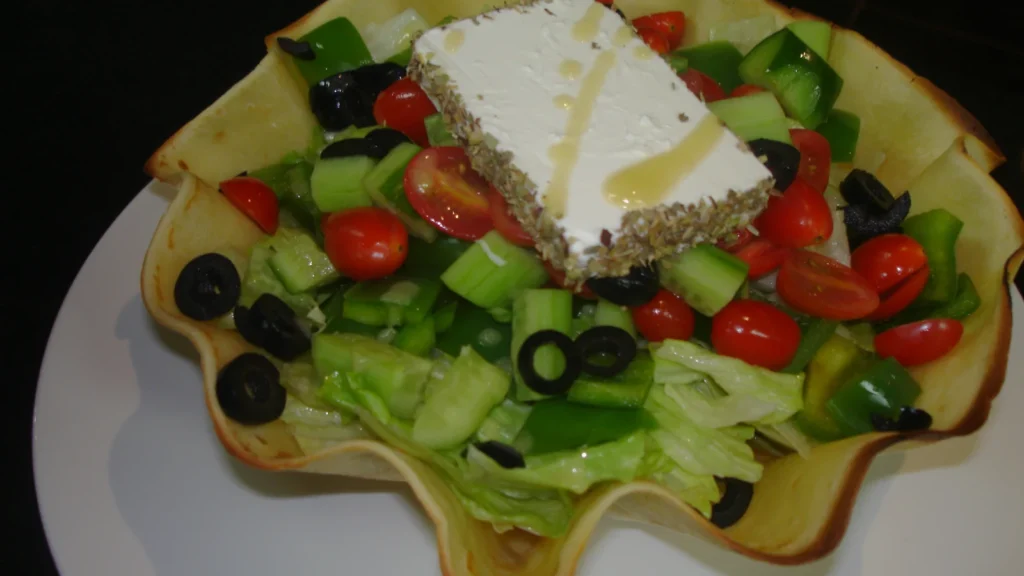

A real Greek salad, or horiatiki (village salad), has no lettuce. It is ripe tomatoes, cucumber, green pepper and onion, a handful of olives and a whole slab of feta, finished with dried oregano and plenty of olive oil. Because there are so few ingredients, each one matters. This recipe shows you how to build it, how to dress it the Greek way, and what to change when tomatoes aren’t at their best.
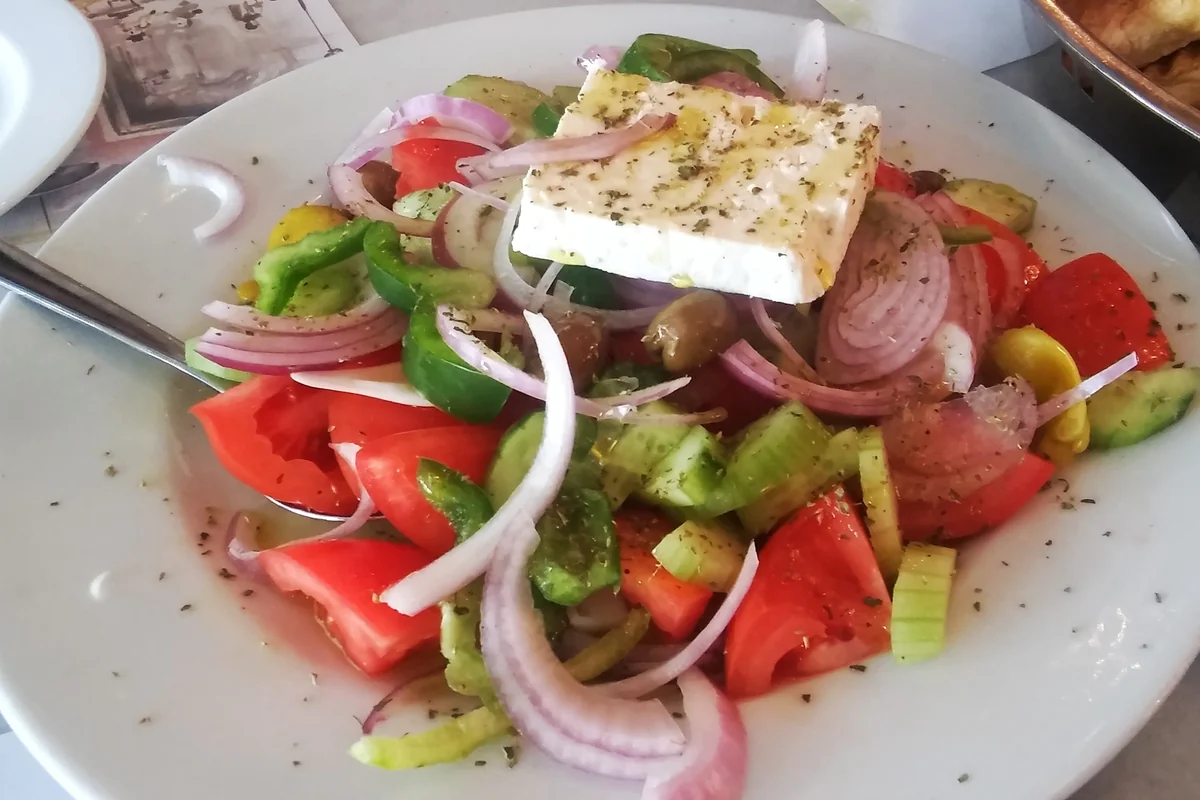
Greek salad recipe (horiatiki)
Serves: 4 as a side, 2 as a light lunch. Prep: 15 minutes. Cook: none. Total: 15 minutes.
Ingredients
- 4 ripe medium tomatoes (about 1¼ lb / 600 g), cut into wedges
- 1 cucumber, halved lengthways and cut into thick half-moons
- 1 green bell pepper, sliced into rings
- ½ small red onion, thinly sliced
- 12–16 Kalamata olives, such as our Kalamata olives in a 370 g jar
- 7 oz (200 g) block of feta
- 1 tsp dried Greek oregano
- 4–5 tbsp extra virgin olive oil
- 1–2 tsp red wine vinegar (optional)
- Fine sea salt, to taste
- Optional: 1 tbsp capers, rinsed
Method
- Put the tomatoes in a wide bowl and sprinkle with a pinch of salt. Leave for 5 minutes so they release some juice.
- Add the cucumber, pepper, onion and olives (and capers, if using). Toss gently.
- Drizzle with the vinegar, if using, then most of the olive oil. Toss again.
- Lay the block of feta on top. Crumble the oregano over the feta with your fingers.
- Finish with the rest of the olive oil and serve straight away, with bread for the juices.
What makes it a horiatiki
- No lettuce. Leafy salads exist in Greece, but the summer village salad is built on tomato and cucumber.
- A slab of feta, not crumbs. The block sits on top, and everyone breaks off their own piece.
- Dried oregano. Its flavour works well with tomato and feta. Our guide to Greek oregano explains why the Greek kind is so aromatic.
- Generous olive oil. It is the dressing. The juices from the tomatoes mix with it at the bottom of the bowl, which is why bread is never far away.
Choosing the ingredients
Tomatoes
Use the ripest tomatoes you can find. Salting them first draws out juice and seasons them from the inside. Out of season, cherry or plum tomatoes usually have more flavour than large salad tomatoes; halve them and salt them in the same way.
Feta
Feta is a protected designation of origin in the European Union. Under the registration, it is a Greek brined cheese made from sheep’s milk or a mix of sheep’s and goat’s milk. Cheese sold as feta outside the EU may be made differently, so check the label. A block stored in brine keeps its texture better than pre-crumbled feta.
Olives
Kalamata olives are the usual choice: purple-black, almond-shaped and fruity. If yours have stones, tell your guests. To compare them with other olives, read Kalamata vs black olives.
Olive oil
You’ll taste the oil raw, so use one you like on its own. A fruity extra virgin oil, such as our Koroneiki olive oil from Messinia, suits the salad well. Our guide to choosing Greek olive oil explains how to read the label.
Dressing: in the bowl or in a jar?
Traditionally, the salad is dressed straight in the bowl: salt, olive oil, an optional splash of vinegar and oregano. If you’d rather make the dressing ahead, or want to use it on other salads, follow our Greek salad dressing recipe. It uses about 3 parts oil to 1 part vinegar.
Variations
- Cretan style: serve it over barley rusks soaked briefly in water, as for dakos.
- With capers or caper leaves: common on the islands.
- With purslane: a summer green with a lemony crunch.
- As a pasta salad: toss the same vegetables, olives and feta with short pasta for our Greek pasta salad.
- Extra seasoning: a pinch of our homemade Greek seasoning in place of plain oregano.
Making it ahead
Greek salad is best eaten within an hour of making it, because the cucumber and onion soften as they sit. You can chop the vegetables a few hours ahead and keep them covered in the fridge, then salt, dress and add the feta just before serving. Don’t leave a dressed salad with cheese out at room temperature for more than 2 hours.
For a fuller table, serve it with dips and olives from our simple Greek mezze guide. For a more filling salad, try our Greek chickpea salad or Greek orzo salad. For the Cretan take on tomato, cheese and olives, served on a barley rusk, see our dakos recipe. Browse more Greek pantry recipes or the Greek olive oil collection.
Sources
- EUR-Lex: Commission Regulation (EC) No 1829/2002 registering Feta as a protected designation of origin
- USDA FSIS: “Danger Zone” (40°F–140°F)
Greek salad: frequently asked questions
What is in a traditional Greek salad?
Tomatoes, cucumber, green pepper, red onion, Kalamata olives and a block of feta, with dried oregano, salt and olive oil. There is no lettuce.
What is horiatiki?
Horiatiki means “village” salad. It’s the Greek name for the classic tomato, cucumber and feta salad.
Do you put vinegar on Greek salad?
It’s optional. Many cooks use only olive oil and the tomato juices, while others add a splash of red wine vinegar.
Can I make Greek salad ahead?
Chop the vegetables up to a few hours ahead and keep them covered in the fridge. Salt, dress and add the feta just before serving.

Good things from our land, ideas for your table.
Explore the pantry journal →