

Choosing Greek Olive Oil

Choosing Greek olive oil starts with a few practical questions: what does the label actually say, how will you use the oil, and what size suits your kitchen? Compare those details before relying on a beautiful bottle or a familiar place name. This guide brings the main choices together, with links to more detailed answers when you need them.
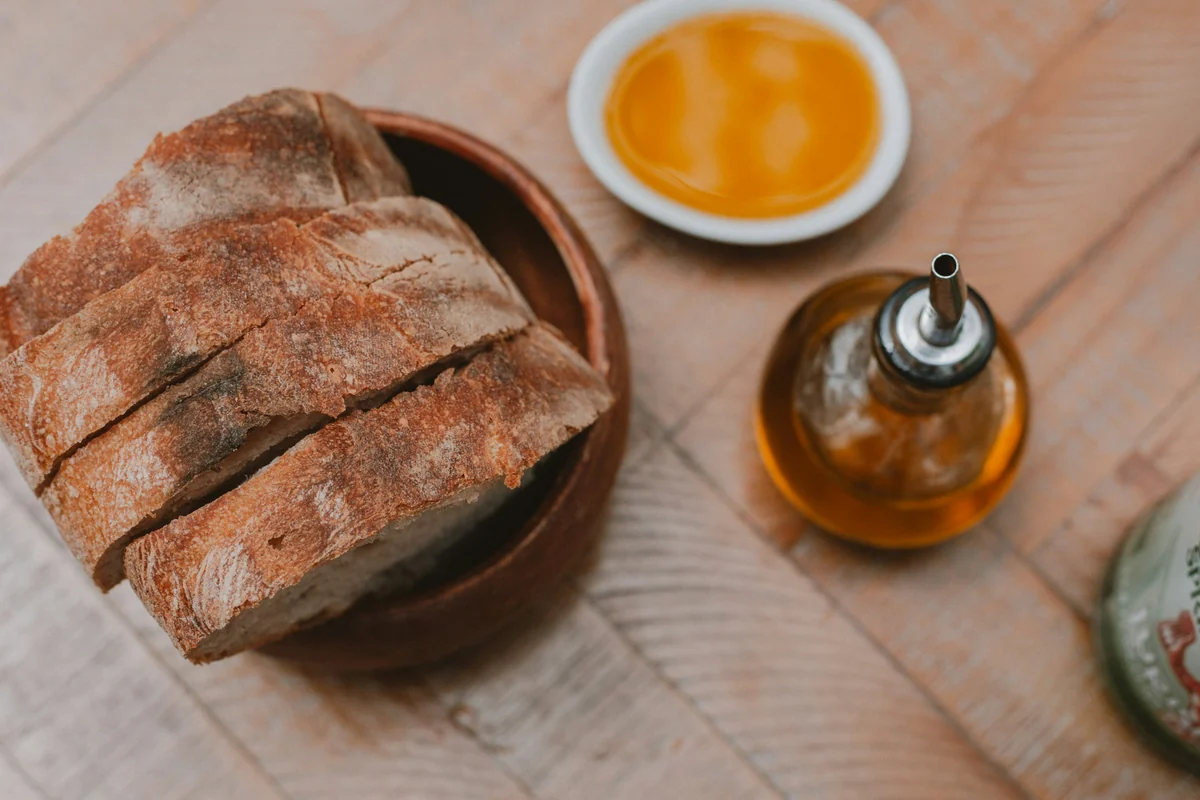
Choosing Greek olive oil: start with the label
Read the oil category, declared origin, producer or packer information, volume, date information and storage instructions. These details answer different questions. A country name tells you something different from an olive variety; a best-before date is not a harvest date. When harvest information is supplied, read it alongside the rest of the label rather than treating one date as a complete quality assessment.
The International Olive Council distinguishes oil categories using chemical and sensory criteria. Extra virgin is an oil category, not a synonym for every bottle described as Greek. You cannot verify all the category’s requirements from colour, cloudiness or a home tasting alone. Start by comparing like with like.
Separate origin, variety and brand
A label may identify Greece, a region, an estate or an olive variety. Record exactly what it declares. Do not infer the origin of the olives solely from a Greek brand name, a landscape illustration or the address of the business that packed the oil.
For a comparison across countries, our Greek versus Italian olive oil guide explains why the individual bottle matters more than choosing a winning flag. Ask which variety is named, what origin is stated and which information is available for the particular product you are considering.
Choose packaging around your kitchen
Think about your normal cooking rhythm. An occasional finishing drizzle and a busy kitchen using olive oil each day may call for different pack sizes. A larger pack is useful only if its size, closure, pouring arrangement and storage requirements suit you.
Our olive oil tin versus glass bottle comparison looks at light protection, handling and label information. Whichever format you choose, follow the producer’s guidance, close it between uses and keep it away from heat and direct light. The IOC also identifies exposure to air and excessive heat as storage concerns.
Filtered or unfiltered: ask a separate question
Filtration is not the same question as origin, variety or oil category. A cloudy appearance should not make the whole buying decision for you. Read our filtered versus unfiltered Greek olive oil guide for the distinction and the information worth requesting.
Taste the oil with food you already know
Start with a simple food such as bread, cooked beans or tomatoes. Try a small amount and note how the flavour works with the dish. If comparing two oils, use the same food and similar amounts so that the comparison is useful. A personal preference is a good reason to choose an oil; it is not a substitute for a laboratory or professional sensory assessment.
For practical serving ideas, explore olive oil in the everyday kitchen. Build a routine around dishes you actually make, rather than buying a bottle for an imagined occasion and leaving it unused.
A short checklist for a useful product enquiry
- Name the oil or collection that interests you.
- Ask for the current label, pack size, declared origin and available date information.
- Describe whether you want oil for home cooking, a gift or a hospitality project.
- Include your country so any possible delivery arrangements can be discussed separately.
Explore the Greek olive oil collection and use product enquiries for an individual question. For a café, restaurant or retail project, our retail and hospitality enquiry page explains what information to include. Prices and US and UK shipping rates are listed on each product page.
Questions about choosing Greek olive oil
Does Greek origin alone tell me which oil to choose?
No. Compare the declared category, individual product information, packaging and your intended use. Origin is one part of the decision.
Should I always choose the largest container?
Choose a size you can handle and store appropriately for your routine. Check the product’s own instructions rather than assuming one pack size suits every household.
Where should I start if I am unsure?
Read the label checklist above, then choose the detailed guide that matches your question: country comparison, filtration, packaging or everyday use.
Cold-Pressed vs Cold-Extracted Olive Oil
Cold-pressed and cold-extracted describe extraction methods. They are not two separate quality grades. A modern centrifuge can produce extra virgin olive oil; an old-fashioned press is not a prerequisite for that category.
The machinery is the main distinction
Under the EU olive-oil marketing standard, first cold pressing refers to a first mechanical pressing using a traditional hydraulic press system below 27°C. Cold extraction covers percolation or centrifugation below the same temperature. These optional descriptions apply to virgin or extra virgin oils.
Extra virgin is a separate classification
Extra virgin classification includes analytical and sensory requirements. Method wording alone does not replace those checks. The International Olive Council’s category definitions are a useful reference. A cold-extracted extra virgin bottle is therefore not a lesser category than a cold-pressed extra virgin bottle.
What to choose for the kitchen
Start with the oil category, identifiable origin and crop information, then consider the pack size and flavour information the producer supplies. Do not pay for a pressing phrase on the assumption that it guarantees a particular taste. Read our buying guide for those broader choices and filtered versus unfiltered oil for a different processing question.
Explore Greek olive oil. Method definitions: Article 10 of Regulation 2022/2104.
How to Compare Olive Oil Prices per Litre
To compare olive oil prices per litre, divide the pack price by its volume in litres. This shows the cost of the same volume across different pack sizes. Keep product identity and kitchen suitability beside the calculation so the cheapest unit price does not become the only decision criterion.
Put every volume in the same unit
Copy the stated net volume rather than estimating from the bottle’s appearance. A 500 ml pack contains 0.5 litres; a 750 ml pack contains 0.75 litres. Keep the original figures beside the converted values so a misplaced decimal is easy to spot.
Do not compare a quoted weight directly with a quoted volume. If one supplier provides only a mass and another provides litres, ask for the missing comparable specification instead of assuming that a kilogram is a litre.
Use a clearly hypothetical example
Suppose an imaginary 500 ml bottle costs 12 currency units and an imaginary 750 ml bottle costs 16. The first is 12 divided by 0.5, or 24 per litre. The second is 16 divided by 0.75, or about 21.33 per litre.
Use these imaginary figures as a model for your own comparison. Use the same currency and rounding convention for real offers. Preserve the unrounded calculation until the final display; otherwise a small difference can be exaggerated by early rounding.
Separate the item from the whole order
Start with the item-only unit price. Put delivery, applicable taxes and other order charges on separate lines if those figures are actually known. A delivery charge shared across several products needs an explicit allocation method; it should not silently be attributed entirely to the oil.
Mark an unknown charge as unknown. “Cheapest delivered” is not a conclusion you can reach from a product price alone. Comparing countries introduces further currency and commercial differences, so keep the date and source of each quote.
Check whether the packs are truly comparable
Read the product identity, producer information, stated origin and pack details before treating two lines as substitutes. Our guide to choosing Greek olive oil addresses the product questions that arithmetic cannot resolve.
A larger pack may have a lower unit price while creating an awkward kitchen routine. Consider how you use it and where it fits. The tin-versus-glass guide helps you keep the container decision separate from the calculation.
Keep a compact comparison record
For each offer, record the exact pack, net volume, item price, currency, date, calculated unit price and any unknown charges. Add a final note explaining why one option suits your intended use. This leaves a decision you can revisit when a quote changes.
Explore the Greek olive-oil collection, then request the current pack and quotation needed for your comparison. Keep your calculation with that quote so you can update it when the price or format changes.
Olive Oil Acidity Is Not a Sourness Score
Olive oil’s free acidity is a laboratory measurement, not a score for how sour it tastes. Read an acidity figure as one piece of analytical information about an identified oil. A lower printed number does not, by itself, tell you which bottle you will prefer with food.
What free acidity measures
University of California Cooperative Extension explains free acidity in terms of fatty acids released from triglycerides. It is generally expressed as a percentage on an oleic-acid basis. The same technical guide distinguishes that measurement from the sourness people associate with acidic foods.
An imaginary result of 0.3% should therefore be read with its stated analytical meaning, rather than as “three times less sour” than another number. Keep the units and wording attached to the result. If a pack simply says low acidity without an identified value, record the claim as written.
Why a taste cannot supply the number
The University of California guide notes that free fatty acids cannot be tasted at the levels normally present in olive oil. A bitter impression, peppery sensation or sour note is not a way to measure the printed percentage at home.
Describe a flavour concern in your own words when asking the producer about a particular bottle. Retain the product name and lot information. This gives the supplier a useful starting point without trying to convert a sensory impression into a laboratory result.
Read category requirements as a whole
The International Olive Council’s definition gives extra-virgin olive oil a maximum free acidity of 0.8 grams per 100 grams, expressed as oleic acid, alongside its other required characteristics. The acidity limit is one criterion; it does not replace the rest of the category.
If comparing bottles, begin with their full designations. Our Greek olive-oil choosing guide brings category, origin and pack details together. The Greek-versus-Italian comparison explains why neither a country name nor one number answers the whole buying question.
Ask a precise question about a stated result
Copy the acidity statement exactly and ask whether it refers to a particular batch, a current analysis or a general product specification. Keep the answer with the label information. When a report is supplied, check its sample reference and date before connecting it to the bottle you are considering.
Then return to your practical choice: clear product information, appropriate packaging and an oil you enjoy using. Explore the Greek olive-oil collection and ask for the current information needed to understand a specific item.
Technical background: University of California Cooperative Extension on free acidity. For the category definition, see the International Olive Council’s olive-oil definitions.
Planning Olive Oil as a Finishing Ingredient
A finishing oil is added near serving so it becomes part of the final mouthful. It can be used on a plated soup, cooked vegetables or beans, or offered separately at the table. Plan it alongside the fat and seasoning already in the dish.
Choose the role before the quantity
Ask what the finish should contribute: a visible drizzle, additional oil in a dressing or an optional table condiment. A soup already enriched with oil may need a different finishing approach from plain cooked beans. Add a small amount to one serving first so you can decide how it fits the dish.
Match the oil’s intensity to your preference
The International Olive Council describes fruitiness, bitterness and pungency as distinct positive sensory attributes. They can be present at different intensities. A mild-tasting dish may make an assertive oil more noticeable; whether that is desirable is a matter of the combination and your preference, rather than a universal pairing rule.
Account for the whole plate
Consider dressings, cheese, olives and sauces already present. Adding oil is another ingredient decision, not a requirement for every Greek-inspired dish. Keep lemon, salt and herbs as separate choices when you want to understand what each addition changes.
Serve it in a manageable way
A small pourer or spoon lets diners control an optional finish. If you finish plates in the kitchen, use a consistent amount for a consistent presentation. Our everyday olive-oil guide covers broader uses, and oregano dish ideas explore the herb side of a meal.
Browse Greek olive oil. Sensory background: the IOC’s explanation of tasting attributes.
Choosing an Olive Oil Gift Around the Recipient
A useful olive-oil gift fits the recipient’s cooking habits, storage space and interest in the ingredient. Choose the oil and pack for those needs before choosing decorative packaging.
Think about how they will use it
Someone who enjoys dressings and table oil may appreciate information about the oil’s flavour and origin. Someone who cooks for one may prefer a manageable bottle rather than a large tin. If the recipient has a favourite oil, its category and pack size give you a useful starting point.
Choose a pack they can handle
Consider the closure, pouring arrangement and space available in the kitchen. A large tin and a small glass bottle offer different handling experiences; neither container alone proves the oil’s quality. The tin-versus-glass guide compares their practical features.
Include the product story that is actually supplied
Origin, producer, cultivar and harvest information can make the gift more meaningful when they relate to the actual bottle. Keep the label available rather than covering every useful detail with wrapping. Do not choose a bottle solely for an award image without understanding which oil and year it refers to.
Make the first use easy
A short suggestion such as serving it with bread or adding it to cooked beans can be more useful than several accessories. Let the recipient decide the quantity and seasoning. Our olive-oil buying guide explains the product details worth considering.
Explore the Greek olive-oil collection. Confirm current availability and destination arrangements before planning delivery of a gift.
Olive Oil Harvest Date vs Best-Before Date
The harvest date and best-before date answer different questions. A harvest statement describes the crop used to make an oil; a best-before statement concerns the product’s quality period under its stated storage conditions. One cannot be calculated reliably from the other. Some labels also say “early harvest”; see early harvest olive oil for what that means.
What a harvest statement tells you
In the EU olive-oil marketing standard, a harvesting-year indication for virgin or extra virgin oil must relate to the entire contents. A bottle may use a crop-year format or a month and year. The month corresponds to oil extraction. This is a more specific production clue than the date when a shop received its stock.
Why a long best-before period is not a harvest date
Two packers can choose different durability periods. Comparing only the latest best-before date therefore does not establish which oil came from the more recent crop. Likewise, a bottling date describes a packaging step, which may happen after extraction.
How to compare two bottles
Compare like fields: harvest with harvest, pack size with pack size and oil category with oil category. Then consider how quickly your household will use the bottle. A smaller pack from an identifiable crop can be more practical than a larger pack whose age is unclear. The olive-oil buying guide puts dates alongside origin and category; the container comparison helps with pack choice.
Browse the Greek olive-oil collection. Technical background: Article 11 of Commission Delegated Regulation 2022/2104 explains harvesting-year indications.
A Practical Olive Oil Serving Setup for a Shared Table
For a shared table, keep olive oil easy to reach and easy to portion. One stable bottle or small pourer, a clean resting surface and separate dipping dishes are a practical starting arrangement.
Choose between pouring and dipping
If oil is for finishing food, a controlled pourer helps guests add it to their own plate. If it is for bread, individual small dishes avoid the need to pass one communal dipping bowl repeatedly. Put a plate under a vessel that may drip.
Match the container to the service
A large storage tin may be awkward at a crowded table. A smaller serving vessel can be easier to handle, but the container must be suitable for food use and filled through a clean process. Keep the original product identity available so diners can find out which oil is being served. See our pack-format comparison.
Keep additions recognizable
Serve salt, oregano or other additions separately if guests should choose them. If you prepare a seasoned dipping mixture, say what it contains. Plain olive oil should not be presented as a flavoured product, or a prepared mixture as the plain oil’s own flavour.
Avoid crowding the table
Put the oil beside the bread or dish that needs it, away from an unstable edge. Place a separate spoon with any shared condiment and give it somewhere to rest. Refill small serving quantities as needed rather than making a large pool the centre of the table.
Explore the olive-oil collection. For broader uses, read olive oil in the everyday kitchen.
Scaling Olive Oil in a Recipe Without Mixing Units
When scaling olive oil in a recipe, multiply the original amount by the same portion factor you use for the recipe. Keep the unit unchanged unless you have a reliable conversion for the specific measurement. The arithmetic gives a starting quantity; it does not prove that the larger dish will cook exactly like the original.
Start with the recipe you actually have
Write down the original number of portions and the stated oil quantity. Preserve any distinction between oil used in cooking and oil added at the table. If a recipe gives a measured amount plus an optional drizzle, do not pretend the optional part was precisely defined.
Check whether the original quantity is a volume or a mass. Millilitres and grams are different measurements. A kitchen scale is useful when the recipe specifies grams, but its reading should not be relabelled as millilitres without a justified conversion.
Calculate one portion factor
Divide the desired portions by the original portions. Changing a recipe from four portions to six gives a factor of 1.5. If that hypothetical recipe specifies 40 ml of oil, the scaled arithmetic is 40 multiplied by 1.5, or 60 ml.
The example’s 40 ml is an imaginary starting amount; use the quantity in your actual recipe. Write the factor at the top of your worksheet and apply it consistently to ingredients that are being scaled. Keep any recipe-specific exceptions visible rather than guessing them away.
Preserve the measurement language
If the recipe uses tablespoons, first check what volume its author means by a tablespoon. Spoon conventions and household utensils can differ. Converting everything to “spoons” without that check can introduce more uncertainty than the scaling itself.
Use a marked measure appropriate to the amount and readable in the unit you need. Read the scale before pouring, especially when two measurement systems appear together. If you cannot measure a rounded quantity accurately, note the approximation rather than presenting false precision.
Separate quantity from cooking geometry
A larger batch may need different equipment or several cooking rounds. Doubling an ingredient amount does not automatically establish a new cooking time, oven setting or safe handling method. Follow the recipe’s own scaling guidance where it exists.
For ideas about the roles oil can play, see olive oil in the everyday kitchen. Choosing the oil is another decision; our Greek olive-oil guide covers that starting point.
Save an honest revised recipe
Keep the original amount, factor, calculated amount and any practical adjustment on separate lines. After cooking, record the actual equipment and results if you want to repeat the dish. Keep the revised version beside the original so you can see which changes came from arithmetic and which came from cooking.
For the ingredient itself, explore the Greek olive-oil collection. Before the next batch, check the saved factor and your chosen unit rather than trying to reconstruct an amount from memory.
Looking at oil from Crete? Read Cretan olive oil: Koroneiki, PDOs and the label.
Greek olive oil: frequently asked questions
What is the difference between cold-pressed and cold-extracted olive oil?
Cold-pressed and cold-extracted describe extraction methods. They are not two separate quality grades. A modern centrifuge can produce extra virgin olive oil; an old-fashioned press is not a prerequisite for that category.
How do I compare olive oil prices per litre?
To compare olive oil prices per litre, divide the pack price by its volume in litres. This shows the cost of the same volume across different pack sizes. Keep product identity and kitchen suitability beside the calculation so the cheapest unit price does not become the only decision criterion.
Does olive oil acidity mean it tastes sour?
Olive oil’s free acidity is a laboratory measurement, not a score for how sour it tastes. Read an acidity figure as one piece of analytical information about an identified oil. A lower printed number does not, by itself, tell you which bottle you will prefer with food.
How do I use olive oil as a finishing ingredient?
A finishing oil is added near serving so it becomes part of the final mouthful. It can be used on a plated soup, cooked vegetables or beans, or offered separately at the table. Plan it alongside the fat and seasoning already in the dish.
How do I choose olive oil as a gift?
A useful olive-oil gift fits the recipient’s cooking habits, storage space and interest in the ingredient. Choose the oil and pack for those needs before choosing decorative packaging.
What is the difference between an olive oil harvest date and a best-before date?
The harvest date and best-before date answer different questions. A harvest statement describes the crop used to make an oil; a best-before statement concerns the product’s quality period under its stated storage conditions. One cannot be calculated reliably from the other.
How do I serve olive oil at a shared table?
For a shared table, keep olive oil easy to reach and easy to portion. One stable bottle or small pourer, a clean resting surface and separate dipping dishes are a practical starting arrangement.
How do I scale olive oil quantities in a recipe?
When scaling olive oil in a recipe, multiply the original amount by the same portion factor you use for the recipe. Keep the unit unchanged unless you have a reliable conversion for the specific measurement. The arithmetic gives a starting quantity; it does not prove that the larger dish will cook exactly like the original.
Source and further reading
International Olive Council: oil categories and storage. Product-specific facts should always be checked against the actual label and producer information.
Continue exploring this ingredient
Browse the olive oil guide library, then explore How to Compare Olive Oil Prices per Litre and Scaling Olive Oil in a Recipe Without Mixing Units. For a named producer and pack, see Rapti Koroneiki Olive Oil, Messinia — 500ml.