
Koulourakia: Twisted Greek Easter Butter Cookies
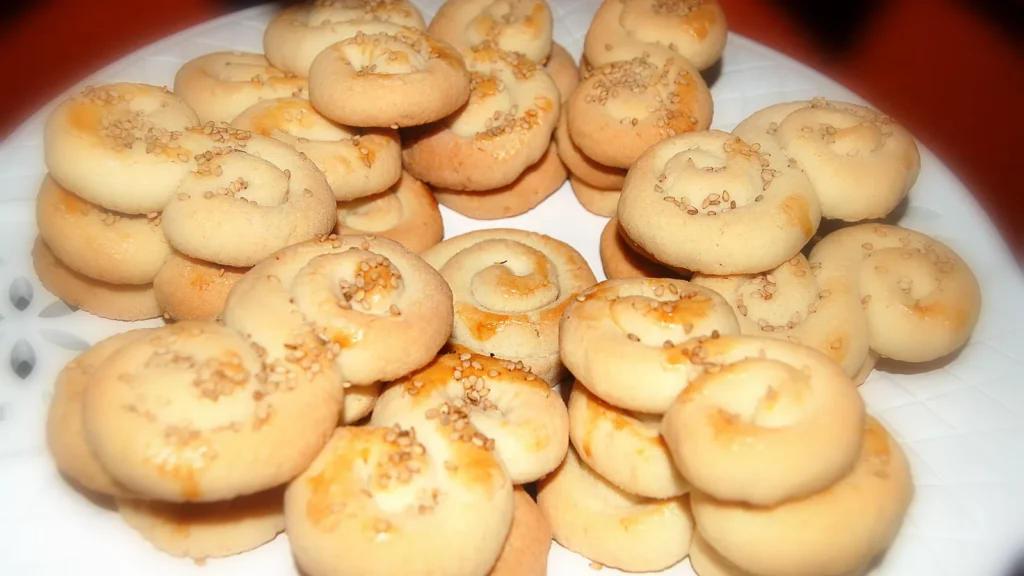

Koulourakia are Greek butter cookies rolled into ropes and twisted, coiled or braided, brushed with egg so they bake to a glossy gold, and often sprinkled with sesame. They are baked above all for Easter, usually during Holy Week so they are ready when the Lenten fast ends, and are dunked in coffee or milk for breakfast for days afterwards. The name comes from koulouri, a ring-shaped bread, and the cookies are made in many regional forms across Greece, from crisp vanilla twists to the flat, rounder versions sold by Pontic Greek bakers. For the rest of the Easter table, see Greek Easter food, and for the braided Easter bread, tsoureki.
Koulourakia recipe
Serves: about 45 cookies. Prep: 40 minutes. Cook: 15–20 minutes per tray. Total: about 1 hour 20 minutes.
Ingredients
Cookies
- 1 cup (225 g) unsalted butter, softened
- 1 cup (200 g) sugar
- 3 large eggs, at room temperature
- ¼ cup (60 ml) milk or orange juice
- Finely grated zest of 1 orange
- 2 tsp vanilla extract
- About 4½ cups (560 g) plain (all-purpose) flour
- 2 tsp baking powder
- ¼ tsp baking soda
- A pinch of fine sea salt
Egg wash
- 1 egg yolk beaten with 1 tbsp milk
- 2 tbsp sesame seeds (optional)
Method
- Beat the butter and sugar for about 5 minutes until light and fluffy. Beat in the eggs one at a time, then the milk or orange juice, zest and vanilla.
- Mix 4 cups of the flour with the baking powder, baking soda and salt. Add to the butter mixture and mix to a soft dough, adding the remaining flour a spoonful at a time until it no longer sticks to your hands. Don’t add more than you need.
- Heat the oven to 350°F (180°C, 160°C fan) and line two trays.
- Take walnut-sized pieces (about 20 g) and roll each into a rope about 6 inches (15 cm) long. Fold it in half and twist the two strands together, or coil it into a snail or an S shape.
- Place the cookies on the trays, brush with the egg wash and sprinkle with sesame seeds if using.
- Bake for 15–20 minutes until golden and shiny. Cool on a rack.
Getting the dough right
Koulourakia dough should be soft and smooth, and not sticky. The amount of flour you need varies with your flour and eggs, so hold back the last half cup and add it gradually. Too much flour gives dry, crumbly ropes that crack when you twist them; too little and the shapes spread in the oven. If the dough feels greasy on a warm day, chill it for 20 minutes before shaping.
How to shape koulourakia
- Twist: roll a 6-inch (15 cm) rope, fold it in half and twist the strands together. This is the classic shape.
- Snail: coil a rope into a flat spiral.
- S or figure of eight: curl each end of a rope in opposite directions.
- Braid: plait three thin ropes for a larger, festive cookie.
Keep the pieces the same size so they bake evenly, and roll on an unfloured surface; a little friction helps the rope stretch. Children love shaping them, which is part of the Easter tradition in many families.
Sesame seeds and flavourings
Sesame is the most common topping. Brush the egg wash on first, then sprinkle the seeds so they stick. Lightly toasting them adds a nutty flavour; our guide to toasting sesame seeds explains how, and our pasteli guide covers the Greek honey and sesame bar. Orange zest and vanilla are standard flavourings; some regions add a pinch of ground mahlepi (mahlab) or mastic.
These cookies contain wheat, eggs and milk, and sesame if you add it. Sesame became the ninth major food allergen in the US, with labelling required from January 2023, according to the FDA, so mention it if you share or sell your koulourakia.
Koulourakia and other Greek holiday cookies
Koulourakia are the Easter cookie; at Christmas their place is taken by kourabiedes, the almond cookies in powdered sugar, and melomakarona, soaked in honey syrup. Koulourakia are the least sweet of the three, which is why they work so well with coffee. Try them with a freddo espresso in summer or a traditional Greek coffee.
Storing koulourakia
Let them cool completely, then keep them in an airtight tin at room temperature for 2–3 weeks. They become slightly crisper with time. You can also freeze the baked cookies for a few months, or freeze the shaped, unbaked cookies on a tray and bake them from frozen, adding a few minutes.
For more Greek baking, see our olive oil cake, fig bars and the full Greek pantry recipes.
Sources
Koulourakia: frequently asked questions
What are koulourakia?
Greek butter cookies rolled into ropes and twisted or coiled, glazed with egg and often topped with sesame, traditionally baked for Easter.
Why do my koulourakia crack when I twist them?
The dough has too much flour or is too cold. Add flour gradually and let chilled dough warm up a little before shaping.
Are koulourakia supposed to be hard?
They should be firm and lightly crisp outside with a tender inside, good for dunking in coffee, but not rock hard.
How long do koulourakia keep?
About 2–3 weeks in an airtight tin at room temperature.

Good things from our land, ideas for your table.
Explore the pantry journal →