
Vasilopita: Greek New Year Cake with a Hidden Coin
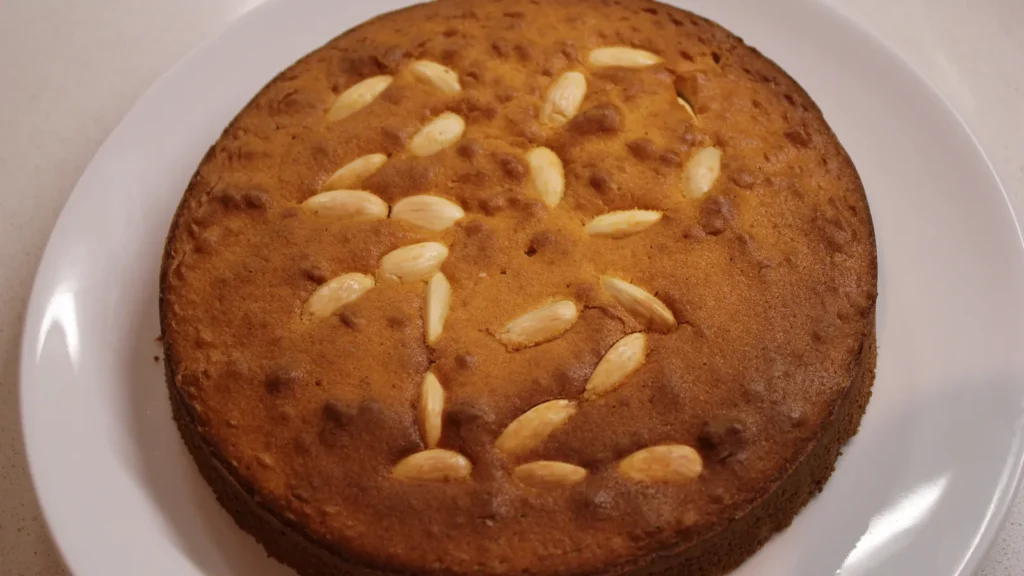

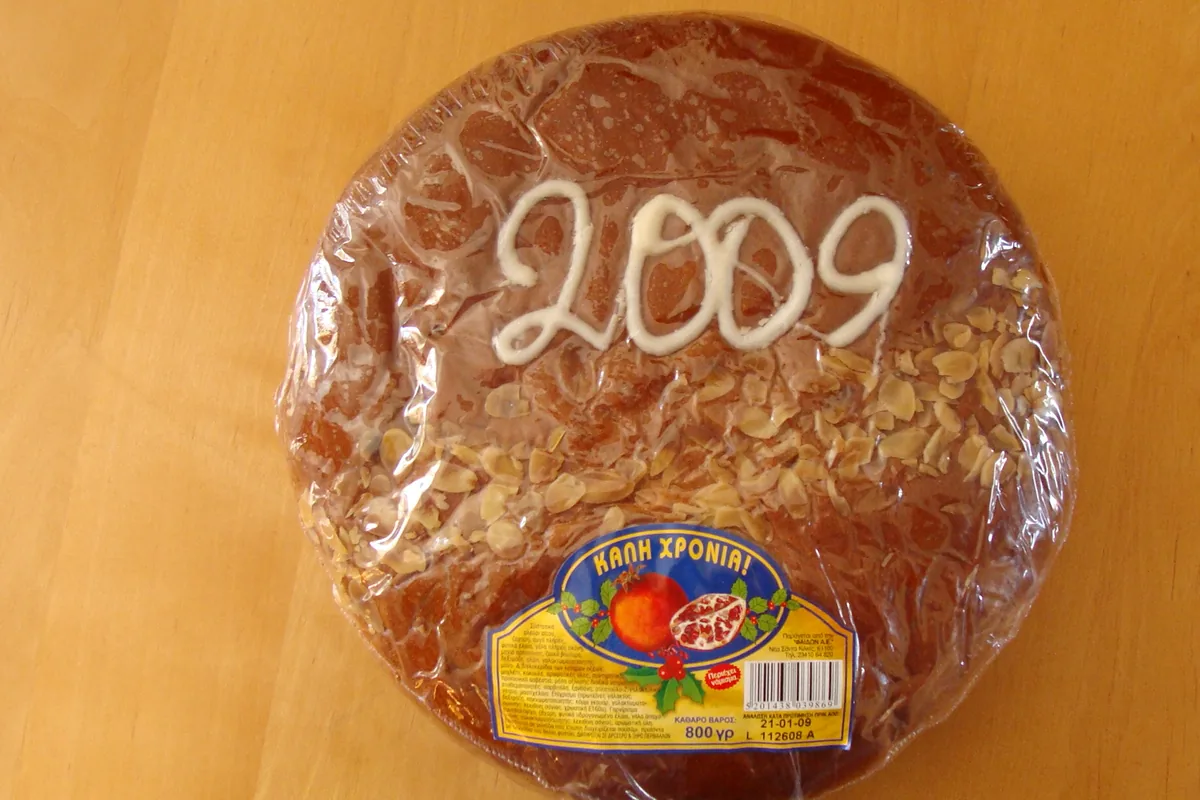
Vasilopita (βασιλόπιτα, “Basil’s pie”) is the cake Greek families cut on New Year’s Day, with a coin hidden inside. Whoever finds the coin in their slice is said to be blessed, or lucky, for the year ahead. Some families make it as a sweet bread, others as a cake; our version is a light, orange-scented cake that is easy to make at home.
Vasilopita recipe (Greek New Year cake)
Serves: one 10-inch (26 cm) cake, 12–16 slices. Prep: 25 minutes. Cook: 50–60 minutes. Total: about 2 hours 30 minutes, including cooling.
Ingredients
For the cake
- 1 cup (225 g) unsalted butter, softened
- 1½ cups (300 g) sugar
- 4 large eggs, at room temperature
- Finely grated zest of 2 oranges
- ½ cup (120 ml) fresh orange juice
- ½ cup (120 g) plain Greek yogurt
- 1 tsp vanilla extract
- 3 cups (375 g) all-purpose flour
- 1 tbsp baking powder
- ½ tsp baking soda
- ¼ tsp salt
- Optional: ½ tsp ground mahlepi
For the top
- ¼ cup (25 g) blanched almonds or flaked almonds, or powdered sugar for dusting
- 1 coin, washed and wrapped tightly in foil
Method
- Heat the oven to 350°F (175°C). Butter a 10-inch (26 cm) round cake pan, ideally springform, and line the base with baking paper.
- Whisk the flour, baking powder, baking soda, salt and mahlepi (if using) in a bowl.
- Beat the butter and sugar with an electric mixer for 4–5 minutes, until pale and fluffy. Beat in the eggs one at a time, then the orange zest and vanilla.
- Mix the orange juice and yogurt. Add the flour mixture to the butter in three parts, alternating with the juice and yogurt, and mix on low speed just until smooth.
- Spread half the batter in the pan, place the foil-wrapped coin on it, and cover with the rest of the batter so the coin is hidden. Smooth the top.
- If decorating with almonds, press them into the top in the numbers of the new year.
- Bake for 50–60 minutes, until golden and a skewer inserted in the centre comes out clean. If the top browns too quickly, cover loosely with foil after 35 minutes.
- Cool in the pan for 15 minutes, then remove and cool completely. If you didn’t use almonds, dust with powdered sugar, using a paper stencil for the year.
The story of vasilopita
The cake is named after Saint Basil the Great, a 4th-century archbishop of Caesarea in Cappadocia, whose feast day is 1 January. The Antiochian Orthodox Archdiocese of North America retells the traditional story: when an emperor imposed a crushing tax on the people of Caesarea, Basil persuaded him to cancel it, and was left with chests of coins and jewellery to return. He had them baked into loaves, and as each person received a piece, they found their own valuables inside. Other versions say that Basil hid coins in bread to give to the poor discreetly.
In memory of the story, Orthodox Christians bake a vasilopita for 1 January, in churches as well as at home. The Greek Orthodox Archdiocese of America calls the coin the flouri (φλουρί).
How to cut the vasilopita
Traditions vary by family and region, but a common order is described by the Greek Orthodox Archdiocese of America and the Antiochian Archdiocese:
- The head of the household makes the sign of the cross over the cake with a knife.
- The first slice is cut for Christ, the next for Saint Basil; many families also cut slices for the house, the poor or absent relatives.
- Then a slice is cut for each person present, often from the oldest to the youngest.
- Whoever finds the coin keeps it for the year. Some families give a small gift to the finder, and some suggest donating to people in need if the coin is in one of the first slices.
At home the cake is often cut just after midnight on New Year’s Eve or on New Year’s Day. Churches, schools and workplaces in Greece also hold their own vasilopita cutting in January.
Tips for hiding the coin safely
- Wash the coin well and wrap it tightly in foil, so it is easy to spot.
- Put it on a layer of batter rather than pushing it in afterwards, so it doesn’t sink to the base or leave a mark on top.
- Tell everyone there is a coin before they eat, and keep an eye on young children, for whom a coin can be a choking hazard.
- Some bakers prefer to slip the foil-wrapped coin in from underneath after baking, through a small slit in the base.
Cake or bread?
The Antiochian Archdiocese notes that in some places vasilopita is a rich, sweet bread and in others a spiced cake. The bread style is close to Easter tsoureki, scented with mahlepi and mastiha. The cake style, as here, is often flavoured with orange and decorated with almonds or a dusting of sugar. Both carry the coin.
Variations
- Olive oil vasilopita: replace the butter with ¾ cup (180 ml) light-tasting olive oil and whisk it with the sugar instead of creaming. Our olive oil vs butter guide explains the conversion.
- With mahlepi: the aromatic ground seed kernel gives a cherry-almond scent typical of Greek festive baking.
- Lemon instead of orange: use the zest of 2 lemons and replace the juice with milk.
- Decorated: pipe the year in melted chocolate or icing, as some bakeries do.
Storing
Keep the cake covered at room temperature for up to 3 days, or wrap slices and freeze them for up to a month. It is lovely with a cup of Greek coffee or honey lemon tea.
For more festive baking, see melomakarona, kourabiedes, our olive oil cake and the full list of Greek desserts. The cake contains wheat, eggs, milk and, if you decorate with almonds, tree nuts: four of the major food allergens listed by the US FDA.
Sources
- Antiochian Orthodox Christian Archdiocese of North America: St Basil and the Vasilopita
- Greek Orthodox Archdiocese of America: The vasilopita tradition and coin
- US FDA: Food allergies, what you need to know (the 9 major food allergens)
Vasilopita: frequently asked questions
What is vasilopita?
A Greek New Year cake or sweet bread, named after Saint Basil, with a coin hidden inside. It is cut on 1 January, and the person who finds the coin is said to be blessed for the year.
When do you cut the vasilopita?
Usually just after midnight on New Year’s Eve or on New Year’s Day, 1 January, the feast of Saint Basil.
Who gets the first slice of vasilopita?
Traditionally the first slices are cut for Christ and Saint Basil, then for the household or the poor, and then for each person, often from oldest to youngest.
How do you put the coin in a vasilopita?
Wrap a clean coin in foil and place it on a layer of batter before covering it with the rest, or slip it in through the base after baking.

Good things from our land, ideas for your table.
Explore the pantry journal →