
Greek Thyme Honey: Taste, Origin and How to Use It
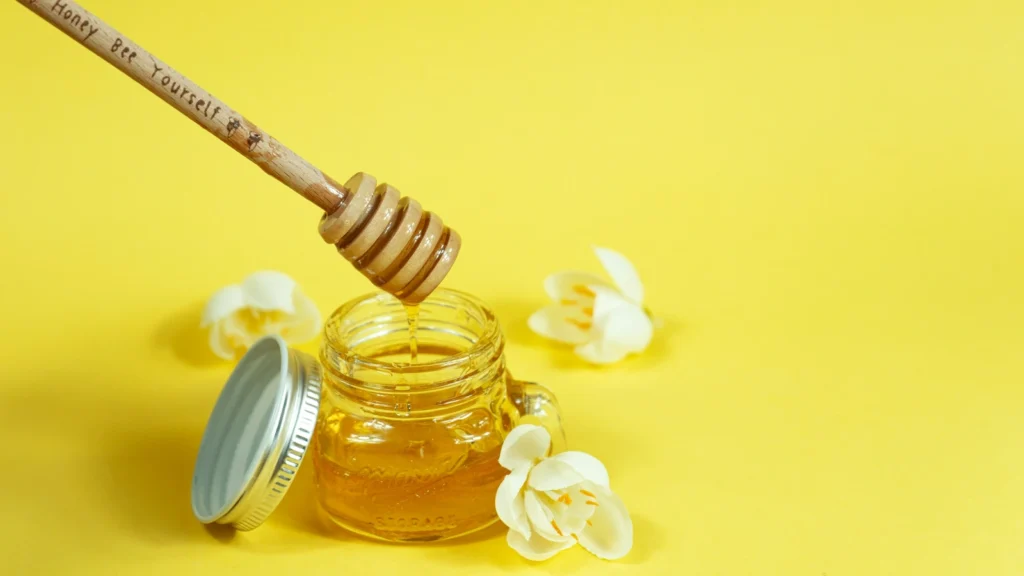
Greek thyme honey is one of the best-known honeys from Greece. It comes from bees that forage on wild thyme on the islands and the dry, rocky hillsides of the mainland. This guide covers where it comes from, what it tastes like, how it differs from other Greek honeys and how to use it.
Also in this guide: Comb Honey vs Extracted Honey: Choosing a Useful Form · Floral Origin and Geographical Origin on a Honey Label · Honey or a Honey Blend? Start with the Ingredient List · Questions to Ask About a Honey Test Report
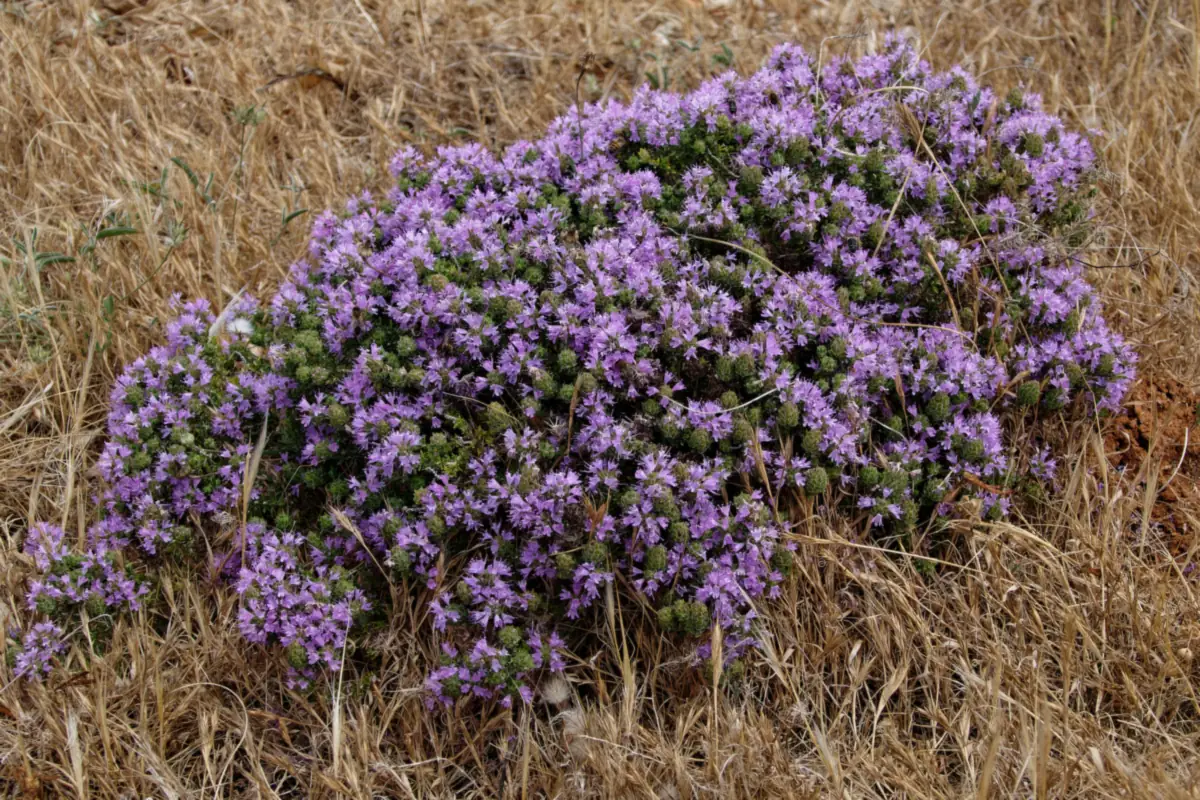
What is thyme honey?
Thyme honey is a floral honey made mainly from the nectar of thyme flowers. In Greece the main plant is usually wild conehead thyme (Thymbra capitata), which flowers in early summer on islands such as Crete and the Dodecanese, including Kalymnos. Because bees forage freely, a jar labelled “thyme honey” means thyme is the main nectar source, not the only one. The floral origin on the label is a different claim from the geographical origin. Our guide to floral and geographical origin on a honey label explains the difference.
What does Greek thyme honey taste like?
Thyme honey is usually described as intensely aromatic, with a herbal, slightly floral scent and a long finish. Its colour ranges from light to medium amber. The flavour is strong, so a little goes a long way. Like most honeys it can crystallise over time. That is a natural change, and gentle warming in a water bath returns it to liquid.
Thyme honey vs other Greek honeys
Greek pine honey is a honeydew honey. Bees make it from secretions on pine trees rather than flower nectar, and it is darker, less sweet and woodier. Thyme honey is floral and more aromatic. Creamed honey is a texture, not a type: almost any honey can be creamed. For side-by-side detail, read Greek pine honey vs thyme honey and creamed honey vs liquid honey.
How to use thyme honey
- Drizzle it over thick Greek yogurt with walnuts.
- Serve a small spoon beside cheese, especially salty cheeses like feta (try whipped feta with honey) or aged graviera, or warm it with chilli to make hot honey.
- Stir it into a cup of Greek mountain tea once the tea has cooled slightly.
- Spread it on warm toast or use it in place of sugar in simple dressings. See honey in baking before you swap it into a cake recipe.
- Pour it warm over loukoumades, Greek fried honey puffs, or use it in the syrup for melomakarona.
Honey should not be given to infants under 12 months old.
Comb Honey vs Extracted Honey: Choosing a Useful Form
Comb honey keeps the honey in its wax cells, while extracted honey has been removed from the comb. Chunk honey combines a piece of comb with extracted honey in a container. Choose between them according to how you want to serve or measure the honey, rather than assuming that one form is automatically better.
Recognize the three forms
The University of Georgia’s bee programme distinguishes extracted, comb and chunk honey in its processing guide. This is a difference in presentation, separate from botanical variety. A pack can describe a honey’s floral source and its physical form at the same time.
Look at both the product name and the container. A piece of comb sitting in honey is different from a standalone comb section. Read the net quantity and supplied information when comparing packs; the shape of a clear box or jar does not tell you everything about the contents.
Choose according to the task
For a recipe specifying a measured amount of liquid honey, choose a product that matches that instruction. A comb section introduces wax and is not a simple spoon-for-spoon replacement. Keep the recipe’s ingredient form intact unless the author provides an alternative.
For a table presentation, a comb section offers a different way to portion and serve the ingredient. Purdue Extension notes that both the honey and comb are edible. Follow the pack’s serving guidance and let guests know what is on the plate, especially when comb is unfamiliar to them.
Keep form, texture and variety separate
Extracted honey is not defined solely by whether it currently looks runny. Our creamed-versus-liquid honey guide explains the texture question. Read that alongside the pack rather than assuming that every firm-looking honey still contains comb.
Botanical variety is another decision. The pine-honey and thyme-honey comparison introduces those names. Neither a comb photograph nor a liquid appearance establishes where a honey was harvested or which botanical source it comes from.
Plan serving before opening the pack
Check the opening and supplied handling directions. Choose a suitable plate or dish and a clean utensil so the portion can be served without balancing the pack over other food. Keep the original container nearby for ingredient and product questions.
Before buying, write down the intended use, preferred form and quantity. For an unfamiliar comb product, ask how the producer recommends portioning it. For a recipe, take the ingredient wording with you so a striking presentation does not distract from the form you actually need.
Explore the Greek honey collection for ingredient enquiries. Background on the forms comes from the University of Georgia’s honey-processing guide; Purdue Extension’s honey sheet addresses eating the comb. Ask about available forms before planning a purchase.
Floral Origin and Geographical Origin on a Honey Label
Floral origin and geographical origin answer different questions on a honey label. A plant-source description concerns the honey’s botanical source; a country or region concerns where it came from. Read both separately instead of treating one attractive name as a complete provenance statement.
Give each kind of information its own field
Copy the product name, botanical wording, stated geographical origin and responsible business details into separate lines. This makes it easier to see which facts the pack actually provides. Leave a field blank when the information is absent.
Record a business address under operator details. Look separately for the wording that identifies the harvesting origin. If a place appears only in a brand name, ask the seller how it relates to the product before using it as a geographical description.
Keep plant names distinct from added ingredients
A thyme-honey description is not the same claim as a preparation containing thyme as an added herb. Read the product name and ingredient information rather than relying on a picture of a flowering plant.
Our pine-honey and thyme-honey guide introduces the honey categories. The culinary thyme guide addresses the herb as a cooking ingredient.
Read origin wording as written
Do not expand “Greece” into an island, mountain or estate unless the product information supports the narrower statement. If several origins are identified, preserve the blend information rather than choosing the most marketable country for a summary.
Origin-labelling requirements depend on the market and current rules. The European Commission’s honey page provides current EU context. Check the rules for the market in which a product is being offered before preparing a commercial label.
Ask for evidence matching the claim
If a floral or regional statement matters to your decision, ask what information supports it for the actual item. Be specific about the wording you are trying to understand. A generic certificate or a photograph of beehives may not answer that question.
Keep the supplier’s explanation and any analytical document with the product record. Put personal flavour notes in a separate field so you can compare both the stated identity and your own preference without losing either.
Use a simple comparison worksheet
For each jar, record the exact label wording under plant source, geographical source, operator and missing information. Compare those fields before making a summary for a gift, menu or product listing. Avoid filling gaps with a story taken from another producer.
The Greek honey collection is the relevant category destination. See the Commission’s honey overview and origin-labelling background for EU context. Keeping the fields separate makes a later supplier question much more precise: which place, which plant source and which actual product?
Honey or a Honey Blend? Start with the Ingredient List
To distinguish honey from a honey-containing blend, read the actual product name and ingredient information together. A honeycomb picture, golden colour or prominent word on the front is not a complete description. Your first task is to establish what the product contains before comparing flavour, texture or price.
Read the food’s name carefully
Look for the name that identifies the food, not just the brand or a decorative phrase. A spread, syrup, dressing or other preparation can contain honey without being a jar of honey alone. Preserve that distinction when copying information into a shopping note.
The US Food and Drug Administration’s honey guidance distinguishes honey from products containing additional sweeteners. Use the guidance as background when reading a US product. Follow the actual label and ask the seller when its identity is unclear.
Find the complete ingredient information
Read the ingredient statement where one is supplied and connect it with the product name. Do not stop after finding the word honey if additional ingredients follow. A front label may emphasize one ingredient while the full product is a mixture.
If information is missing from an online listing, request a current label or specification. Do not assume that an incomplete web description proves either a single ingredient or an improper product. Keep an unknown visibly unresolved rather than replacing it with a guess.
Separate additions from honey varieties
A botanical variety describes a different question from whether other ingredients were added. Our pine-honey and thyme-honey guide introduces that distinction between honey categories. Check the actual ingredient information when comparing a prepared spread or syrup with either honey category.
Likewise, a texture word is not a complete ingredient declaration. The explanation of what creamed honey means addresses the name, while the actual pack remains the source for what a particular product contains.
Compare like with like
When comparing products, write down the food name, net quantity and ingredients before looking at price. A honey-containing sauce and a jar of honey may serve different kitchen purposes, so a low price does not make them direct substitutes.
Keep any nutrition or dietary question separate from the marketing impression. If you have a specific ingredient requirement, check it against the complete label. Save the exact wording so you can ask a specific question if an ingredient is unclear.
Use a short shopping record
A useful note reads: “Product name: __. Ingredients shown: __. Quantity: __. Missing information: __. Intended use: __.” Save the current label if you need to compare an online description later.
Explore the Greek honey collection for this pantry category. Background is available in the FDA’s honey and honey-products guidance. For a useful comparison, retain the exact product name and ingredient wording rather than summarizing both products as honey.
Questions to Ask About a Honey Test Report
A honey test report answers the questions covered by its sample, method and stated conclusion. Before using it to support a purchase decision or public claim, check those boundaries. A document labelled “analysis” should not automatically become proof of every possible statement about the honey.
Connect the report to the actual sample
Look for the sample identifier, product reference and relevant dates. Ask the supplier how the tested sample connects with the pack or lot under consideration. If that connection is missing, keep it unresolved rather than assuming that one report covers all future supply.
Keep the report’s date visible in your record. If the supplier or batch changes, ask whether the old document still applies. Record where the document came from and whether it is complete. A cropped image of a result can omit scope, notes or identifying information. Ask for clarification through the supplier’s normal channel without publishing someone else’s document or personal details.
Read the question the method addresses
Find the analysis performed and the report’s actual wording. Different questions require different evidence. Do not assume a result about one characteristic establishes botanical origin, geographical origin and every other quality claim at once.
The European Commission’s knowledge service describes methods for verifying honey authenticity. Use it to understand the kinds of analytical questions being investigated. Ask the issuing laboratory or a competent specialist to explain the meaning of a technical result you need to rely on.
Preserve limitations and uncertainty
Read explanatory notes and any qualifications alongside the headline result. If a term is unclear, ask the laboratory or supplier what it means in this report. Do not translate a technical phrase into “perfect honey” because that is easier to put on a product card.
A recent Joint Research Centre publication emphasizes evaluation of authentication methods through testing and comparison. Read the report’s stated scope and retain its qualifications when summarizing the result. If the wording is difficult to interpret, ask a specific question about that passage.
Separate a report from sensory preference
Your impression of colour, texture or flavour is not a substitute for the stated analysis. Likewise, a report does not tell you whether you will enjoy the honey on a particular food. Keep purchase criteria in distinct fields.
The pine-and-thyme honey guide covers category context. The creamed-versus-liquid article covers texture; neither provides a household authenticity test.
Write the remaining questions precisely
A useful record includes report identity, sample connection, method, actual conclusion and unresolved questions. Quote only what you are permitted to use and can explain accurately. Retain the link between the report, the sample and the product it is being used to describe.
Explore the Greek honey collection for the relevant category. Technical background also appears in the JRC’s authentication-method publication. Keep unresolved questions in the purchasing record and ask for a clear explanation before using a technical result in public copy.
Choosing honey: frequently asked questions
What is the difference between comb honey and extracted honey?
Comb honey keeps the honey in its wax cells, while extracted honey has been removed from the comb. Chunk honey combines a piece of comb with extracted honey in a container. Choose between them according to how you want to serve or measure the honey, rather than assuming that one form is automatically better.
What do floral origin and geographical origin mean on a honey label?
Floral origin and geographical origin answer different questions on a honey label. A plant-source description concerns the honey’s botanical source; a country or region concerns where it came from. Read both separately instead of treating one attractive name as a complete provenance statement.
How can I tell honey from a honey blend?
To distinguish honey from a honey-containing blend, read the actual product name and ingredient information together. A honeycomb picture, golden colour or prominent word on the front is not a complete description. Your first task is to establish what the product contains before comparing flavour, texture or price.
What should I ask about a honey test report?
A honey test report answers the questions covered by its sample, method and stated conclusion. Before using it to support a purchase decision or public claim, check those boundaries. A document labelled “analysis” should not automatically become proof of every possible statement about the honey.
Our thyme honey selection
Our named thyme honey is Kalymnos Thyme Honey by G. Skevofylakas, 450g. It is described as raw, and its stated origin is Kalymnos. Browse the full Greek honey collection. You can buy it from the product page or send us a question.
Thyme honey FAQ
Does thyme honey contain thyme?
No herb is added. The name tells you the main flower the bees visited. Thyme honey is a different ingredient from the culinary herb; see our Greek thyme cooking guide.
Why has my thyme honey gone solid?
Crystallisation is natural and does not mean the honey has spoiled. Warm the jar gently in warm water to make it liquid again.
How should I store thyme honey?
Keep it tightly closed at room temperature, away from moisture. The fridge is not needed and speeds up crystallisation.

Good things from our land, ideas for your table.
Explore the pantry journal →