
Creamed Honey vs Liquid Honey: Spread, Drizzle or Stir?
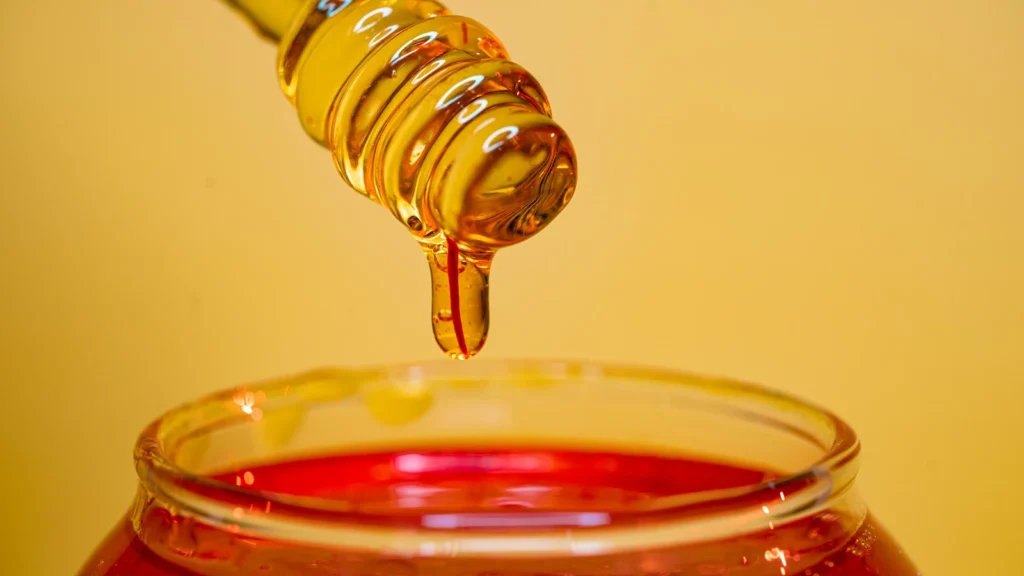
Choose creamed honey when you want to spread it and liquid honey when you want to pour or drizzle it. Creamed honey has a fine crystalline structure; liquid honey offers a pouring form and can crystallize naturally over time. Neither texture alone establishes floral source, authenticity or the full processing history.
Also in this guide: Honey and Cheese Board: A Simple Pairing Plan · Before Replacing Sugar with Honey in a Baking Recipe · How to Set Up a Honey Serving Station · How to Measure Honey for a Recipe
For toast, try a thin spread of creamed honey. For yogurt, choose a liquid drizzle or a small spoonful of creamed honey folded through. Either form can be stirred into a warm drink. For a recipe, keep the stated form and measurement rather than guessing that a rounded scoop equals a measured pour.
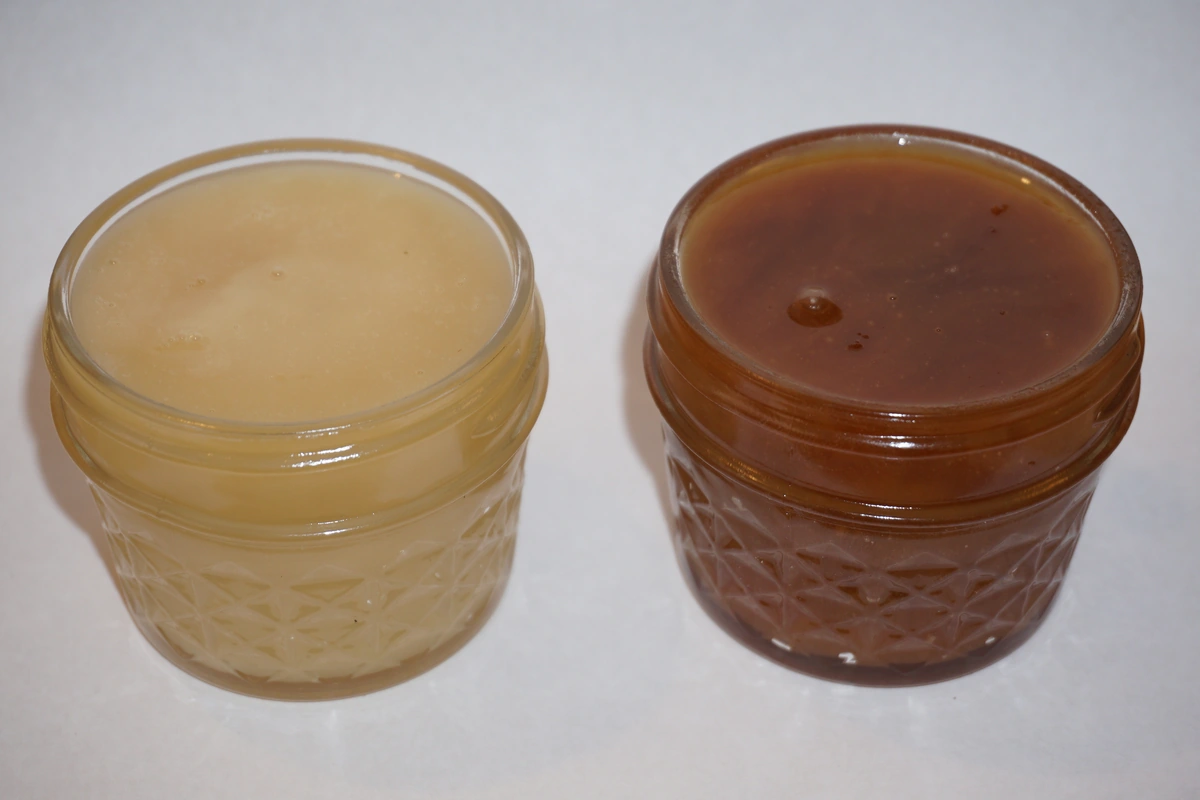
Creamed and liquid honey at a glance
| Question | Creamed honey | Liquid honey |
|---|---|---|
| What is the texture? | Spreadable honey with fine crystals formed under controlled conditions. | Honey in a pouring form; its consistency can vary. |
| How might I serve it? | Spread a thin layer on toast or fold a small spoonful through yogurt. | Drizzle over yogurt or add a measured pour where the recipe asks for it. |
| Can I stir it into a warm drink? | Yes; the original spreadable form matters less once mixed through. | Yes; taste before deciding how much to add. |
| Does texture reveal floral source? | No. Read the source information on the jar. | No. Read the source information on the jar. |
| Does texture prove authenticity? | No. Crystals alone are not an authenticity test. | No. Remaining liquid is not an authenticity test. |
What makes honey creamed?
British Columbia’s apiculture bulletin defines creamed honey as honey crystallized under controlled conditions. Guiding crystallization helps avoid larger crystals and produces a more consistent creamy texture throughout the jar.
Betterbee, a beekeeping equipment supplier, likewise explains creamed honey as controlled crystallization. Its technical guidance distinguishes slow mixing from whipping air into the honey. The smooth texture is therefore better understood through the crystals than through an image of whipped cream.
These descriptions explain the product form. They are not a tested home-production recipe from Greek Bounty. Preparing a consistent batch is a different task from choosing a jar for breakfast.
What liquid honey offers
Liquid honey is convenient when you want a ribbon across a dish or a measured pour. You can see where a drizzle lands and spread it with a spoon if needed. It is a practical form for adding a little sweetness to a finished bowl.
Its consistency can still vary from jar to jar and with temperature. Compare two honeys under similar conditions before deciding that one is unusually thick. Record what you notice without treating it as a laboratory measurement.
Liquid honey can crystallize naturally. That means a jar may change texture over time rather than remaining exactly as it appeared on the day you opened it. If you want it runny again, see how to decrystallize honey; for shelf life, read does honey go bad?
Choose the form for the job
For toast, creamed honey can be convenient because you can lift a small amount with a knife and spread it across the surface. Begin with a thin layer and taste before adding more. The point is control over placement, not a requirement to cover every part of the bread.
For yogurt, liquid honey makes a visible drizzle; creamed honey can be added as a small spoonful and folded through. Try the same plain yogurt if you want to compare the experience. Adding fruit, nuts and honey together makes it harder to identify which difference you prefer.
For a warm drink, either form can be stirred in. Measure a modest amount and taste the drink first without it. Once the honey is mixed through, the original spreadable or pouring form matters less than when you place it on bread.
For a recipe, follow the form and measurement it specifies. A recipe calling for a poured quantity may be easier to reproduce with liquid honey. Do not assume that a rounded scoop of creamed honey matches a measured volume of liquid honey.
Separate texture from flavor
To understand the texture alone, compare honeys with the same declared source if possible. If one is thyme honey and the other is a different variety, the comparison includes source and flavor as well as form.
Ask two separate questions: do I enjoy this honey’s flavor, and do I like how it behaves on this food? A honey may taste appealing but be inconvenient for the serving style you have in mind. Another may spread beautifully but have a flavor you would reserve for a different dish.
There is no need to give one form an overall victory. A jar for spreading and a jar for drizzling can serve different purposes.
Crystals are not an authenticity test
Natural crystallization involves honey’s sugars coming out of solution. Its development depends on the honey and its conditions. A liquid jar and a crystalline jar therefore cannot be ranked for authenticity just by looking at them.
Our pine vs thyme honey guide compares two source types. This comparison focuses on a different question: choosing a deliberate spreadable form or a pouring form for your kitchen.
Do not interpret every unexpected change as ordinary crystallization. If the product seems abnormal or its condition is unclear, consult the producer about that jar rather than using a general texture guide to diagnose it.
Read the jar before choosing
Check the product name, ingredient information, declared origin, source description, dates and storage guidance. Keep any statements about processing separate from the word creamed. Texture alone cannot tell you the complete production history.
Flavored spreads also need their own ingredient check. Decide whether you want the honey’s own flavor or a product with additional flavoring, and compare accordingly. This article does not establish what any Greek Bounty jar contains.
Use a clean, dry utensil, close the jar after serving and follow its storage instructions. If your aim is to preserve a spreadable texture, ask the producer for the guidance specific to that product rather than borrowing a home-creaming temperature.
Explore the Greek honey collection and use the supplied details to understand each jar. Creamed and liquid are useful ways to think about serving honey; your food and routine determine which form you will enjoy most.
Honey and Cheese Board: A Simple Pairing Plan
A honey and cheese board works best when the honey stays in its own small dish. Guests can try the cheese plain, then add a little sweetness to a separate bite. Choose two contrasting cheeses and plain bread or crackers before adding fruit or other accompaniments.
Three combinations to try
For a first tasting, try a soft fresh cheese with a light drizzle, a firm aged cheese with a small dab, and a blue cheese with honey served alongside. These are starting ideas rather than fixed pairings: taste the actual cheese and honey together, then keep the combination you enjoy. Ames Farm’s pairing guide offers a producer’s perspective on matching honey and cheese.
Keep the accompaniments simple during that first comparison. Plain bread lets the pairing stand out; strongly flavoured crackers, chutney and several honeys can make it harder to tell which combination you liked.
Choose a texture that suits the board
Pouring honey suits a spoon or dipper over an individual portion. Spreadable honey works with a small spreading knife. Our creamed versus liquid honey guide explains that texture choice; pine versus thyme honey addresses a different choice, the declared honey source.
Arrange it for comfortable sharing
Put the honey bowl on a stable part of the board with its own utensil and a small rest for drips. Keep a separate knife for each cheese and leave space for slicing. Offer nuts or fruit separately when included, and keep ingredient information available. Follow the cheese’s handling guidance while serving.
Explore the Greek honey collection when choosing the honey. For the next board, remember the cheese’s exact name and the honey you paired with it; those details are more useful than trying to reproduce the size of a styled photograph.
Before Replacing Sugar with Honey in a Baking Recipe
Honey changes more than sweetness when it replaces granulated sugar. It brings moisture and its own flavour to a batter, so a honey-based recipe is the easiest starting point for a dependable bake.
Why a straight swap changes the mixture
Granulated sugar and honey are different physical ingredients: one is dry crystals and the other is a concentrated liquid sweetener. Replacing one with the other changes the recipe’s liquid balance as well as how it is mixed. A cake, biscuit and bread dough need not respond in the same way.
Use honey guidance as part of the whole recipe
University of Wisconsin Extension discusses reducing other liquid and adjusting baking conditions when substituting honey. Its guidance also treats some uses, such as fillings and dressings, differently from baked goods. The practical implication is to use guidance that matches the dish rather than treating one ratio as a solution for every recipe.
Keep the variety and texture in mind
A strongly flavoured honey will become an ingredient in the bake’s flavour. Liquid honey is easier to measure and mix than a firm crystallized portion. The creamed-versus-liquid guide explains texture; the pine-and-thyme comparison introduces varieties.
Choose a practical route
For an occasion, select a recipe developed for honey and follow it as written. For experimentation, adapt a small batch rather than a full celebration cake, and keep the original and changed ingredient quantities. This lets you repeat a result you like without reconstructing the changes from memory.
Explore Greek honey. Technical background: University of Wisconsin Extension’s honey substitution notes.
How to Set Up a Honey Serving Station
A honey serving station needs a stable dish, a suitable utensil and a place for drips. Start with one honey beside the foods it will accompany. Two clearly labelled choices can make a useful tasting; a row of unlabelled jars usually makes breakfast harder to navigate.
Match the utensil to the honey
For flowing honey, use a small spoon or dipper with its own rest. For creamed honey, offer a spreading knife and a dish that stays put while someone takes a portion. The creamed versus liquid comparison explains the serving difference.
Place the honey within easy reach of the plates and bread, with enough space to set a plate down. Keep the honey utensil separate from butter, yoghurt and jam utensils, and replace a utensil that has been mixed into another food.
Give each choice a useful label
Use the product’s name, honey type and relevant ingredient information. For a two-honey station, plain labels such as the actual named thyme honey and pine honey help guests choose without implying that every jar tastes alike. Keep the original packs nearby if more information is needed.
The word creamed describes a honey texture; it is not a declaration about every ingredient in every prepared spread. Our creamed-honey ingredient guide explains why the actual product matters.
Build the food around the station
Bread, plain yoghurt and sliced cheese each give guests a different way to try honey. Serve these separately so each person decides what goes on their plate. Ames Farm’s honey-and-cheese suggestions offer one pairing reference. Follow each accompaniment’s own handling guidance.
For a larger breakfast, use small serving dishes and replenish them as needed rather than crowding the counter. Explore the Greek honey collection for information about the honey itself.
How to Measure Honey for a Recipe
When a recipe gives honey in grams, weigh it directly into the mixing bowl. When it gives a spoon or cup measure, use that measure and scrape the honey into the bowl. Grams and millilitres describe different things, so the same number is not an automatic conversion.
Weigh into the bowl
Place the empty bowl on a kitchen scale and zero it. Add honey slowly until you reach the recipe’s weight. If other ingredients are already in the bowl, zero the scale again before adding the honey. This avoids leaving part of the measured amount clinging to a second container.
For a simple scaling example, half of a recipe calling for 80 g of honey needs 40 g. Work in the same unit as the original recipe. If the scale switches to ounces unexpectedly, change the unit back before continuing.
Transfer spoon and cup measures cleanly
Use the recipe’s stated measuring spoon or cup, rather than a serving spoon whose capacity is unknown. A small flexible spatula helps scrape out a measuring cup. Keep a dish beside the bowl for the sticky utensil so it does not leave honey across the work surface.
Measure the ingredient in the form the recipe names. A spoonful of firm creamed honey may not sit in a measure like flowing honey; see creamed and liquid honey. If a recipe requires warming to combine ingredients, follow its method rather than heating the jar simply to make measuring easier.
Keep honey choice separate from quantity
A honey’s floral source affects the ingredient you choose, not the arithmetic of halving its weight. Our pine and thyme honey comparison can help with that selection. Browse the Greek honey collection for the available product descriptions, then follow the recipe’s own honey quantity.
Using honey: frequently asked questions
How do I pair honey with a cheese board?
A honey and cheese board works best when the honey stays in its own small dish. Guests can try the cheese plain, then add a little sweetness to a separate bite. Choose two contrasting cheeses and plain bread or crackers before adding fruit or other accompaniments.
Can I replace sugar with honey in baking?
Honey changes more than sweetness when it replaces granulated sugar. It brings moisture and its own flavour to a batter, so a honey-based recipe is the easiest starting point for a dependable bake.
How do I set up a honey serving station?
A honey serving station needs a stable dish, a suitable utensil and a place for drips. Start with one honey beside the foods it will accompany. Two clearly labelled choices can make a useful tasting; a row of unlabelled jars usually makes breakfast harder to navigate.
How do I measure honey for a recipe?
When a recipe gives honey in grams, weigh it directly into the mixing bowl. When it gives a spoon or cup measure, use that measure and scrape the honey into the bowl. Grams and millilitres describe different things, so the same number is not an automatic conversion.
Sources
British Columbia: Apiculture Bulletin 603, Creamed Honey
Betterbee: understanding creamed honey
European Commission CORDIS: honey crystallization
Continue exploring this ingredient
Browse the honey guide library, then explore Comb Honey vs Extracted Honey: Choosing a Useful Form and Questions to Ask About a Honey Test Report. For a named producer and pack, see Kalymnos Thyme Honey — G. Skevofylakas, 450g.

Good things from our land, ideas for your table.
Explore the pantry journal →