
Greek Pine Honey vs Thyme Honey: What Changes in the Jar?

The clearest difference between Greek pine honey and thyme honey is their source. Pine honey is a honeydew honey; thyme honey is a nectar honey. Both are made by bees, but the bees collect different starting materials. That distinction is more useful than assuming one jar must be sweeter, healthier or better than the other.
Once you understand the source, you can compare the actual jars: their stated origin, their aromas, how they feel on a spoon and how they work with food. A varietal name is a starting point for discovery, not a promise that every harvest tastes identical.
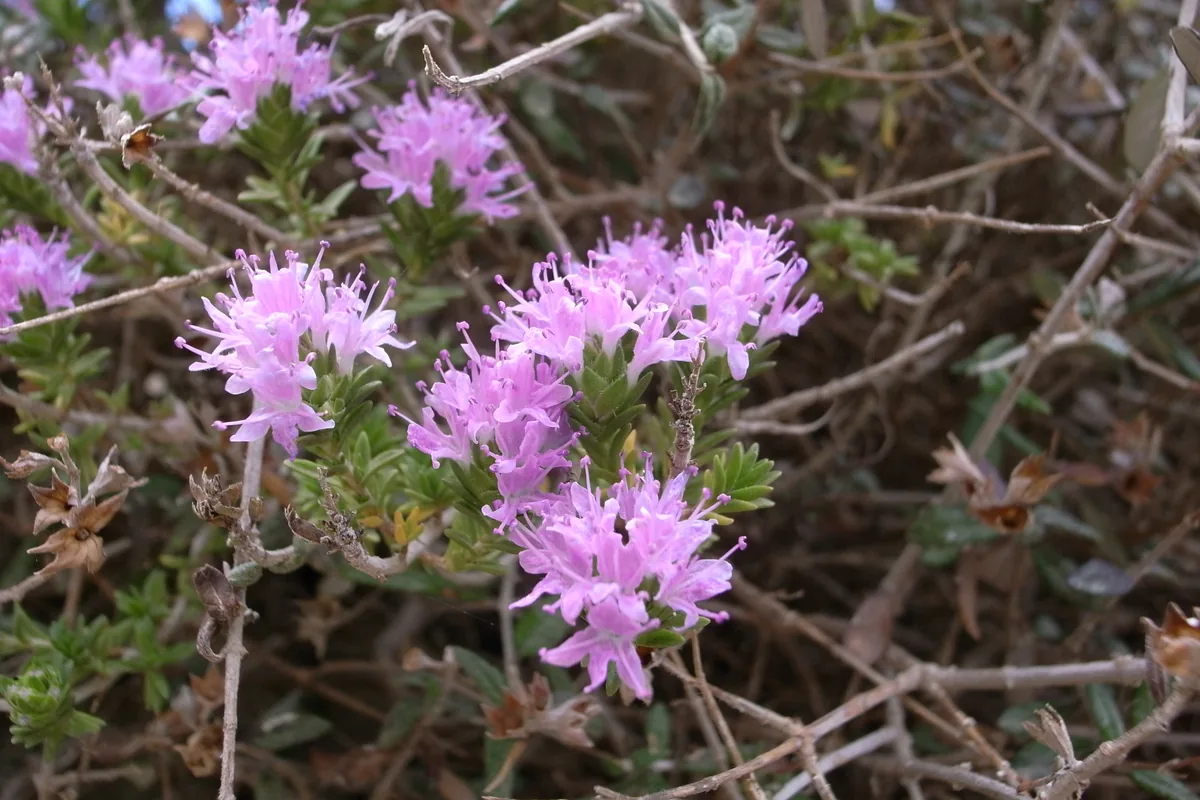
Pine honey: a honeydew origin
Honeydew honey begins with material collected from living parts of plants, including the sugary excretions of plant-sucking insects. Bees collect and transform it into honey. This is the distinction set out in the EU honey definition, rather than a suggestion that pine honey is pine-flower nectar.
Original research on Greek unifloral honeys classifies pine and fir as honeydew honeys. When reading a pine-honey label, think of a forest-associated source, not a jar with pine flavoring added. If a product does contain added ingredients, its ingredient information should be your guide.
A pine-honey name also does not tell you everything about geographical origin. Record the country or region explicitly given. “Pine honey” identifies a source type; “Greek” adds an origin claim. For a useful comparison, you need to understand both.
Thyme honey: a nectar origin
Thyme honey belongs to the nectar-honey group: bees collect nectar from flowers. The same Greek research identifies thyme among the country’s nectar honeys. This does not mean that a spoonful tastes exactly like dried thyme in cooking.
As one producer example, Attiki describes its island thyme honey as golden and aromatic, with a sweet taste and a lingering aftertaste. That is a description of that producer’s product. It is a useful invitation to notice aroma, but it should not be transferred to every thyme honey or to a different brand’s jar.
Honey names and tasting descriptions can be broad. Instead of expecting a rigid flavor formula, look for the producer’s own notes and then decide whether they match your experience. A honey can be distinctive without tasting like the plant’s leaves.
Compare aroma before comparing sweetness
Set out small portions in separate clean dishes at the same room temperature. Smell them first, then taste a little of each. Keep the first comparison plain so yogurt, tea or toasted bread does not cover the differences.
Use three questions: what do I notice before tasting; how does the sweetness feel in the mouth; and what remains after swallowing? If “floral,” “woody,” “herbal” or simply “gentle” comes to mind, write it down as your own observation. Do not force a word because it appears in a product description.
Try reversing the tasting order. The first honey can set your expectations for the second. A sip of water between samples and modest portions make it easier to focus on flavor instead of accumulating sweetness. This is a preference exercise, not a method for verifying botanical origin.
Choose for the food you actually enjoy
For plain yogurt, compare the honeys with equal spoonfuls of the same yogurt. A small drizzle lets you judge whether you prefer the honey to stand out or blend into the tangy base. Add fruit or nuts only after that first comparison, so you can tell which ingredient is changing the result.
For tea, start with the same tea and the same small amount of honey in each cup. Taste the tea plain first. You may want a honey that adds a noticeable aromatic layer, or one that simply gives the cup the sweetness you enjoy. Neither choice requires a claim that one variety is universally best for tea.
If mountain tea is your usual cup, our Greek mountain tea guide can help you understand the herb before adding honey. Brew according to the pack, then make the honey comparison with the same brewed tea.
On bread, use the same bread and skip flavored butter for the first taste. The result may differ from the yogurt comparison. That is useful: one honey can become your breakfast favorite while another suits your evening cup.
Texture and crystals need context
Compare texture at the same temperature. Note whether the honey runs easily from the spoon, pours slowly or spreads. Those observations tell you how convenient it is for a particular use; they are not a ranking of purity.
Honey can crystallize naturally as its sugars come out of solution. Its sugar balance and storage conditions influence the process. Crystals alone do not prove that honey has been adulterated, and staying liquid alone does not establish authenticity. Treat texture as one characteristic rather than a home laboratory test.
For daily use, follow the jar’s storage guidance and use a clean, dry utensil. Do not assume that a change of texture means you need to throw away a normal jar, or that any unexpected change is harmless. If the product seems abnormal, ask the producer rather than diagnosing it from a varietal name.
A useful label checklist
Before deciding between two jars, read the stated floral or honeydew source, the declared country and region, the ingredients, the lot and date information, and the storage directions. Notice whether the description identifies a single source or a blend. If the label simply says “Greek honey,” do not supply a pine or thyme identity yourself.
Keep raw, organic and other claims separate from the source name. A jar does not acquire a certification because it is pine or thyme honey. Only rely on claims actually supplied for that product.
The jar is the final comparison
Greek pine honey vs thyme honey is first a honeydew-versus-nectar comparison, and then a question of personal taste. Your best choice is the jar whose information you understand and whose flavor suits what you eat.
Explore the Greek honey collection and read the details supplied for each product. The discussion here explains honey types; it does not mean that both varieties are currently offered in the collection.
Related guides and sources
Looking for the herb rather than the honey? Our Greek thyme cooking guide explains that separate ingredient. For a serving idea with honey, explore preparing a cup of mountain tea and taste the tea plain before deciding what to add.
Original research: Greek unifloral honey characteristics
Attiki: island thyme honey product description
European Commission CORDIS: why honey crystallizes
Continue exploring this ingredient
Browse the honey guide library, then explore Honey or a Honey Blend? Start with the Ingredient List and Before Replacing Sugar with Honey in a Baking Recipe. For a named producer and pack, see Kalymnos Thyme Honey — G. Skevofylakas, 450g.

Good things from our land, ideas for your table.
Explore the pantry journal →