
Tsoureki: Greek Easter Bread with Mahlepi and Mastiha
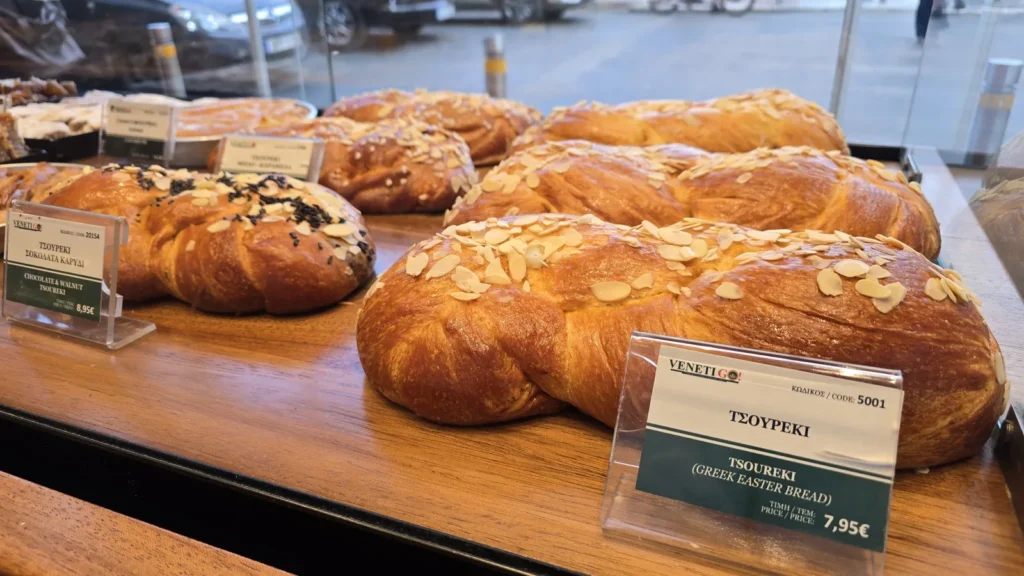

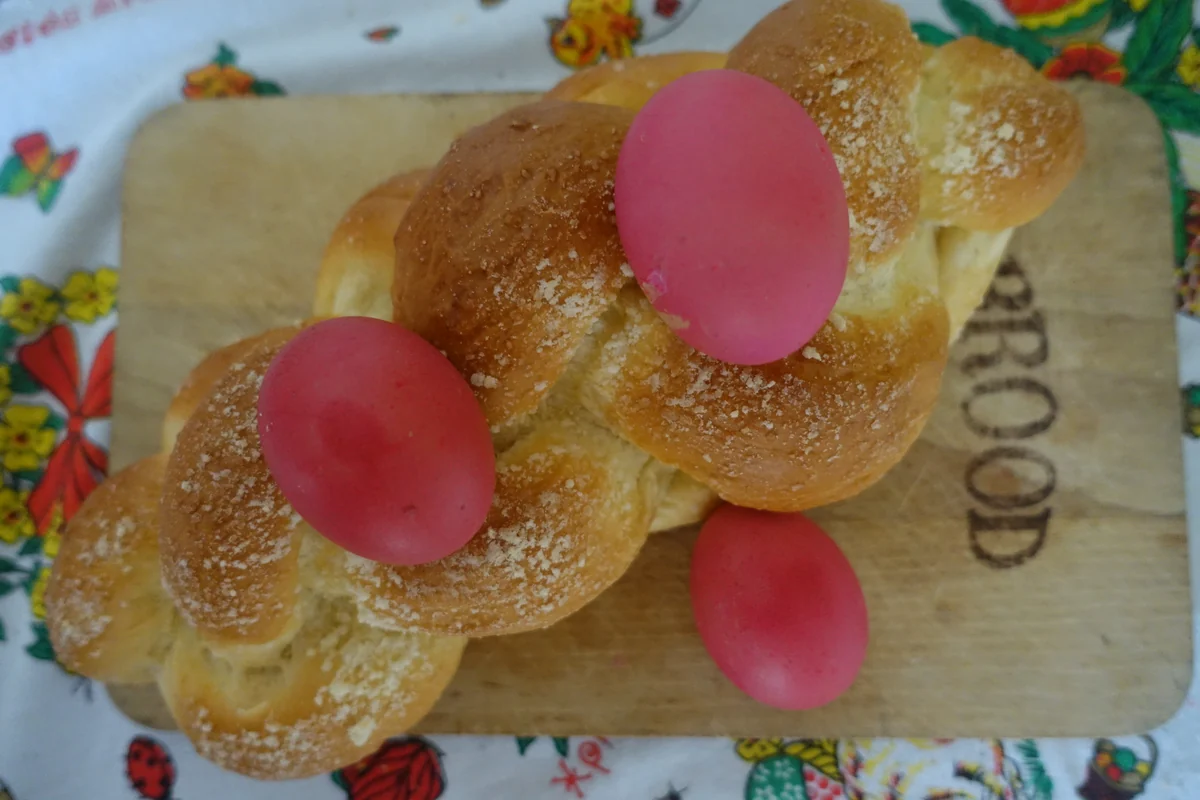
Tsoureki (τσουρέκι) is a soft, sweet, braided bread enriched with butter, eggs and milk, and scented with mahlepi, mastiha and orange. It is baked for Greek Easter, when it is often decorated with a red-dyed egg, and you will find it in Greek bakeries all year round. It takes time, mostly waiting for the dough to rise, but the method is straightforward.
Tsoureki recipe (Greek Easter bread)
Serves: 2 braided loaves, about 12 slices each. Prep: 45 minutes, plus 3–4½ hours rising. Cook: 30–35 minutes. Total: about 5 hours.
Ingredients
For the dough
- 4½ cups (560 g) bread flour, plus extra for kneading
- 2¼ tsp (7 g) instant yeast
- ¾ cup (150 g) sugar
- ½ tsp salt
- 1 tsp ground mahlepi
- ½ tsp mastiha tears, ground with 1 tsp of the sugar
- Finely grated zest of 1 orange
- ¾ cup (180 ml) whole milk, warmed to about 100°F (38°C)
- 3 large eggs, at room temperature, beaten
- ½ cup (115 g) unsalted butter, melted and cooled
To finish
- 1 egg yolk beaten with 1 tbsp milk
- 2 tbsp flaked almonds or sesame seeds
- Optional: 2 red-dyed hard-boiled eggs
Method
- In a large bowl or stand mixer, whisk the flour, yeast, sugar, salt, mahlepi, ground mastiha and orange zest.
- Add the warm milk and beaten eggs and mix to a shaggy dough.
- Knead for about 5 minutes, then add the melted butter a little at a time, kneading until each addition is absorbed.
- Keep kneading for 10–15 minutes by machine (longer by hand) until the dough is smooth, elastic and slightly sticky. It should stretch thinly without tearing.
- Cover and leave in a warm place for 2–3 hours, until doubled in size.
- Punch down and divide into 6 equal pieces. Roll each into a rope about 16 inches (40 cm) long and braid three ropes together to make each loaf. Tuck the ends under. If using red eggs, press one into the top of each braid.
- Place the loaves on lined baking trays, cover loosely and leave to rise for 1–1½ hours, until puffy.
- Heat the oven to 350°F (175°C). Brush the loaves with the yolk and milk glaze and sprinkle with almonds or sesame.
- Bake for 30–35 minutes, until deep golden brown and the internal temperature is about 190°F (88°C). Cover loosely with foil if they brown too fast.
- Cool on a rack before slicing.
Tsoureki and Greek Easter
According to Visit Greece, on Holy (Maundy) Thursday “Greek home ovens get very busy” as tsoureki, described as a fragrant Easter brioche, is baked along with Easter cookies, and eggs are boiled and dyed red. The red, Visit Greece explains, symbolises joy at nature’s rebirth and the Resurrection. A red egg pressed into the braid is a traditional decoration. Read more in our guide to Greek Easter food.
The two special spices: mahlepi and mastiha
Mahlepi (mahleb) is the ground kernel of the stone of the St Lucie cherry. It has a bitter-almond, cherry-like aroma and is used in festive breads and cookies across Greece and the eastern Mediterranean. Buy it ground, or grind the small seeds yourself, and keep it in the freezer because it goes stale quickly.
Mastiha (mastic) is the resin of the mastic tree, collected as small, translucent “tears”. The EU registered Masticha Chiou (mastic from the island of Chios) as a protected designation of origin in 1997. Its flavour is piney and slightly resinous. Grind the tears with a little sugar in a mortar, otherwise they stick together; use it sparingly, because too much tastes bitter.
Both are sold in Greek and Middle Eastern grocers and online. If you can’t find them, tsoureki is still good with orange zest and a little vanilla or ground cardamom, but it won’t have the classic flavour.
How to get the stringy texture
A good tsoureki pulls apart in soft, feathery strands. Three things help:
- Bread flour: its higher protein builds a stronger gluten network.
- Long kneading: knead until the dough passes the windowpane test, stretching thin enough to let light through without tearing.
- Adding the butter gradually: fat added too early or all at once stops the gluten developing. Work it in a little at a time once the dough has started to come together.
A warm, draught-free spot for rising, about 75–80°F (24–27°C), keeps the timings close to the recipe. In a cool kitchen, the first rise can take an hour or more longer; go by size, not the clock.
Braiding
The classic shape is a three-strand braid. Lay three ropes side by side, pinch them together at the top and plait as you would hair, keeping the braid loose so it has room to rise. Some bakers make a round wreath by joining the ends of a longer braid, with a red egg in the centre. Don’t bake raw eggs into the bread: use eggs that are already hard-boiled and dyed.
Tsoureki, challah and brioche
| Bread | Fat | Flavour |
|---|---|---|
| Tsoureki | Butter, eggs, milk | Mahlepi, mastiha, orange; sweet |
| Challah | Usually oil and eggs, no dairy | Lightly sweet, no special spices |
| Brioche | A lot of butter and eggs | Rich and buttery; not usually spiced |
Storing and serving
Wrap cooled tsoureki tightly and keep it at room temperature for 3–4 days, or freeze it, sliced, for up to a month. Day-old slices make excellent toast or French toast. Serve it with Greek coffee, with butter and Greek thyme honey, or alongside koulourakia on the Easter table.
The same enriched dough is the base of some bread-style vasilopita for New Year. For more festive baking, see Greek desserts and melomakarona. Tsoureki contains wheat, eggs and milk, and almonds if you use them, all major food allergens listed by the US FDA.
Sources
- Visit Greece: Easter in Greece
- EUR-Lex: Commission Regulation (EC) No 123/97 (registers Masticha Chiou as a PDO)
- US FDA: Food allergies, what you need to know (the 9 major food allergens)
Tsoureki: frequently asked questions
What is tsoureki?
A sweet, braided Greek bread enriched with butter, eggs and milk and flavoured with mahlepi, mastiha and orange. It is traditionally baked for Easter.
What is mahlepi?
A spice made from the ground kernels of the St Lucie cherry stone, with a bitter-almond, cherry-like aroma.
Can I make tsoureki without mastiha?
Yes. Use orange zest and a little vanilla or cardamom instead. It will still be a good sweet bread, but less traditional in flavour.
Why is my tsoureki dense?
Usually because the dough was under-kneaded, the butter was added too quickly, or it didn’t rise long enough. Knead until the dough stretches thinly and let it double in size.

Good things from our land, ideas for your table.
Explore the pantry journal →