
Dried Greek Oregano: Whole Leaves vs Ground
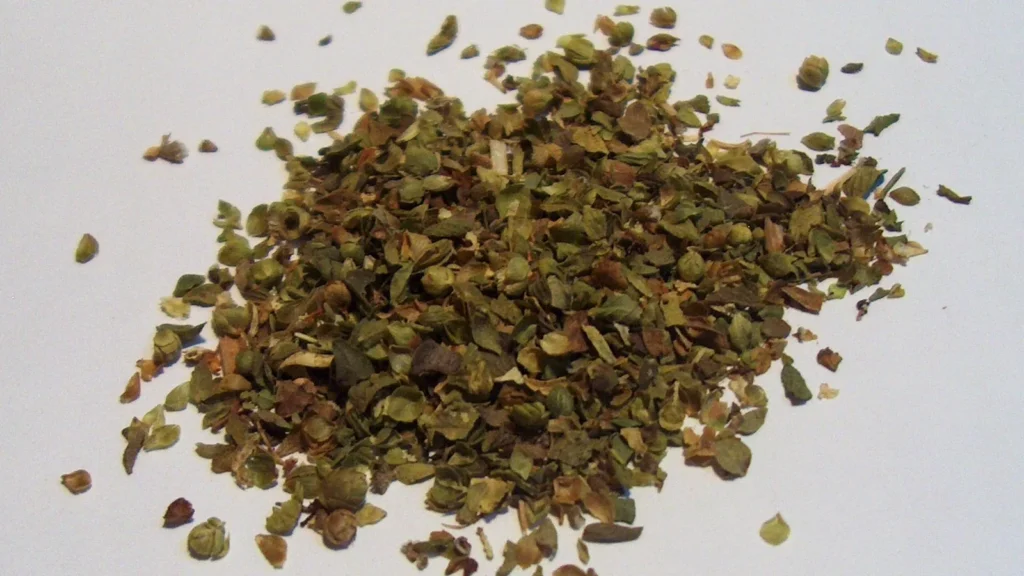

When you compare dried Greek oregano whole leaves vs ground, focus first on the form the recipe asks for. Leafy pieces and a fine powder can both be dried culinary oregano, but they are not automatically equivalent spoon for spoon. The shape of the ingredient matters to measuring and to how you want it to appear in a dish.
Also in this guide: Preparing a Dried Oregano Bunch: Leaves and Stems · Growing Culinary Oregano Indoors for Cooking · How to Prepare Fresh Oregano for Cooking · Mexican Oregano vs Greek Oregano: Read the Ingredient · Oregano on Homemade Pizza: Plan the Seasoning Layers · Oregano vs Sweet Marjoram in Cooking · Plain Oregano vs Greek Seasoning Blend · Thyme vs Oregano: Which Does Your Recipe Need?
This is a guide to choosing a format. For the separate question of plant names, see our Greek oregano versus regular oregano guide. A fine grind does not establish a botanical identity or cultivation origin.
What whole leaves and ground mean
Illinois Extension lists dried leaf oregano and ground oregano as available forms of the same culinary herb. Leaf oregano retains visible pieces. Ground oregano is reduced to a finer form. A pack described as whole leaf may still contain some broken pieces from handling; read the producer’s description rather than expecting every leaf to be intact.
Also distinguish ground oregano from a seasoning blend. A finely textured product may contain other ingredients, so look at the ingredient list. If your recipe specifies plain oregano, an oregano-based mixture is a different substitution decision.
Why the measuring question matters
Illinois Extension advises that the form of herbs can change the amount needed in a recipe. Its culinary guidance distinguishes dried leaf herbs from ground forms. That is a reason to check the recipe, not a license to invent an exact conversion for every jar of Greek oregano.
A spoonful of coarse pieces and a spoonful of fine material are different measurements of differently arranged particles. Do not infer equal amounts simply from using the same spoon. Nor should you assume that equal weights will deliver an identical flavor from different producers or batches.
Read the ingredient line closely
Look for wording such as dried leaf oregano, ground oregano or crushed oregano. Then check how the amount is specified: weight, level spoon, heaped spoon or a less precise pinch. If the author specifies both form and quantity, preserve both as your starting point.
For a repeatable recipe, use the stated measure carefully. If the source leaves the form unclear, inspect its ingredient notes or ask the author. This is especially useful before making a large batch, when an unclear instruction can multiply into a result you did not intend.
Choosing by appearance and texture
Ask how you want the finished dish to look. If you like visible herb pieces on a plate, a leaf format is an understandable choice. If you want a finer addition, a ground format may fit your preference. These are presentation choices to try, rather than proof that one form is universally superior.
Consider a small bowl of dressing: would you like to see the leafy pieces, or would you rather use a finer material? Try the format that matches your goal, then taste it with the food it accompanies. A spoonful of dressing alone is not the same eating experience as a dressed potato or tomato.
Switching between leaf and ground oregano
If your recipe is flexible and you have a different form, begin cautiously and taste before adding more. For a recipe that provides a specific conversion, use that author’s guidance. As a general starting point, Oregon State University Extension gives ¼ teaspoon powdered herb = 1 teaspoon dried herb = 1 tablespoon chopped fresh herb. For oregano, that means about ¼ teaspoon ground oregano in place of 1 teaspoon dried leaf, or 1 teaspoon dried leaf in place of 1 tablespoon chopped fresh leaves. Products vary, so treat it as a first measure and taste before adding more.
Make a note of the product, form and amount you used if you enjoy the result. That creates a useful personal reference. Keep the note specific to the dish rather than deciding that all ground oregano should receive the same adjustment.
Compare products without changing everything
For a simple home comparison, use two small portions of the same plain food and season them separately. Keep other ingredients similar. Decide whether you are comparing the same measured quantity or the amount you actually prefer; those are different questions.
Notice flavor and visible texture without assuming a brand or country must win. This is an invitation to make your own comparison, not a claim that GreekBounty has carried out a side-by-side kitchen test.
Keep the label with the herb
When transferring oregano into a jar, retain the product name, form and date information. Illinois Extension advises storing dried herbs in airtight containers and protecting them from heat, moisture and light. Follow any more specific directions on your pack. Storage advice does not prove the safety of a questionable ingredient.
Explore our Greek oregano collection for product details. Once you have selected a form, our five everyday dishes with Greek oregano offers a broader starting point for using it. Check the exact description rather than assuming this collection always stocks both leaf and ground forms.
Preparing a Dried Oregano Bunch: Leaves and Stems
To prepare a bunch of dried culinary oregano, work over a wide dry tray, detach the leaves gently and remove tough stems before measuring. Sorting a small amount at a time is easier than rubbing an entire bunch straight into a pan.
Use a tray to catch the leaves
Hold a manageable section over the tray and loosen the leafy material with your fingers. Set the stripped stems aside. Spread the leaves in a thin layer so you can see and remove the conspicuous woody pieces before they go into the food.
Keep the ingredient dry during this sorting step. This method is for a food product identified as culinary oregano, rather than an unidentified dried decorative bundle. Our oregano guide explains the ingredient identity.
Sort before grinding or measuring
Do the inspection before using a grinder: powdering everything makes stems harder to recognise. If the recipe asks for loose dried leaves, measure the sorted leaves. If it asks for rubbed or ground oregano, prepare that form before measuring.
The whole-leaf versus ground guide explains the format difference. A spoon containing a long stalk is not a useful equivalent to a spoon of prepared leaves.
Close the remaining ingredient
Return the remaining oregano to a suitable closed container and retain its product name and date information. University of Minnesota Extension’s herb guidance discusses keeping dried herbs away from heat and light.
Check the supplied form when exploring the Greek oregano collection. Sorting a bunch produces a cooking ingredient; it does not turn the stems and leaves into equal measuring units.
Growing Culinary Oregano Indoors for Cooking
To grow culinary oregano indoors, begin with a labelled edible oregano plant, a pot that drains and the brightest suitable position you can provide. Light and watering matter more than placing a decorative herb pot close to the cooker.
Choose a culinary plant and a bright position
A garden centre can supply a named culinary oregano; keep its identification tag. Different oregano types have different culinary and ornamental uses, as described by Illinois Extension. Do not harvest an unidentified ornamental plant for dinner.
Put the pot where it receives strong light rather than choosing a dim position simply because it is convenient for cooking. Iowa State’s indoor-herb guide explains the light and container requirements for indoor herbs. Where natural light is inadequate, consult that guidance before expecting regular kitchen harvests.
Let the pot drain
Use a container with drainage holes and an appropriate potting medium. Keep a saucer underneath for watering, then empty standing water so the roots are not sitting in it. Check the growing medium before watering rather than giving the plant the same amount every day regardless of conditions.
Long, weak growth can be a reason to reassess the light; persistently wet growing medium is a reason to reassess drainage and watering. The plant tag and local horticultural advice can help with the exact variety and conditions.
Harvest a little while the plant grows
Snip small leafy tips from an established plant, leaving healthy growth to recover. Prepare the harvested leaves for the dish rather than pulling the plant apart for one large recipe. Our oregano cooking guide and everyday dish ideas connect the harvest to the kitchen.
An indoor pot is a growing project; the Greek oregano collection is the separate pantry destination when choosing a supplied ingredient.
How to Prepare Fresh Oregano for Cooking
Prepare fresh culinary oregano by washing it, removing excess moisture and separating the leaves from tough stems. Chop the leaves only as finely as your dish needs. Small tender tips and woody lower stalks behave differently in a finished meal.
Wash and dry before chopping
Rinse the fresh oregano under clean running water and gently remove surface moisture with a clean towel or suitable salad spinner. A wet bunch can dilute a dressing and cling to the board, making it harder to chop evenly. Purdue Extension’s oregano reference provides selection, storage and preparation background.
Strip the usable leaves
Hold a stalk near the tip and gently pull the lower leaves away from the stem over a board or bowl. Inspect the leaves and remove conspicuous tough pieces. For very tender tips, follow the recipe’s instruction about whether to chop the whole tip or use leaves alone.
If a recipe calls for a whole sprig to flavour a pot, keep that sprig intact and remove it when directed. For a chopped salad or dressing, prepare the leaves so guests do not meet woody stalks.
Measure in the form the recipe names
If the recipe asks for chopped fresh oregano, chop before taking that measure. Fresh and dried oregano have different physical forms; our whole-leaf and ground oregano comparison explains why a spoonful is not the same across formats.
Our Greek oregano cooking guide offers broader kitchen context. Add your prepared leaves at the stage specified by the recipe, retaining a little for finishing only if it suits the dish. Explore the Greek oregano collection for the forms described there.
Mexican Oregano vs Greek Oregano: Read the Ingredient
Mexican oregano and Greek oregano can share a kitchen name while referring to different plants. Greek oregano is associated with Origanum vulgare subsp. hirtum; Mexican oregano commonly refers to Lippia graveolens. Check the product identity as well as the recipe name.
The common name is not a botanical match
Illinois Extension’s oregano reference lists Greek oregano separately from Mexican oregano, naming Lippia graveolens for the latter. A packet labelled oregano in one culinary context may therefore contain a different herb from another packet bearing the same everyday word.
The botanical identity and growing origin are also separate questions. Greek oregano names a culinary type; it does not, by itself, prove that every plant or packet was grown in Greece.
Use the recipe’s intended context
If you are learning a Greek tomato or vegetable dish, start with the oregano named by its author. If following a Mexican recipe that calls for Mexican oregano, use that ingredient to establish your reference version. Similar uses in savoury food do not mean the finished flavour will be identical.
For a flexible meal, you may enjoy a substitution. Add a modest amount and keep other seasoning changes small. Match the specified fresh or dried form before comparing quantities, and avoid treating a mixed seasoning as either plain herb.
Choose the right next guide
Our Greek oregano cooking guide gives the Mediterranean ingredient context. The whole-leaf versus ground guide addresses a separate issue, the physical form you measure.
Explore the Greek oregano collection for its named products. When asking a seller a question, give the exact pack name or botanical description rather than assuming all oregano labels mean the same plant.
Oregano on Homemade Pizza: Plan the Seasoning Layers
Use oregano on homemade pizza in one of two places: a little in the tomato sauce, or a light finishing sprinkle. Decide where you want its flavour before adding it at every stage. A strongly seasoned sauce may need no extra oregano on top.
Season the sauce first
If following a pizza recipe, use its oregano amount and stage of addition. For a flexible tomato sauce, mix in a small amount, taste the sauce and adjust before spreading it. Keep garlic, salt and any seasoning blend in the same flavour plan rather than treating each addition in isolation.
Purdue Extension’s oregano reference discusses its culinary use. Our Greek oregano guide gives broader kitchen context.
Choose fresh leaves or a dried sprinkle
For fresh oregano, prepare the leaves and remove tough stems before using them. Chopped leaves can distribute through sauce; a few prepared leaves can also finish a baked pizza. For dried oregano, loosen the amount you plan to use before sprinkling so it does not land in one concentrated patch.
The whole-leaf and ground comparison helps explain texture. Follow the recipe when changing fresh to dried rather than matching a handful of fresh sprigs with the same volume of dried herb.
Taste one slice before seasoning the whole pizza
When the pizza is ready to serve, try a little oregano on one slice first. That is an easy way to judge a finishing addition without coating every portion. Strongly flavoured olives, cheese or cured toppings may already give the pizza the intensity you want.
Explore the Greek oregano collection for the supplied form, then keep the seasoning amount that suits your own sauce and toppings.
Oregano vs Sweet Marjoram in Cooking
Oregano and sweet marjoram are related culinary herbs with different flavour profiles. Oregano generally brings a more pungent character; sweet marjoram is milder and sweeter. Choose the herb your recipe names when you want to learn that dish before adapting it.
Related plants, different ingredients
Iowa State University Extension identifies oregano as Origanum vulgare and sweet marjoram as Origanum majorana, while noting variation among oregano types. The common names on culinary packs matter; related plants are not simply two roast-like versions of one ingredient.
Where the difference matters at the table
Try oregano where you want a distinct herbal note in a tomato dish, pizza or a robust vegetable preparation. Sweet marjoram can suit a gentler herb contribution to eggs, poultry or vegetables. These are ideas for choosing a recipe, not rules excluding either herb from other dishes.
If a favourite dish depends on oregano’s character, marjoram will make a variation. When trying that change, keep the rest of the seasoning familiar so you can tell whether you like it.
Substitute thoughtfully
First match the form: fresh leaves, dried leaves or a prepared blend are different starting points. Begin with the recipe author’s substitution advice. Without it, use a flexible dish and add modestly, tasting where appropriate; this is more useful than assuming a fixed conversion for every pair of products.
Our whole-leaf and ground oregano guide covers physical format, while the Greek oregano guide gives the broader ingredient context. Explore the Greek oregano collection for the actual named herb.
Plain Oregano vs Greek Seasoning Blend
Plain oregano is one herb. A Greek seasoning blend combines ingredients chosen by its maker and may include salt, garlic, pepper or other herbs. Read the ingredient list before substituting a blend for the oregano in a recipe. To make your own blend and control each part, try our homemade Greek seasoning recipe.
Why an equal spoonful can change the dish
A recipe calling for oregano, garlic and salt controls those ingredients separately. If a seasoning blend already contains all three, adding it plus the full listed garlic and salt changes the balance. Matching the oregano spoonful cannot account for unknown proportions in the mixture.
Use a recipe written for the particular blend when you want a predictable starting point. For a flexible dish, add a modest amount, taste at an appropriate stage and adjust other seasonings in response. There is no single conversion from every Greek seasoning blend to plain oregano.
Choose control or convenience
Plain oregano is useful when you want to adjust that herb independently: for example, adding oregano to tomatoes while choosing the garlic and salt separately. A blend is convenient when you enjoy its combined flavour and want to repeat it.
University of Maryland Extension’s herb-cooking guidance advises care with combinations of strong herbs. Several unfamiliar blends in the same dish can obscure the flavours you meant to add.
Check composition and physical form separately
Whole leaves, rubbed leaves and powder describe format; single herb versus blend describes composition. Our whole-leaf and ground guide covers the first question, while the Greek oregano guide covers the herb itself.
Explore the Greek oregano collection when you need the named herb. A Greek-style seasoning name alone does not establish the growing origin of its ingredients.
Thyme vs Oregano: Which Does Your Recipe Need?
Thyme and oregano are different herbs, even when they appear in similar savoury dishes. Start with the herb your recipe names, then consider the fresh or dried form and whether it remains in the food or comes out before serving.
Choose by the job in the dish
A whole thyme sprig used in a removable herb bundle has a different practical role from oregano leaves scattered through a salad. Before substituting, read both the ingredient line and the cooking step. The replacement must suit the preparation as well as the flavour you want.
Our thyme guide and Greek oregano guide introduce the two ingredients. Iowa State Extension also treats thyme separately from oregano and marjoram.
Make the first substitution small
A dish built around thyme will change when you use oregano. In a flexible vegetable or bean dish, that may be a variation you enjoy. Keep the other seasonings familiar, add modestly and taste at an appropriate stage rather than making several changes at once.
Match the form before thinking about quantity. A count of fresh sprigs does not convert directly into teaspoons of a different dried herb. Use the recipe author’s substitution advice when supplied; there is no universal thyme-to-oregano exchange for all recipes. For starting amounts to taste from, and other options such as marjoram and savory, see our thyme substitute guide.
Keep pantry destinations clearly named
The Greek oregano collection concerns oregano. Thyme honey is honey associated with a floral source, rather than thyme leaves for cooking.
Once you find a variation you like, retain the herb name, form and amount with the recipe. That gives you a repeatable meal while preserving the distinction between the original and your adaptation.
Comparing oreganos? See Greek oregano vs Italian oregano.
Oregano: frequently asked questions
How do I strip the leaves from a dried oregano bunch?
To prepare a bunch of dried culinary oregano, work over a wide dry tray, detach the leaves gently and remove tough stems before measuring. Sorting a small amount at a time is easier than rubbing an entire bunch straight into a pan.
Can I grow culinary oregano indoors?
To grow culinary oregano indoors, begin with a labelled edible oregano plant, a pot that drains and the brightest suitable position you can provide. Light and watering matter more than placing a decorative herb pot close to the cooker.
How do I prepare fresh oregano for cooking?
Prepare fresh culinary oregano by washing it, removing excess moisture and separating the leaves from tough stems. Chop the leaves only as finely as your dish needs. Small tender tips and woody lower stalks behave differently in a finished meal.
What is the difference between Mexican oregano and Greek oregano?
Mexican oregano and Greek oregano can share a kitchen name while referring to different plants. Greek oregano is associated with Origanum vulgare subsp. hirtum; Mexican oregano commonly refers to Lippia graveolens. Check the product identity as well as the recipe name.
When should I add oregano to homemade pizza?
Use oregano on homemade pizza in one of two places: a little in the tomato sauce, or a light finishing sprinkle. Decide where you want its flavour before adding it at every stage. A strongly seasoned sauce may need no extra oregano on top.
Can I use marjoram instead of oregano?
Oregano and sweet marjoram are related culinary herbs with different flavour profiles. Oregano generally brings a more pungent character; sweet marjoram is milder and sweeter. Choose the herb your recipe names when you want to learn that dish before adapting it.
Is Greek seasoning the same as oregano?
Plain oregano is one herb. A Greek seasoning blend combines ingredients chosen by its maker and may include salt, garlic, pepper or other herbs. Read the ingredient list before substituting a blend for the oregano in a recipe.
Thyme or oregano: which does my recipe need?
Thyme and oregano are different herbs, even when they appear in similar savoury dishes. Start with the herb your recipe names, then consider the fresh or dried form and whether it remains in the food or comes out before serving.
Sources
Illinois Extension: herb forms, measuring differences and storage. Iowa State University Extension: oregano background. Oregon State University Extension: drying herbs and fresh, dried and powdered herb equivalents. Format examples and comparison suggestions are original editorial guidance.
Continue exploring this ingredient
Browse the oregano guide library, then explore Preparing a Dried Oregano Bunch: Leaves and Stems and Plain Oregano vs Greek Seasoning Blend.

Good things from our land, ideas for your table.
Explore the pantry journal →