
Your First Cup of Greek Mountain Tea: A Simple Brewing Ritual
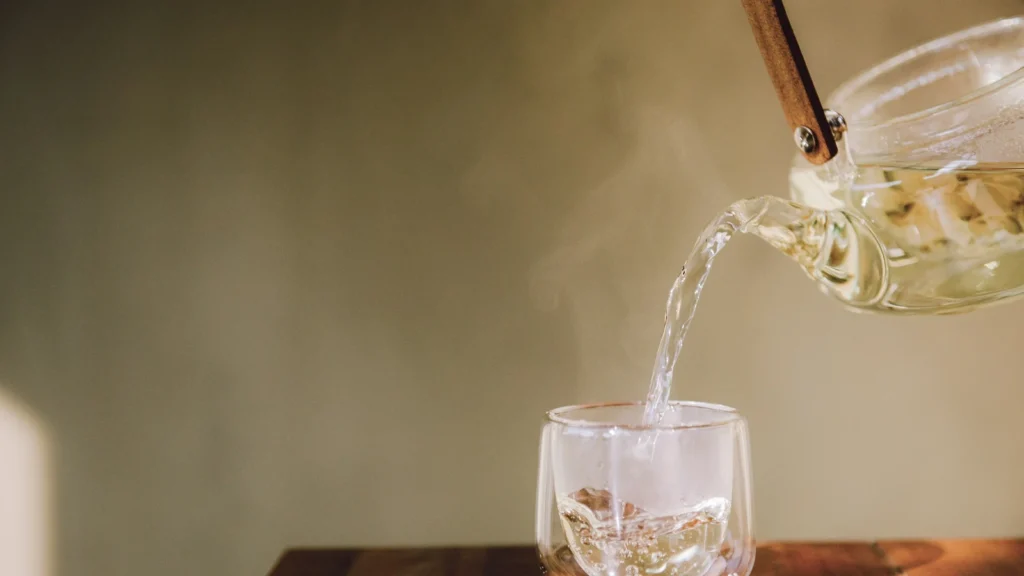
Featured image: AI-generated pantry illustration, not a photograph of supplier inventory.
Also in this guide: Cultivated vs Wild Mountain Tea: What the Sourcing Words Mean · Greek Mountain Tea vs Chamomile: Different Herbs in the Cup · Hosting a Small Mountain Tea Table · Loose Greek Mountain Tea vs Tea Bags · A Mountain Tea Gift Checklist for a New Tea Drinker · Planning Pot and Cup Capacity for Mountain Tea Service · Mountain Tea and Black Tea Come from Different Plants
If your idea of tea begins with a small paper bag, Greek mountain tea can be a pleasant surprise. Depending on how it is packaged, you may see dried stems, leaves, and flowering tops rather than finely cut leaves. That appearance is part of the experience: a familiar pantry ritual made from a different plant.
You do not need special equipment to prepare it. A mug, a heatproof pot, a strainer, and a little attention to the first cup are enough. The goal is a drink you enjoy, with room to adjust the strength, sweetness, and serving style.
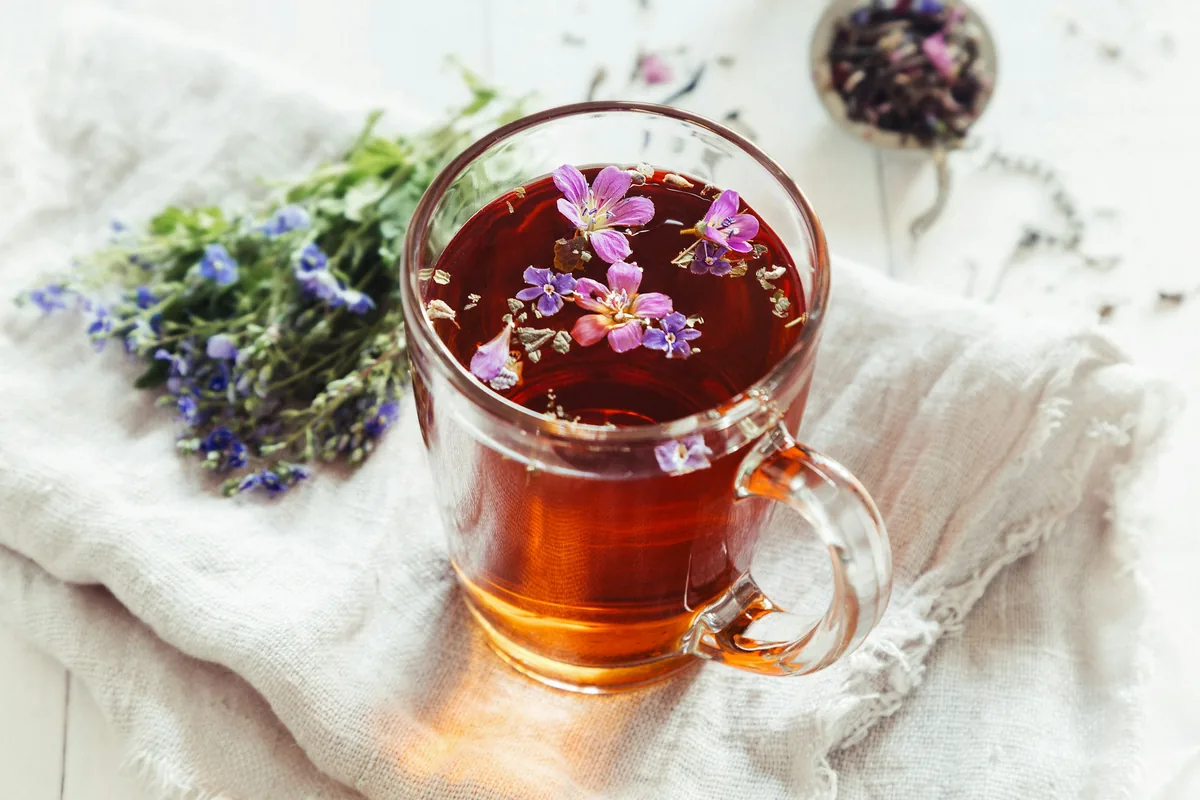
What is in Greek mountain tea?
Greek mountain tea refers to herbal preparations made from plants in the genus Sideritis. It is different botanically from black and green tea. More than one Sideritis species is associated with mountain tea, so check your package rather than assuming every regional name describes an identical plant.
Two preparation words you may encounter are infusion and decoction. In kitchen terms, an infusion steeps the herb in hot water; a decoction heats the herb with water. This article is about preparing a beverage for enjoyment, not using it to treat a condition. The package’s ingredient list and preparation directions should guide your particular purchase, especially if it contains other herbs.
A straightforward first-cup method
Begin with the quantity and method on the package. Whole sprigs vary considerably in size, and a “handful” is not a useful universal measurement. If instructions are absent, ask the supplier for a recommended amount before treating any online recipe as product-specific guidance.
- Measure the herb according to the label and place it in a heatproof pot or infuser. Break long stems only as needed to fit; keep small pieces contained so they are easy to strain.
- For a steeping preparation, add freshly boiled water and cover the vessel. If your package instead recommends simmering, follow that method rather than combining two recipes.
- Use the stated brewing time, then strain into a mug. Taste the first sip plain before adding anything.
- For the next cup, change one thing at a time: a little more or less herb, or a shorter or longer steep within the label’s guidance. Note what you prefer.
This small comparison is more useful than searching for one supposedly perfect method. Package format, plant material, and your preferred strength can differ. A covered pot and a clean strainer are practical tools; an elaborate tea set is optional.
Taste first, then add lemon or honey
Think of the flavor as something to discover from your own cup. Herbal, floral, and gently earthy are useful possibilities to look for, but they are not a guaranteed tasting profile for every mountain tea. Smell the brewed cup and compare it with the dried herb. It is fine if your own description is simply “light,” “rounded,” or “more aromatic than expected.”
Try a few drops of lemon juice in a second sip rather than adding half a lemon immediately. If you like a sweetened drink, stir in a little honey, taste, and adjust. Either addition can shift the balance enough to hide the character you were trying to explore. A plain cup is a useful reference even when your favorite version includes both.
How it differs from other pantry herbs
Mountain tea, oregano, and mint may share space in a Greek pantry, but they do different jobs in a meal. Oregano usually provides a pronounced savory seasoning in potatoes, sauces, salads, or grilled food. Mountain tea is prepared as a drink. Do not substitute spoonfuls of oregano for a tea blend or assume herbs with similar-looking dried stems are interchangeable.
At the table, try mountain tea alongside toast with honey, a simple cookie, or a slice of citrus cake. These are serving suggestions, not a claim about one compulsory Greek tradition. Keep the food uncomplicated for your first tasting so you can notice the drink itself. For a cooler serving, brew according to the label, cool safely, refrigerate, and pour over ice when ready.
Keep the ritual simple
Store the dry herb as directed on its package, keep it dry, and close it after use. Save the label so you retain the ingredients and brewing guidance. Buying a tea because you enjoy its preparation and flavor is reason enough; it does not need a health promise to belong in your kitchen.
Explore Greek mountain tea, read the details for the product you choose, and begin with one unhurried cup. Once you know your preferred preparation, the ritual becomes comfortably repeatable.
How to brew Greek mountain tea: steep or simmer?
Steeping means pouring hot water over the herb and leaving it to infuse away from active heat. Simmering means keeping the herb in water over gentle heat before straining. Both appear in producers’ instructions, so use the method specified for your pack rather than combining their timings.
For a concrete example, VEVI’s mountain-tea guide uses about 2 g per 250 ml of water, a gentle simmer for 3–5 minutes, then a covered rest off the heat for 2–5 minutes. Valley of Tea gives a different approach for its product: 2 g per 250 ml, water at 100°C, and a 5–7-minute steep before straining.
These are attributed producer examples, not a Greek Bounty recipe tested with our products. They show why the method matters alongside the amount. If your tea comes in a bag, follow its own instructions; do not assume a whole-stem method applies unchanged.
Whole stems, cut herb and measuring
Check whether you have whole flowering stems, cut herb or a tea bag. A handful is difficult to repeat because the pieces vary in size. Where a producer gives grams, weighing the herb makes your next cup easier to compare. Snap stems only as needed to fit your pot, and leave room to strain them comfortably.
Make a small note of the amount, water volume and method you use. Taste the first cup plain. If you want a stronger cup next time, change one variable within the pack’s guidance. Adding more herb and more brewing time together makes it harder to see which change you prefer.
Does Greek mountain tea contain caffeine?
Pure Sideritis mountain tea is described as caffeine-free by producers such as VEVI. Check the full ingredient list on a blend: a product containing black or green tea is a different drink. A mountain-tea name on the front is not a substitute for the actual ingredients or caffeine information.
Can I serve mountain tea over ice?
Yes, you can explore it as a chilled drink. Prepare it using the pack’s hot-brewing directions and strain out the herb. VEVI’s iced example uses a stronger brew because ice dilutes the drink. For your own first comparison, try a small batch and consider how much ice you will add before changing the herb quantity.
Use a clean container, cool the strained tea and refrigerate it for chilled serving. Add lemon or honey to taste after you have tried it plain. This guide does not set a tested storage life for brewed tea; make a modest amount rather than treating it as a long-term pantry drink.
How should I store the dry tea?
Follow the pack’s storage directions. Valley of Tea advises a cool, dry place away from direct sunlight and keeping its tea tightly sealed after opening. Use a dry utensil and keep the herb away from cooking steam.
For plant identity and selection, see our Greek mountain tea guide. Explore the mountain tea collection and check the preparation details supplied for the particular pack.
Cultivated vs Wild Mountain Tea: What the Sourcing Words Mean
Cultivated mountain tea is grown as a crop; wild-collected mountain tea is gathered from plants growing outside cultivation. Those words describe sourcing, while Sideritis identifies the botanical ingredient. Cultivation does not turn mountain tea into a different drink, and a wild claim does not supply every other fact about a pack.
Cultivation is a real mountain-tea route
A 2022 study published by the Bulgarian Academy of Sciences describes cultivated Sideritis scardica and investigates seed production and pollination in wild and cultivated settings. Its work shows that cultivation belongs in a factual discussion of this plant, rather than being treated as an imitation of wild material.
The study concerns identified locations and plants. Use it as background when understanding the sourcing term, then ask the supplier about the actual product. A photograph of a mountain or a traditional-looking bundle cannot tell you how that pack was sourced.
Keep plant identity and sourcing separate
A cultivated pack and a wild-collected pack may name the same species, but the two sourcing statements answer a different question from the species name. Read the actual botanical wording before comparing how the plants were grown or collected.
Our guide to Sideritis names on labels explains the identity question. Keep origin in its own field too: a growing or collection location is more specific than the address of the business that packed the tea.
Ask what the sourcing statement covers
A practical question is: “Is the material cultivated, wild-collected, or a stated combination, and what information supports that description for this product?” If the supplier uses hand-picked, ask what stage that describes. Harvesting by hand and growing under cultivation can be separate characteristics.
Treat organic wording as another specific claim to clarify rather than a synonym for wild. Request the relevant current product information if it matters to your choice. Keep the supplier’s answer with the pack identity so a later purchase can be checked against the same description.
Understand the conservation question without guessing
The EU CAP Network describes work on Sideritis that includes protocols for sustainable wild collection and cultivation. The practical lesson for a buyer is to ask how a sourcing statement is supported rather than ranking every wild pack above every cultivated one.
The mountain-tea guide connects sourcing questions with ingredient and preparation information. Whichever description the pack gives, use its own preparation directions instead of assuming the sourcing term establishes a brewing method.
Explore the Greek mountain-tea collection and request the current details for the item that interests you. Background: the Bulgarian Academy of Sciences study and the EU CAP Network project summary.
Greek Mountain Tea vs Chamomile: Different Herbs in the Cup
Greek mountain tea and chamomile are different herbs. Mountain tea is associated with Sideritis; German chamomile is Matricaria chamomilla. Neither is a processing style of the other.
The plants belong to different families
Kew places Sideritis scardica in the mint family, Lamiaceae, and Matricaria chamomilla in the daisy family, Asteraceae. Sideritis scardica is a perennial subshrub, whereas German chamomile is an annual. Those botanical differences remain even when both products sit in the same herbal-tea section.
What the dried ingredient can look like
A loose mountain-tea pack can contain flowering stems, leaves and flower heads. Chamomile products are often sold as flower material or in bags. Format varies, so a cut or bagged product may not look like the whole living plant. Use the botanical name to settle identity, rather than identifying a chopped herb by appearance alone.
Which one should you buy?
Choose by the ingredient you want to explore and the preparation format that suits you. If you already drink chamomile, mountain tea is a different botanical ingredient to try, not a stronger or weaker grade of chamomile. For mountain tea, a pot and strainer should accommodate the stem pieces in a loose pack. Preparation quantities and timing belong to the actual product.
Continue with the mountain-tea basics
The Greek mountain-tea guide introduces Sideritis. Our species-name guide explains why Sideritis species wording matters within that category.
Explore Greek mountain tea. Botanical sources: Kew’s records for Matricaria chamomilla and Sideritis scardica.
Hosting a Small Mountain Tea Table
For a small mountain-tea gathering, set up one place for preparation and another for serving. A pot, a stable strainer, cups and a separate dish for the spent herbs make loose Sideritis easier to share without putting the whole brewing process in every guest’s hands.
Set out the equipment first
Choose a pot that accommodates the actual stems or cut material. Put the strainer on a dish when it is not in use, and allow enough table space to pour without reaching across cups. Keep the hot pot within the host’s easy reach.
Prepare the plain drink before adding extras
A plain preparation lets guests choose their own honey or lemon. Put those additions on their own small tray with separate utensils. If you want to offer another herb, present it as a separate drink or clearly named blend rather than adding it silently to the mountain tea.
Make the snack part simple
Choose easy-to-serve portions so guests do not need to juggle a cup, knife and shared platter at once. Small pieces of pasteli or dried figs can be offered as separate Greek pantry foods. Their presence beside the pot does not make them ingredients of the tea.
Give curious guests a useful starting point
Explain that mountain tea refers to Sideritis herbs, then let the conversation follow their interest. The mountain-tea guide covers the ingredient; the first-cup guide covers preparation. Have the pack nearby so a guest can identify what they enjoyed.
Explore the mountain-tea collection. This is a suggested hosting arrangement that you can adapt to your table and equipment.
Loose Greek Mountain Tea vs Tea Bags
Loose mountain tea gives you control over the amount of plant material in the pot; a tea bag supplies a pre-portioned format. The practical choice is about preparation and portioning, rather than assuming that one format always tastes better.
Loose stems need room
Traditional loose material can include flowering stems and leaves. A narrow ball infuser may be awkward for long pieces, whereas a pot with a separate strainer lets you handle them more easily. Our flowers, leaves and stems guide explains these plant parts. Inspect the actual cut before buying equipment.
A bag makes the starting portion repeatable
A bag contains a stated amount, but bags from different makers need not contain the same weight or ingredients. Compare net weight and bag count to understand the format. For example, 20 bags in a 30g box means an average of 1.5g per bag; it does not establish a universal brewing dose.
Compare ingredients before comparing convenience
Mountain tea refers to Sideritis, while ordinary black and green teas come from Camellia sinensis. A bagged herbal blend may contain other plants too. Neither the bag nor the loose format identifies a species by itself. Kew’s Sideritis scardica record provides botanical context.
Which format suits your routine?
Choose loose material if adjusting the amount and using a strainer suit your routine. Choose a bagged format if quick portioning and cleanup matter more. Start preparation with the directions for that particular item. Our mountain-tea guide connects format choices with brewing and sourcing.
Explore the Greek mountain-tea collection and check which format is actually offered.
A Mountain Tea Gift Checklist for a New Tea Drinker
For a first mountain-tea gift, make the ingredient easy to understand and easy to prepare. The recipient is more likely to use a modest, clearly identified pack with a suitable strainer than a large decorative bundle with no obvious way to brew it.
Match the format to the recipient’s kitchen
Loose stems suit someone comfortable using a pot and strainer. A more compact cut or bagged format may suit someone whose routine is based on a single mug. Check the actual format being sold before choosing accessories; a tiny tea ball may not accommodate whole stems.
Give them the name they can buy again
Keep the product name and any botanical name with the gift. Sideritis is the mountain-tea genus, and Sideritis scardica is one species used in this context. Kew’s species record supplies botanical background. Our label guide explains those names.
Include a useful first step
Keep the preparation instructions with the pack. If you add a serving suggestion, separate it from those instructions: honey or lemon can be an optional extra. A small pot or strainer is useful only if its size suits the purchased material.
Prefer a manageable quantity
A gift should fit the recipient’s habits and storage space. A smaller introductory pack lets them decide whether to include the drink in their routine. Do not choose an oversized pack solely because it looks generous.
The mountain-tea guide is a practical companion to a first gift. Browse the collection and confirm the current format and availability.
Planning Pot and Cup Capacity for Mountain Tea Service
Choose a mountain-tea pot by its measured serving yield, not just the capacity printed on its box. The pot needs space for water, loose plant material and safe pouring, while the cups need their own headroom.
Start with the cups
Fill a cup with plain water to the level you would actually serve, then measure that amount. For illustration, four 180ml servings require 720ml in the cups. Four nominal 250ml cups do not automatically mean you should pour one litre of water into a one-litre pot.
Separate water added from drink poured
Loose herbs and the strainer can retain liquid. The usable yield is the drink that reaches the cups after straining, rather than the starting water quantity. Measure it in your own setup. A water-only capacity check helps establish headroom; a preparation with the actual tea establishes serving yield.
Give the material room
Long Sideritis stems may need a larger opening or a separate strainer. A very fine cut has different handling needs from an intact bundle. See mountain-tea flowers, leaves and stems before choosing an infuser.
Scale the correct method
Once you know the required liquid yield, use the preparation guidance for the product rather than estimating the amount from stem length. If several small pots suit service better than one large pot, portion each consistently. The mountain-tea guide connects these practical questions with brewing and ingredient identity.
Explore the mountain-tea collection for the ingredient category. Vessel calculations here are worked planning examples, not a guaranteed servings-per-pack claim.
Mountain Tea and Black Tea Come from Different Plants
Greek mountain tea comes from Sideritis herbs; black tea comes from Camellia sinensis. Black and green teas share a plant species and differ in processing. Mountain tea sits outside that black-versus-green distinction.
Tea can name a plant or a prepared drink
Kew identifies Camellia sinensis as the tea plant. Its leaves produce familiar black and green teas. In everyday language, tea also describes an infusion made from other plants. That broader use explains why the shelf can include mountain tea, chamomile and black tea without implying they are the same ingredient.
Sideritis has its own botanical identity
Sideritis scardica is one species used for mountain tea. Kew places it in Lamiaceae, while Camellia sinensis belongs to Theaceae. A mountain-tea pack can therefore carry a scientific name entirely different from the names on black tea. See our Sideritis label guide for the species question.
Preparation equipment can differ too
Whole mountain-tea stems can be awkward in a small tea ball designed for cut leaves. A pot and strainer give larger pieces room. Bagged forms change that practical comparison, so choose equipment for the format you buy.
Make a clear order
Ask for Sideritis mountain tea if that is what you want, especially when a menu says only herbal tea. If a blend is offered, find out its other ingredients. The mountain-tea guide introduces the ingredient and links to its preparation guide.
Browse the mountain-tea collection. Botanical references: Kew’s Camellia sinensis and Sideritis scardica records.
What does the evidence say? Read Greek mountain tea benefits: what the EMA assessment says.
Greek mountain tea: frequently asked questions
What is the difference between cultivated and wild mountain tea?
Cultivated mountain tea is grown as a crop; wild-collected mountain tea is gathered from plants growing outside cultivation. Those words describe sourcing, while Sideritis identifies the botanical ingredient.
Is Greek mountain tea the same as chamomile?
Greek mountain tea and chamomile are different herbs. Mountain tea is associated with Sideritis; German chamomile is Matricaria chamomilla. Neither is a processing style of the other.
How do I host a small mountain tea table?
For a small mountain-tea gathering, set up one place for preparation and another for serving. A pot, a stable strainer, cups and a separate dish for the spent herbs make loose Sideritis easier to share without putting the whole brewing process in every guest’s hands.
Should I buy loose Greek mountain tea or tea bags?
Loose mountain tea gives you control over the amount of plant material in the pot; a tea bag supplies a pre-portioned format. The practical choice is about preparation and portioning, rather than assuming that one format always tastes better.
How do I choose mountain tea as a gift?
For a first mountain-tea gift, make the ingredient easy to understand and easy to prepare. The recipient is more likely to use a modest, clearly identified pack with a suitable strainer than a large decorative bundle with no obvious way to brew it.
How much mountain tea fits my pot and cups?
Choose a mountain-tea pot by its measured serving yield, not just the capacity printed on its box. The pot needs space for water, loose plant material and safe pouring, while the cups need their own headroom.
Is mountain tea made from the same plant as black tea?
Greek mountain tea comes from Sideritis herbs; black tea comes from Camellia sinensis. Black and green teas share a plant species and differ in processing. Mountain tea sits outside that black-versus-green distinction.
Related guides and sources
Before choosing your next pack, check the botanical names on its label and the flowers, leaves and stems in its format. Our Greek mountain tea guide connects the ingredient, preparation and product questions.
VEVI: mountain tea preparation
Valley of Tea: mountain tea brewing
Sources & further reading
Continue exploring this ingredient
Browse the mountain tea guide library, then explore What to Ask Before Listing Mountain Tea in a Shop and A Greek Mountain Tea Service Checklist for Cafés. For a named producer and pack, see Olympus Cooperative Greek Mountain Tea — 40g.

Good things from our land, ideas for your table.
Explore the pantry journal →