
Briam Recipe: Greek Roasted Vegetables in Olive Oil
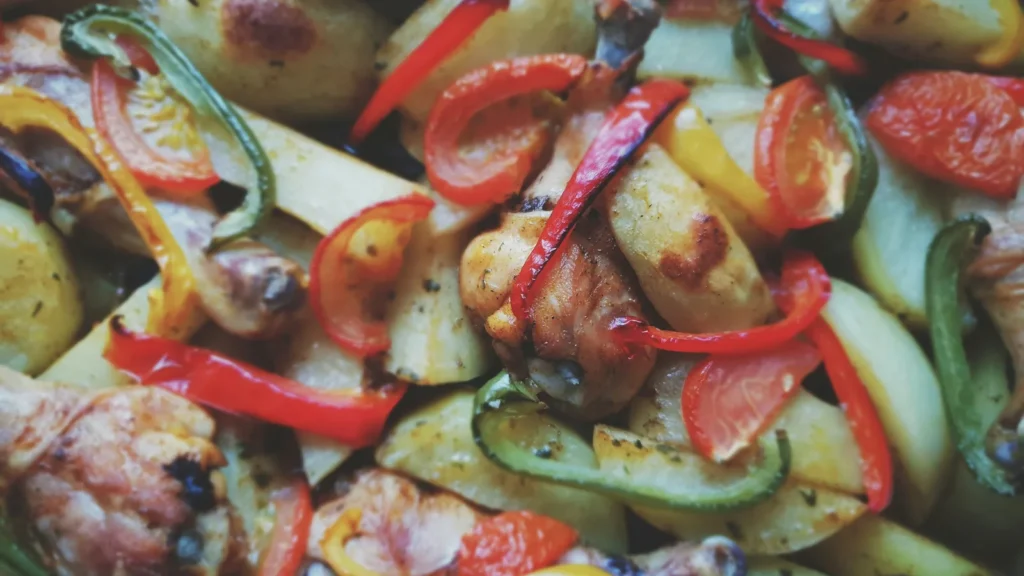
Briam is the Greek answer to ratatouille: potatoes, courgettes, aubergine, peppers and onion roasted slowly in one tin with tomato, garlic, oregano and a generous amount of olive oil, until the vegetables are soft and sweet and the juices have turned into a rich sauce. It is a summer dish and a main course, not just a side, usually eaten warm or at room temperature with feta and bread. In some regions it is called tourlou.

Briam recipe (Greek roasted vegetables)
Serves: 4–6 servings. Prep: 25 minutes. Cook: about 1¼ hours. Total: about 1 hour 40 minutes.
Ingredients
- 1½ lb (700 g) potatoes, peeled and cut into thick slices
- 2 medium courgettes (zucchini), cut into thick rounds
- 1 medium aubergine (eggplant), cut into chunks
- 1 green and 1 red bell pepper, cut into strips
- 1 large red onion, sliced
- 3 garlic cloves, sliced
- 1 can (14 oz / 400 g) chopped tomatoes, or 4 ripe tomatoes, grated
- ½ cup (120 ml) extra virgin olive oil, such as our Rapti Koroneiki olive oil
- 2 tsp dried Greek oregano, such as our dried Greek oregano
- A handful of fresh parsley, chopped
- Salt and black pepper
- ½ cup (120 ml) water
- Feta, to serve (optional)
Method
- Heat the oven to 400°F (200°C, 180°C fan).
- Put all the vegetables and the garlic in a large roasting tin. Add the tomatoes, olive oil, oregano, half the parsley, about 1½ tsp salt and plenty of pepper. Toss well with your hands so everything is coated.
- Spread the vegetables in a single, fairly even layer, with the potatoes underneath where they will cook in the juices. Pour the water around the edges.
- Cover with foil and bake for 40 minutes.
- Uncover, stir gently and bake for another 30–40 minutes, turning once, until the potatoes are tender and the vegetables are soft and browned at the edges. Most of the liquid should have become a thick, oily sauce.
- Rest for 15 minutes, scatter with the rest of the parsley and serve warm or at room temperature with feta and bread.
A dish cooked in olive oil
Briam belongs to the Greek family of ladera, vegetable dishes cooked in olive oil. Visit Greece describes these dishes as popular all year and especially important during Lent, when many Greeks avoid meat and dairy. The oil is not just for cooking: it combines with the tomato and vegetable juices to make the sauce, so use one with good flavour. Our olive oil smoke point guide explains why extra virgin olive oil is fine for oven roasting at this temperature.
Cutting the vegetables
The trick with briam is to get everything tender at the same time. Potatoes take longest, so slice them thinner, about ⅓ inch (1 cm), and keep them at the bottom of the tin in the juices. Cut courgettes and aubergine into larger chunks, about 1½ inches (4 cm), so they don’t turn to mush. Use a large tin; if the vegetables are piled too deep they steam instead of roasting.
Seasoning
Dried oregano is the main herb in briam; rub it between your fingers as you add it to release its aroma. Our guide to cooking with Greek oregano explains why Greek oregano tastes stronger than many supermarket kinds. Fresh parsley, dill or mint stirred in at the end adds freshness. Season well: vegetables need more salt than you might expect.
Variations
- With feta baked in: crumble feta over the top for the last 15 minutes.
- Okra: some versions add okra in late summer.
- Chickpeas: add a can of drained chickpeas with the tomatoes for a more filling dish.
- Other ladera: try fasolakia (green beans), gemista (stuffed vegetables) or spanakorizo (spinach rice).
Serving and storing
Serve briam with crusty bread to mop up the oil, a slab of feta and some olives. It is also good next to grilled meat or fish. Refrigerate leftovers within 2 hours and use within 3 to 4 days, as the USDA advises; briam tastes even better the next day, brought back to room temperature or warmed in the oven.
Find the oil in our Greek olive oil collection, the herbs in the Greek oregano collection, and more ideas in our Greek pantry recipes.
Sources
- Visit Greece: Culinary traditions of Lent (ladera, bean soups, halva)
- USDA FSIS: Leftovers and food safety
Briam: frequently asked questions
What is briam?
A Greek dish of mixed summer vegetables, usually potatoes, courgettes, aubergine, peppers and onion, roasted in one tin with tomato, oregano and olive oil.
What is the difference between briam and ratatouille?
Both are slow-cooked summer vegetables. Briam is roasted in the oven, includes potatoes and uses oregano, while ratatouille is usually cooked on the stove with Provençal herbs.
Is briam a main dish or a side?
In Greece it is usually a main course, served with feta and bread, though it also works as a side.
Can I make briam ahead?
Yes. It keeps for 3 to 4 days in the fridge and many people think it tastes better the next day.

Good things from our land, ideas for your table.
Explore the pantry journal →