
Moussaka Recipe: Classic Greek Moussaka with Aubergine and Béchamel
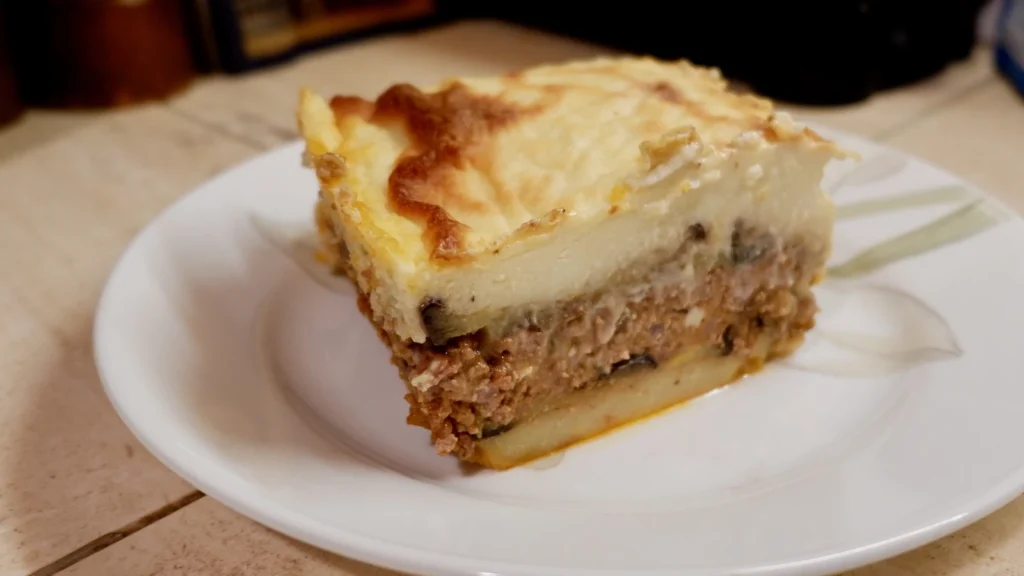

Moussaka is the best-known Greek baked dish: layers of soft aubergine (eggplant) and potato, a rich meat sauce warmed with cinnamon and allspice, and a thick, golden béchamel on top. It takes time, but each stage is simple, and it can be made a day ahead. This recipe roasts the vegetables instead of frying them, which uses less oil and keeps the layers from becoming greasy.
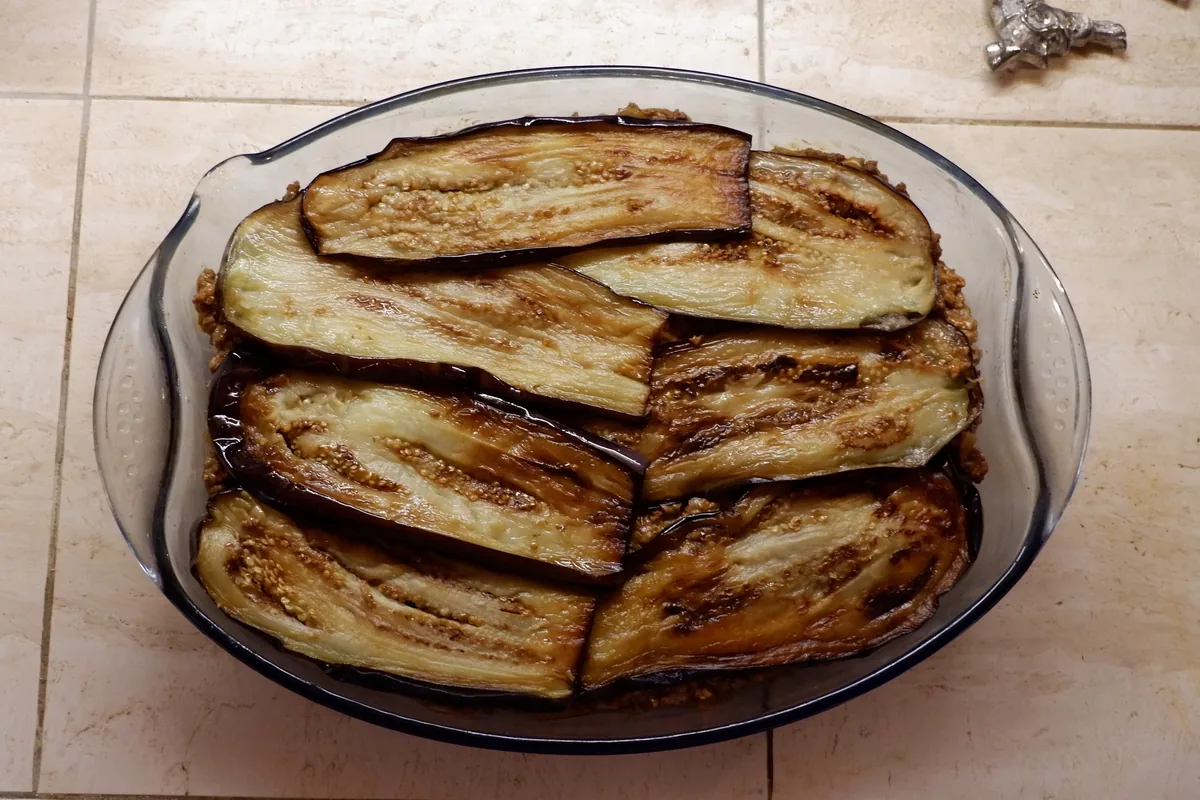
Moussaka recipe
Serves: one 9×13-inch (23×33 cm) dish, 8 servings. Prep: about 1 hour. Cook: about 1 hour 30 minutes. Total: about 3 hours, including resting.
Ingredients
Vegetables
- 3 large aubergines (eggplants), about 3 lb (1.3 kg), sliced ½ inch (1 cm) thick
- 2 large potatoes, peeled and sliced ¼ inch (5 mm) thick
- About ½ cup (120 ml) extra virgin olive oil, such as our Rapti Koroneiki olive oil
- Salt
Meat sauce
- 2 tbsp olive oil
- 1 large onion, finely chopped
- 2 garlic cloves, chopped
- 1½ lb (700 g) ground lamb or beef, or a mix
- ½ cup (120 ml) dry red wine (optional)
- 1 can (14 oz / 400 g) chopped tomatoes
- 2 tbsp tomato paste
- 1 cinnamon stick or ½ tsp ground cinnamon
- ¼ tsp ground allspice
- 1 bay leaf and 1 tsp dried Greek oregano
- Salt, pepper, and a handful of chopped parsley
Béchamel
- 5 tbsp (70 g) butter
- ⅔ cup (80 g) plain (all-purpose) flour
- 3 cups (720 ml) warm whole milk
- 2 egg yolks
- ½ cup (45 g) grated kefalotyri or Parmesan
- Pinch of nutmeg, salt and white pepper
Method
- Heat the oven to 400°F (200°C, 180°C fan). Brush the aubergine and potato slices with olive oil, season with salt and roast on lined trays for 25–30 minutes until soft and golden. (Frying is traditional but uses much more oil.)
- Make the meat sauce: soften the onion in oil for 8 minutes, add garlic, then the meat, breaking it up, and brown well. Add wine and let it bubble away.
- Stir in the tomatoes, paste, cinnamon, allspice, bay and oregano. Simmer uncovered for 30–40 minutes until thick, not watery. Season, remove the bay and cinnamon stick, and stir in the parsley.
- Make the béchamel: melt the butter, stir in the flour and cook for 2 minutes. Whisk in the warm milk gradually and simmer, whisking, until thick. Off the heat, whisk in the yolks, half the cheese, nutmeg and seasoning.
- Assemble in a 9×13-inch (23×33 cm) dish: potatoes, half the aubergine, all the meat sauce, the remaining aubergine, then the béchamel. Sprinkle with the rest of the cheese.
- Lower the oven to 350°F (180°C, 160°C fan) and bake for 45–50 minutes until deep golden.
- Rest for at least 30 minutes before cutting, so the layers hold.
A short history of the béchamel top
Dishes of layered aubergine and meat are found across the eastern Mediterranean and the Middle East. The version most people now call Greek moussaka, with a deep béchamel crust, is often credited to the chef Nikolaos Tselementes, whose cookbooks shaped Greek home cooking in the 20th century and brought French techniques such as béchamel into the Greek kitchen.
Tips for a moussaka that slices cleanly
- Cook the meat sauce until thick. A watery sauce makes a runny moussaka. Simmer until a spoon leaves a trail.
- Drain the vegetables. Roasted slices should be soft and golden; blot any excess oil.
- Make a thick béchamel. It should coat a spoon heavily; the egg yolks help it set into a firm layer.
- Rest it. Thirty minutes to an hour after baking makes all the difference to clean slices. Moussaka is often served warm rather than piping hot in Greece.
Lamb or beef?
Both are used in Greece. Lamb gives a richer, more traditional flavour; beef is milder and easier to find; a mix of the two works well. Brown the meat properly before adding the tomato: this is where much of the flavour comes from. The USDA lists 160°F (71°C) as the safe minimum internal temperature for ground meat; a sauce that has simmered for 30 minutes will be well above it.
Vegetarian moussaka
Replace the meat with 2 cups of cooked brown or green lentils, or with chopped mushrooms browned well in olive oil. Keep the cinnamon, allspice and oregano so it still tastes like moussaka. Courgettes (zucchini) can stand in for some of the aubergine in summer. For a meat-free tray bake of summer vegetables, see our briam recipe.
Make ahead, storing and reheating
You can make the meat sauce and roast the vegetables a day ahead and keep them in the fridge, then assemble and bake. Baked moussaka should be refrigerated within 2 hours and eaten within 3 to 4 days. Reheat portions, covered, in a 350°F (180°C) oven until hot through: the USDA recommends 165°F (74°C) for leftovers and casseroles. Moussaka also freezes well, baked and cooled, for up to about 3 months for best quality.
What to serve with moussaka
Have extra aubergines? Roast them for melitzanosalata, the Greek eggplant dip. A crisp Greek salad dressed with our lemon vinaigrette balances the richness, with crusty bread and a few Kalamata olives. For another baked favourite, see our spanakopita recipe, or browse the Greek pantry recipes and the Greek olive oil collection.
Sources
Moussaka: frequently asked questions
What is moussaka made of?
Greek moussaka is layers of aubergine (eggplant), often potato, a meat sauce of lamb or beef with tomato and warm spices, and a thick béchamel topping.
Why is my moussaka watery?
The meat sauce was probably too thin or the vegetables were wet. Simmer the sauce until thick, drain the vegetables, and rest the moussaka before cutting.
Can moussaka be made ahead?
Yes. Prepare the sauce and vegetables a day ahead, or bake the whole dish and reheat it. It often slices better the next day.
Can you freeze moussaka?
Yes. Freeze it baked and cooled, wrapped well, for up to about 3 months, and reheat until hot through.

Good things from our land, ideas for your table.
Explore the pantry journal →