
Greek Coffee Briki Size for Two Cups: Check the Serving Volume

The right Greek coffee briki size for two cups depends on what you mean by a cup and what the pot maker means by capacity. Start with the two servings you actually want to prepare, then compare that requirement with the instructions for the exact pot. A two-cup label alone is not enough to settle the question.
The goal is a manageable batch in a suitable vessel. This guide focuses on sizing, rather than repeating the full preparation method in our Greek coffee guide.
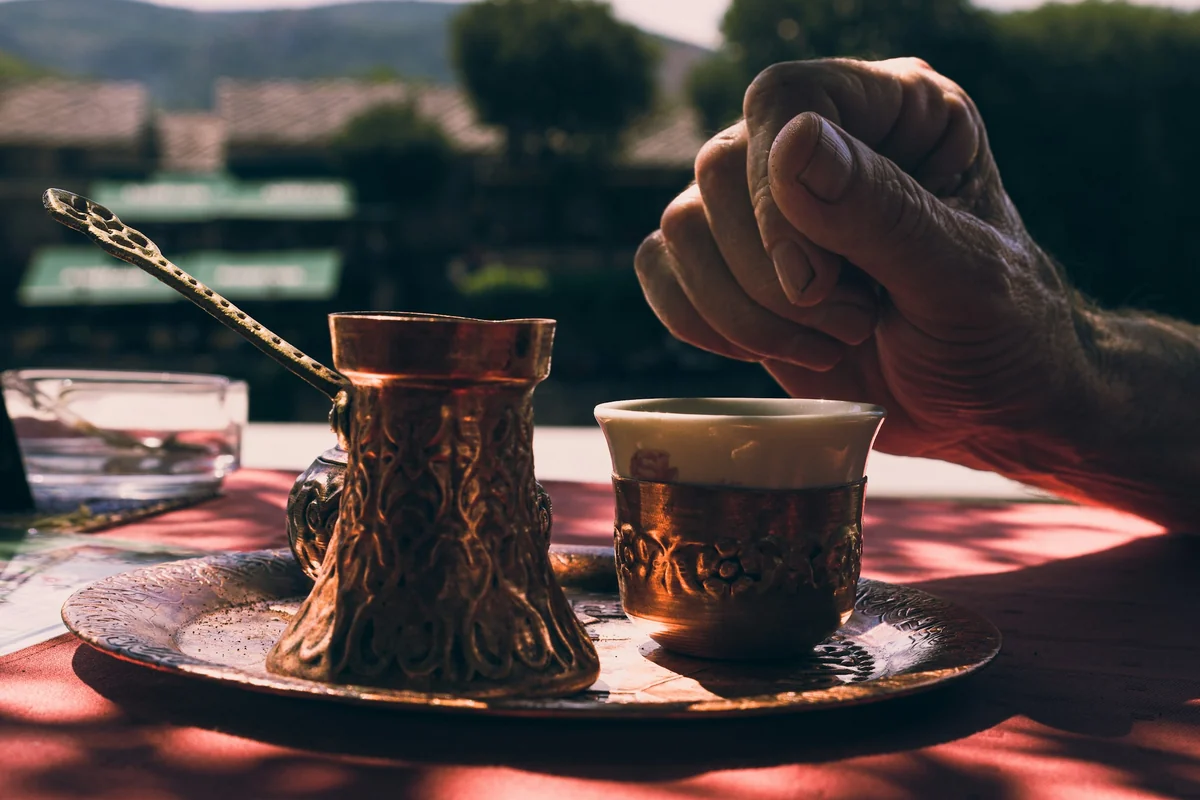
Two coffee servings are not two measuring cups
A serving cup and a kitchen measuring cup do different jobs. Do not take a pot’s two-cup description to mean that it can brew two US measuring cups of water. Look for the maker’s explanation of its serving size instead.
Also separate the cup’s brim capacity from the amount you intend to serve in it. If you normally leave space below the rim, that actual serving level is the relevant starting point. Two people with different cups may therefore need a different batch from two people using matching small cups.
A manufacturer example that shows the problem
SOY identifies its C2 cezve as a two-serving model with a useful capacity of 140 ml. The manufacturer also warns that cups outside Turkey can be larger, so the same model may suit a single serving in those circumstances. This is a specific cezve example that illustrates the sizing issue; it is not a universal Greek briki specification or a claim that GreekBounty sells this pot.
The example is useful because the maker explains both capacity and serving context. When another listing says only 150 ml or two cups, ask what those numbers represent before assuming they mean the same thing.
Nominal capacity, useful capacity and headspace
A stated capacity might describe a brim-full volume or an intended working volume. Look for an explicit definition. SOY’s wording, useful capacity, is more informative than an unexplained volume figure, but its specification still belongs to that model.
Space above the liquid is a separate concern from the amount you want to drink. Follow the pot’s fill guidance and the selected coffee method rather than filling to the brim or adopting an online fraction as a universal rule. If the maker does not explain the working level, ask for clarification. This guide does not invent a fixed headspace percentage for all shapes of briki.
Measure your intended batch before shopping
Choose the two serving cups you intend to use. Establish the serving level and water measure required by your selected method, then measure the total. For example, two hypothetical water portions of 65 ml total 130 ml. That is arithmetic to explain the comparison, not a tested recipe, standard serving size or recommendation to use 130 ml in any particular pot.
Write down the total and bring it to the product details. Confirm that it fits the stated working guidance once the recipe’s ingredients are included. Do not conclude that a pot is suitable merely because its brim-full capacity is larger than your measured water.
Questions to ask about the exact model
Ask whether the listed milliliters represent brim capacity or usable capacity. Find out the water amount or serving size used to calculate its cup count, and whether the maker provides a fill mark or working-level instruction. Ask for the recommended batch range if you will sometimes make one serving and sometimes two.
Check the equipment separately for your heat source, base stability and handling requirements. A suitable volume does not establish compatibility with an induction hob, burner or other heating arrangement. Do not buy accessories solely to force an uncertain setup to work; resolve the model’s instructions first.
What if your current pot is too small?
If the intended batch exceeds the pot’s working guidance, prepare separate batches or choose equipment with instructions that accommodate it. Do not make a brim-full batch as an experiment. If you own a larger pot, check whether its maker describes smaller batches rather than assuming its maximum cup count guarantees every smaller amount works equally well.
Once you have a suitable setup, keep a short note of your pot model, cups and water measure. That removes the guesswork when you repeat the same serving arrangement. Recheck when you switch cups or equipment.
Size is one part of the coffee setup
The pot cannot supply the right grind, recipe or handling on its own. Choose coffee intended for the method and follow its preparation guidance. Explore our Greek coffee collection, then continue with the guide to making Greek coffee for the broader process. This article promises neither a particular foam result nor a tested equipment pairing.
Sources
SOY Türkiye: C2 useful capacity and serving-size caveat. The manufacturer’s facts are specific to its cezve. Measuring examples and shopping questions are original editorial guidance, without an own-kitchen equipment test or universal sizing formula.
Continue exploring this ingredient
Browse the coffee guide library, then explore What Size Greek Coffee Pack Do You Need? and Greek Coffee vs Instant Coffee: Read the Preparation.

Good things from our land, ideas for your table.
Explore the pantry journal →