
Gemista: Greek Stuffed Tomatoes and Peppers with Herbed Rice
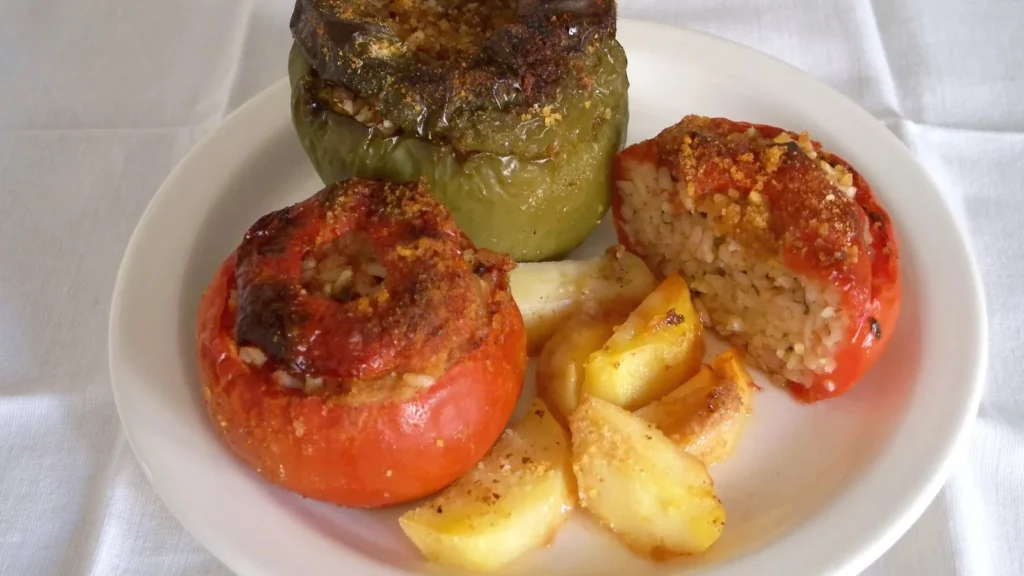

Gemista (also spelled yemista) means “stuffed”, and in Greece it almost always means ripe tomatoes and peppers filled with rice, herbs and their own tomato pulp, then baked slowly in olive oil with potato wedges tucked around them. It is a summer dish, made when tomatoes are at their best, and like many Greek vegetable dishes cooked in olive oil it is often eaten at room temperature, the day it is made or the next.
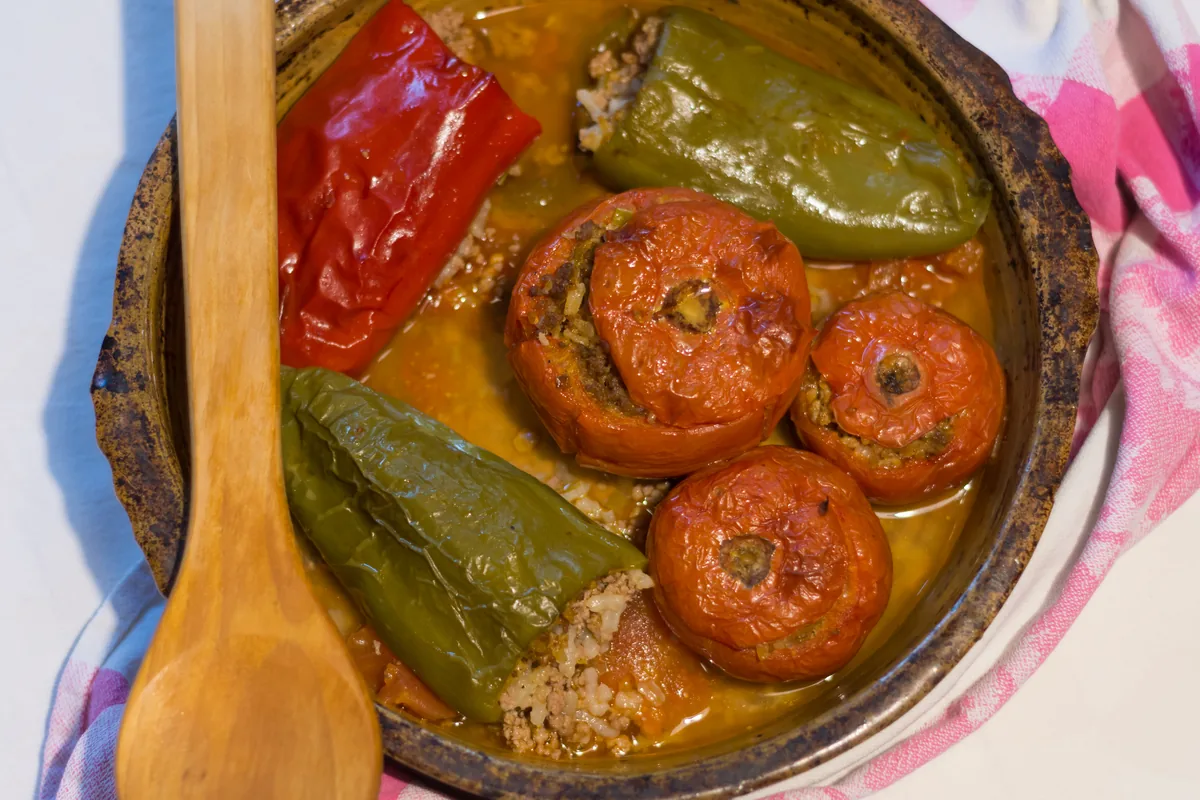
Gemista recipe (Greek stuffed tomatoes and peppers)
Serves: 4–6 servings. Prep: 40 minutes. Cook: about 1¼ hours. Total: about 2 hours.
Ingredients
Vegetables
- 6 large ripe tomatoes
- 4 bell peppers (green, red or yellow)
- 3 medium potatoes, peeled and cut into wedges
Rice filling
- 1 cup (200 g) medium-grain rice, such as Carolina or arborio
- ½ cup (120 ml) extra virgin olive oil, such as our Rapti Koroneiki olive oil, divided
- 1 large onion, grated or finely chopped
- 2 garlic cloves, finely chopped
- 1 small courgette (zucchini), grated
- A large handful each of fresh parsley, mint and dill, chopped
- 1 tsp dried Greek oregano
- 1 tsp sugar (to balance the tomatoes)
- Salt and black pepper
- 2 tbsp tomato paste mixed with 1 cup (240 ml) water
To finish
- 2 tbsp dried breadcrumbs (optional)
- Feta, to serve (optional)
Method
- Heat the oven to 375°F (190°C, 170°C fan).
- Slice the tops off the tomatoes and keep them as lids. Scoop the pulp and seeds into a bowl with a teaspoon, leaving walls about ¼ inch (5 mm) thick. Blend or chop the pulp finely. Cut the tops off the peppers, keep them, and remove the seeds.
- Warm 3 tbsp olive oil in a pan and soften the onion for 5 minutes. Add the garlic and courgette and cook 2 minutes more. Stir in the rice and half the tomato pulp and simmer for 5 minutes, until the rice absorbs most of the liquid. Off the heat, stir in the herbs, oregano, sugar, salt and pepper.
- Sprinkle the inside of the tomatoes and peppers with a little salt and sugar. Fill them about three-quarters full with the rice mixture, as the rice swells, and add a spoonful of tomato pulp to each. Put the lids back on.
- Stand the vegetables in a large roasting tin and tuck the potato wedges between them. Season the potatoes. Pour the remaining tomato pulp, the tomato paste mixed with water and the rest of the olive oil around them. Sprinkle the tops with breadcrumbs if using.
- Cover with foil and bake for 45 minutes. Uncover, baste with the juices and bake for another 30 minutes, until the rice and potatoes are tender and the tops are browned. Add a splash of water if the tin looks dry.
- Rest for at least 15 minutes before serving. Gemista are best warm or at room temperature, with feta and bread.
Choosing the vegetables
Pick large, ripe but firm tomatoes that sit flat, and peppers with a wide base. Green peppers are the most traditional and give a slightly bitter edge; red and yellow are sweeter. Aubergines and courgettes can be hollowed and stuffed in the same way. Out of season, beefsteak tomatoes and a can of chopped tomatoes for the sauce will do.
The rice filling
Medium-grain rice absorbs the tomato juices and stays soft; long-grain rice works but is drier. Par-cooking the rice briefly with the tomato pulp, as in this recipe, helps it cook evenly in the oven. Fill the vegetables only three-quarters full, because the rice swells as it bakes. Plenty of fresh herbs is the secret: parsley, mint and dill, plus a little dried Greek oregano. Some cooks add pine nuts and raisins.
Gemista with meat
For a meatier version, brown 1 lb (450 g) of ground beef or a beef and pork mix with the onion before adding the rice, and use a little less rice. Ground meat should reach 160°F (71°C), according to the USDA’s safe temperature chart; check the filling of a large tomato with a thermometer before serving. The vegetarian version is the traditional Lenten and summer dish.
Tips for perfect gemista
- Don’t throw away the pulp. It flavours both the filling and the sauce.
- Be generous with olive oil. It carries the flavour and browns the potatoes. A fruity Greek extra virgin olive oil is ideal.
- Pack the tin tightly. Vegetables that lean on each other keep their shape.
- Let them rest. Gemista taste better warm than piping hot, once the juices settle.
What to serve with gemista
Feta and crusty bread are all you really need. A Greek salad or some tzatziki on the side is welcome, and the potatoes, cooked in the tomato juices, are often the favourite part.
Storing and reheating
Refrigerate leftovers within 2 hours and eat within 3 to 4 days, as the USDA advises. Bring them back to room temperature or reheat them, covered, in a moderate oven until hot through. Gemista do not freeze well, as the tomatoes collapse.
Browse more dishes from the Greek olive oil collection and all our Greek pantry recipes.
Sources
Gemista: frequently asked questions
What does gemista mean?
Gemista means “stuffed” in Greek. The dish is usually tomatoes and peppers filled with herbed rice and baked in olive oil.
What rice is best for gemista?
Medium-grain rice such as Carolina or arborio absorbs the tomato juices and stays tender. Long-grain rice works but is drier.
Are gemista served hot or cold?
Usually warm or at room temperature. Like many Greek dishes cooked in olive oil, they taste better after resting.
Can I make gemista with meat?
Yes. Brown ground beef with the onion before adding the rice, and make sure the filling reaches 160°F (71°C).

Good things from our land, ideas for your table.
Explore the pantry journal →